

When people picture Cambodian archaeology, they usually picture Angkor Wat: the towering temples, the carved faces, the kings and gods. But those monuments mostly tell the story of the elite. To learn how ordinary people lived (where they slept, what they cooked, what they used every day), you have to look away from the great temples and dig into the surrounding countryside.
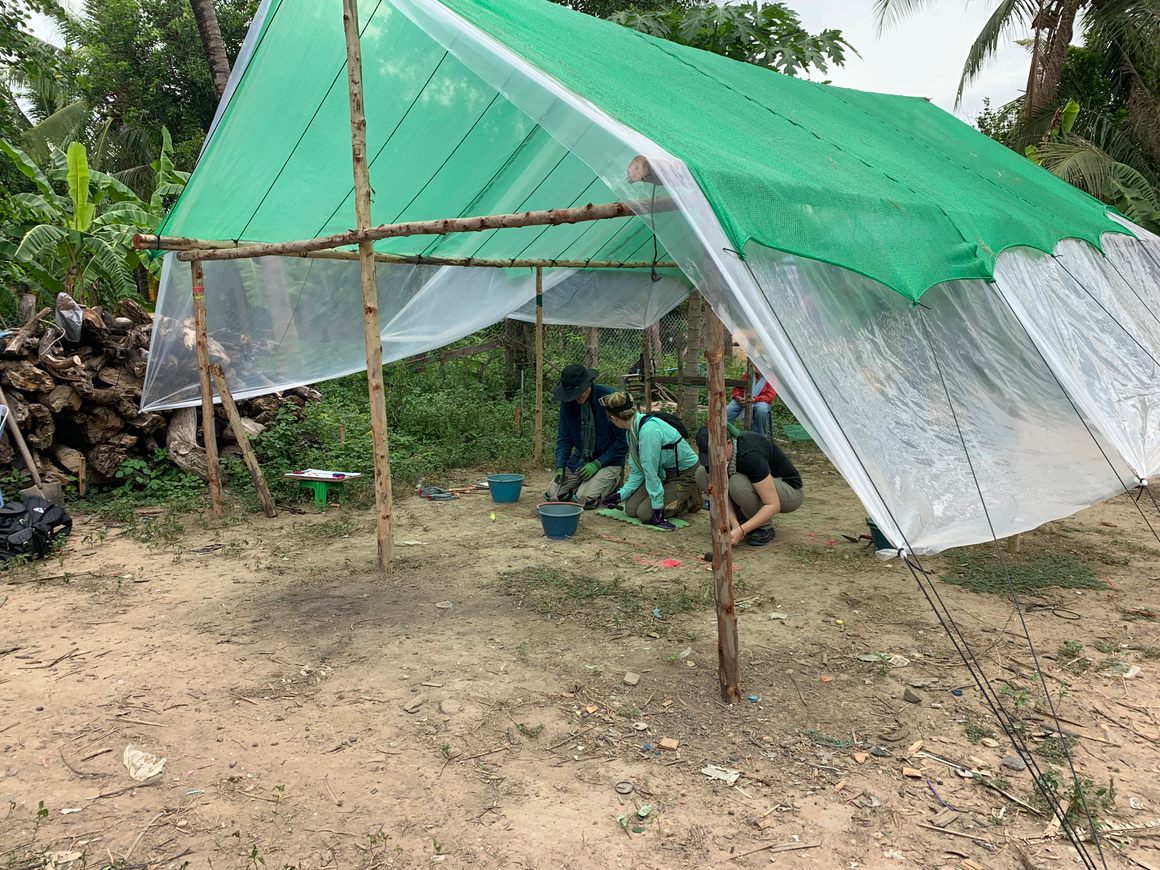
That was the goal of P’teah Cambodia, a household archaeology project led by Drs. Miriam Stark and Alison Carter, and I spent a summer volunteering on it. The team was studying everyday life across the Pre-Angkorian, Angkorian, and Post-Angkorian periods. Our excavation sat just behind Prasat Basaet, a small sandstone temple outside Battambang. I came in knowing very little about archaeology beyond a lifelong fascination with it, and I left knowing how to map, dig, and read a trench.
The Long Way to Battambang
Getting there was an adventure in itself. I flew 14 hours from Los Angeles to Shanghai, and during a 14-hour layover I squeezed in a day at Shanghai Disneyland, which I highly recommend. Then I took the last four-hour flight into Siem Reap.
I spent my first day exploring the temples of Angkor, then treated myself to a meal and a good night’s sleep at the Park Hyatt before meeting the team. The next morning I took a tuk-tuk (a small carriage pulled by a motorbike, and the cheapest way to get around) to our meeting spot. From there, three other volunteers and I rode three and a half hours southwest to Battambang, bouncing over roads under construction the whole way.
Cambodian driving deserves its own mention. Most country roads are a single lane, so drivers pass each other constantly and honk as they go by. It isn’t rude. It’s a courtesy, letting the car, tuk-tuk, or bicycle ahead know you’re right beside them. Add the cows and oxen ambling along the roadside, and every drive was an experience.
We finally arrived at The Coconut House, our home base for the project.
Settling Into a New World
This was my first trip to Asia, and everything felt new. Cambodia is still a developing country, and most families there live without the comforts many of us take for granted at home. Our guesthouse was comfortable, but the contrast with everyday life around us was hard to miss.
Some differences are very practical. I carried my own toilet paper in my field bag at all times, which was a smart move, because most restrooms don’t supply it. Plumbing in the area often can’t handle paper, so it goes in a wastebasket instead. Where there’s no basket, you hold onto it in a plastic bag until you find one. Some toilets flush. Others have a basin of water beside them, and you scoop and pour to flush by hand. You adapt quickly.
What I’ll remember most, though, is the people, who were warm and welcoming, and the markets, which buzzed with life.
Spirit Houses and a Hilltop Temple
On the day I arrived, Miriam kindly took me and another volunteer out with her family to visit a temple nearby. It sat on top of a hill at the end of a long, steep stairway. The climb was hard, and the view from the top was spectacular. Along the way, Miriam told us about Battambang’s history and pointed out the differences between traditional Khmer homes and newer construction. We passed roadside cooks serving cheap, fresh meals to anyone who stopped to sit. Miriam was endlessly generous with her knowledge, and just as curious about us.
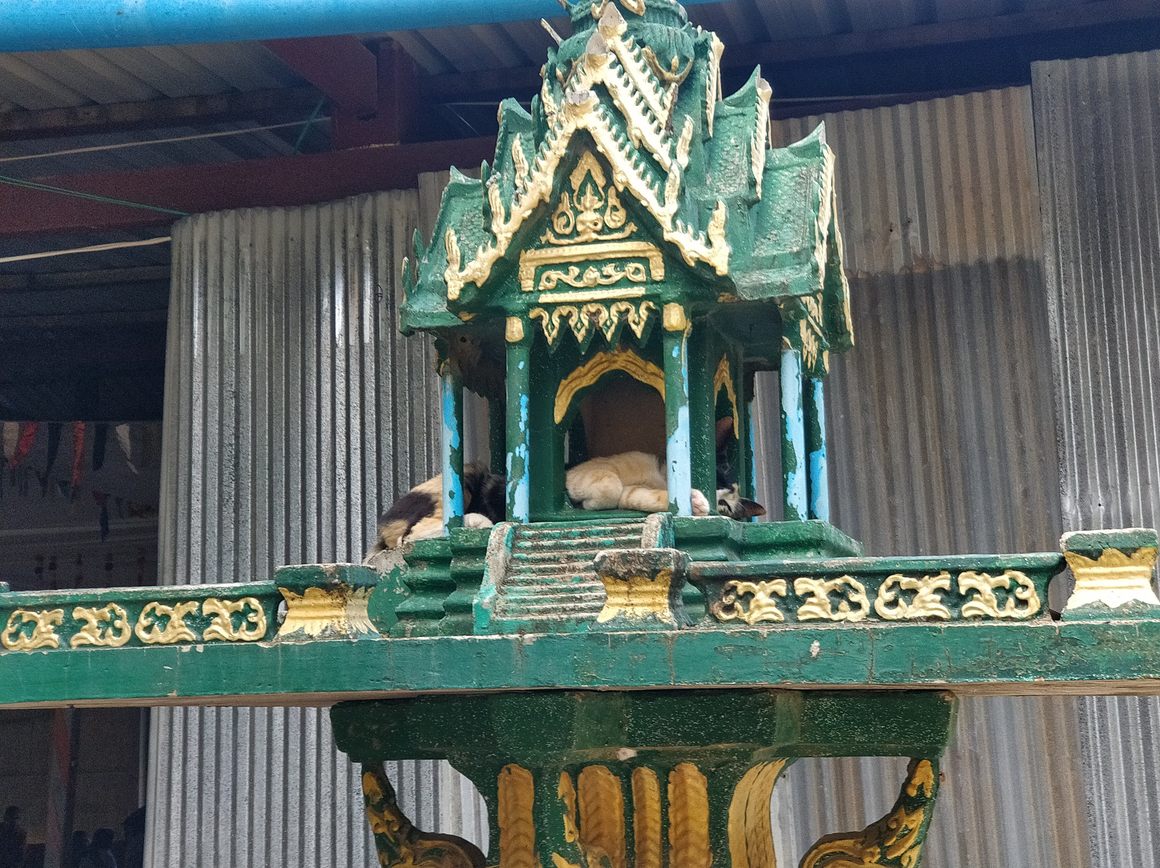
She also introduced me to spirit houses, and the folklorist in me lit up. In Khmer tradition, the land and buildings have their own resident spirits. Families set up a small shrine outside the home, often on a post and looking a bit like an ornate birdhouse or mailbox, where those spirits can dwell. They leave offerings there so the spirits stay content and watch over the household rather than causing trouble. I don’t think I saw a single home without one. It was a beautiful example of belief woven seamlessly into everyday life.
Life in the Trench
Weekdays were all about the dig. Two other volunteers and I were given our own trench. The team first taught us how to map it, measure it, and excavate it properly. Then we got to work, digging from about 8 a.m. until noon.
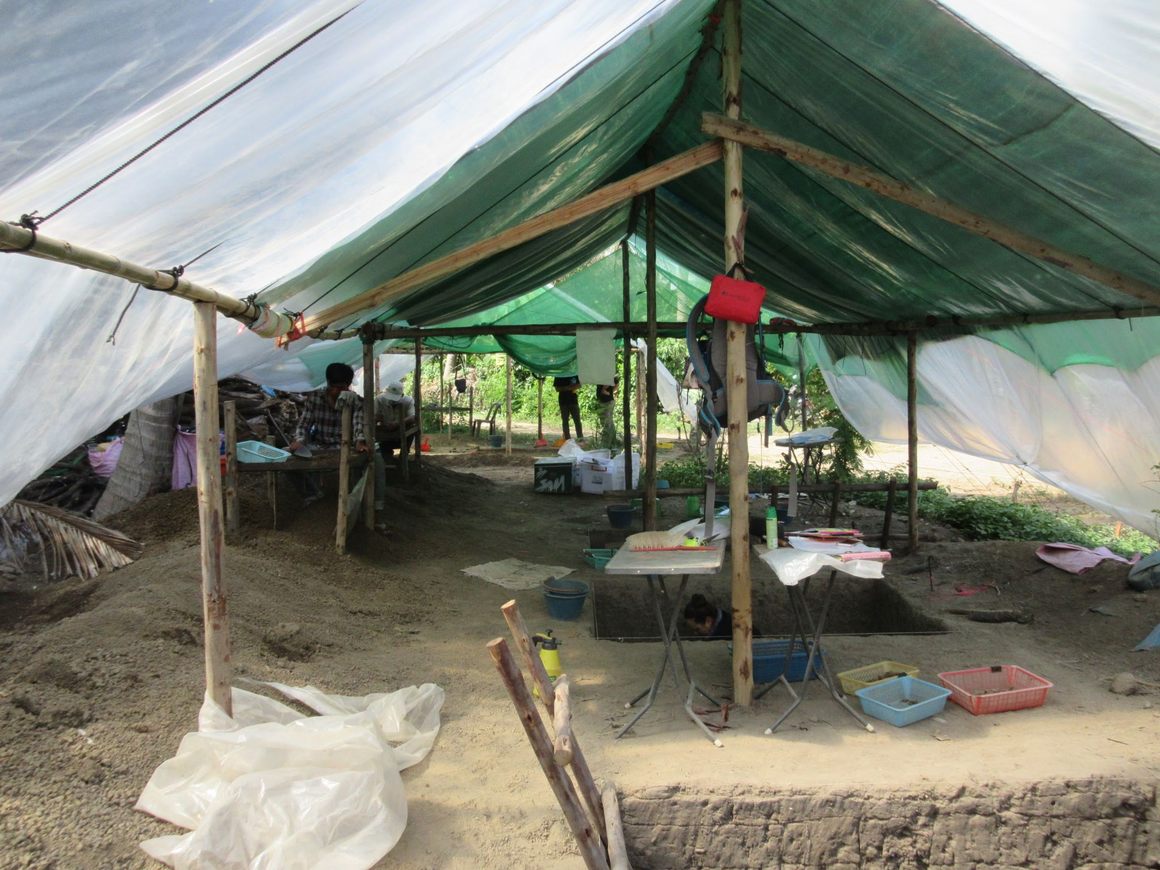
The heat was serious: 90 to 100 degrees Fahrenheit, with constant humidity. We wore quick-dry hiking pants and long-sleeved shirts every day to protect ourselves from the sun and the mosquitoes. Dengue fever is a genuine risk there, so I lived in high-DEET bug spray. It was literally the first thing I put on after every shower. The team also gave us traditional Cambodian scarves to mop away the sweat as we worked, and I washed mine in the sink every evening.
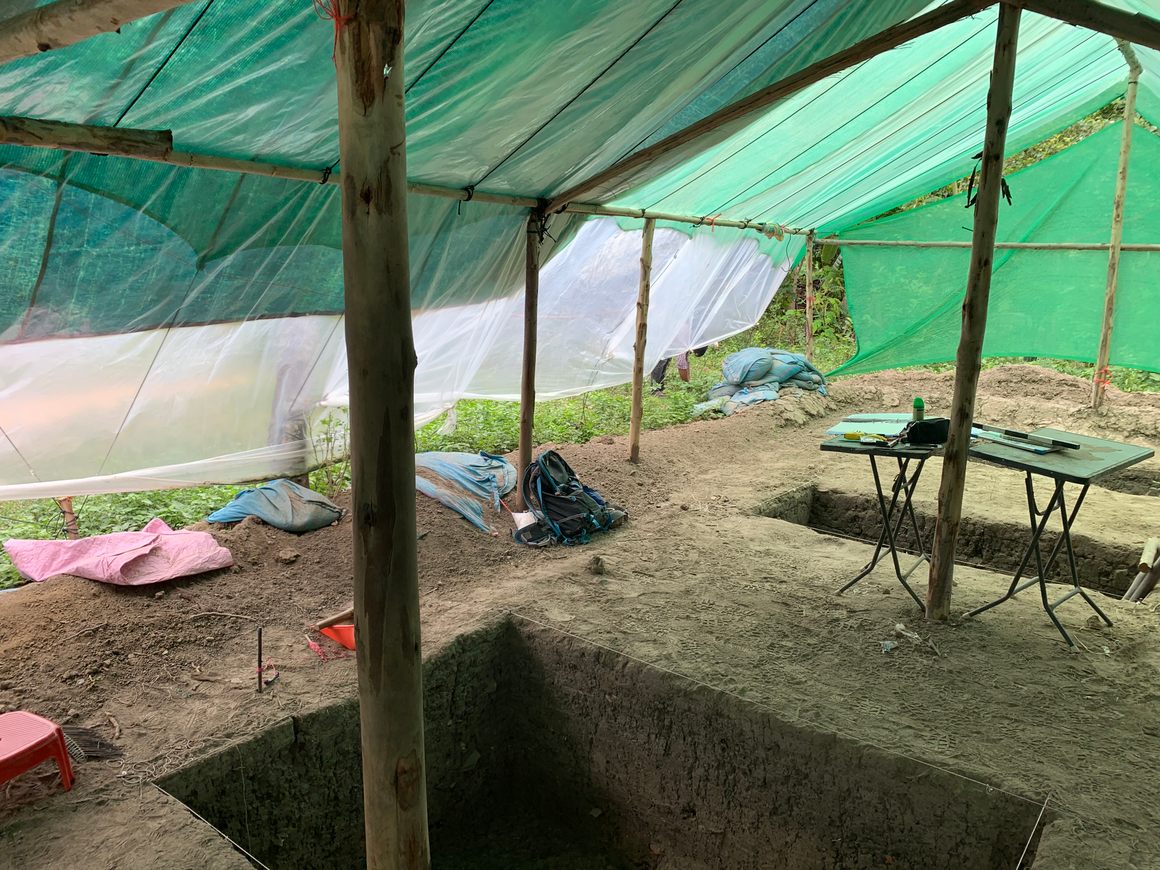
We dug first in 10-centimeter levels, then switched to 5-centimeter levels as we went deeper. Every layer turned up pottery sherds, plus small animal bones and plenty of fired clay. One day we pulled out an unusually large sherd in excellent condition, and the whole team celebrated. By the end of the project I could tell fired clay, pottery, and bone apart at a glance, which felt like a real accomplishment.
Rice, Popsicles, and Pottery Washing
Lunch was at noon in the shade of a pagoda: rice, traditional Khmer dishes, and fresh fruit for dessert. The best days were when the ice cream man came by on his bicycle with popsicles. He soon learned our lunch schedule and made us a regular stop.
Afternoons were too hot for the trench, so we moved to sherd washing, gently cleaning the morning’s finds. Hot afternoons often broke into sudden, short bursts of rain, and the steady, quiet work of washing pottery became my favorite way to unwind after a morning in the field.
Evenings meant a family-style dinner of rice and more Khmer dishes back at the Coconut House, which also made incredible fruit smoothies (called “shakes” there). I had one nearly every night, sometimes followed by a dip in the pool.
A Night at the Circus
One evening the whole team went out for dinner at a spot called La Pizza, then headed to the circus. The show was run by Phare Ponleu Selpak, a Battambang arts school whose graduates often go on to perform with the professional circus in Siem Reap. The young performers mixed traditional dance with acrobatics, fire juggling, and one man who balanced on a truly alarming tower of objects. It was one of the highlights of my trip.
Cambodia was also remarkably affordable. Even splurging, I spent only a little over $100 during my time there.
Why I’ll Never Forget It
This was a once-in-a-lifetime experience. I learned the basics of archaeology, gained a deeper understanding of Cambodian culture, and spent every morning walking past an ancient temple to dig into the lives of people who lived beside it centuries ago. It reminded me why I travel. Seeing how people live in other parts of the world makes you more grateful, more curious, and more open-minded, and I think everyone should do as much of it as they can.
Read more about my fieldwork and adventures around the world at MaloriesAdventures.com.


