

Israel (1985) - In the pre-dawn darkness at the edge of a desert, I woke up in what I thought was a construction site—only to discover I’d spent the night in an archaeological dig. On the other side of a high fence, people were arriving, and I crept away silently, hoping not to be discovered.
From the start, travel in Israel hadn’t been easy for me.
And I never thought the people I’d come to fear most in a country would be bus drivers; or, more precisely, their assistants. But then again, I had never been in a position where they had so much power over me.
The crowded night bus from Tel Aviv to Eilat was moving through the darkness, its horn clearing the road ahead.
Just before we departed two hours ago, I had purchased a ticket to Jerusalem. Jerusalem was only a fraction of the way from Tel Aviv to Eilat on Israel’s southern border—a distance of 220 miles—but I hoped the ticket inspector might miss me and I’d wake up by the Red Sea.
But when I saw him making his way up the aisle, I knew I wasn’t getting away with it. He was about thirty, overweight, and gleaming with perspiration even though it was night and the air conditioner was on.
He caught me looking and glared at me. “Ticket.”
I gave him my ticket, and he inspected it lengthily.
He had an unsettling habit of licking his lips.
After a full minute, he said, “No good.”
He pointed a fat finger at me, like he was delivering a final verdict, and said, “Masada.”
The name meant nothing to me. I had no idea what he meant, but he wasn’t throwing me off the bus, so I nodded and sat back.
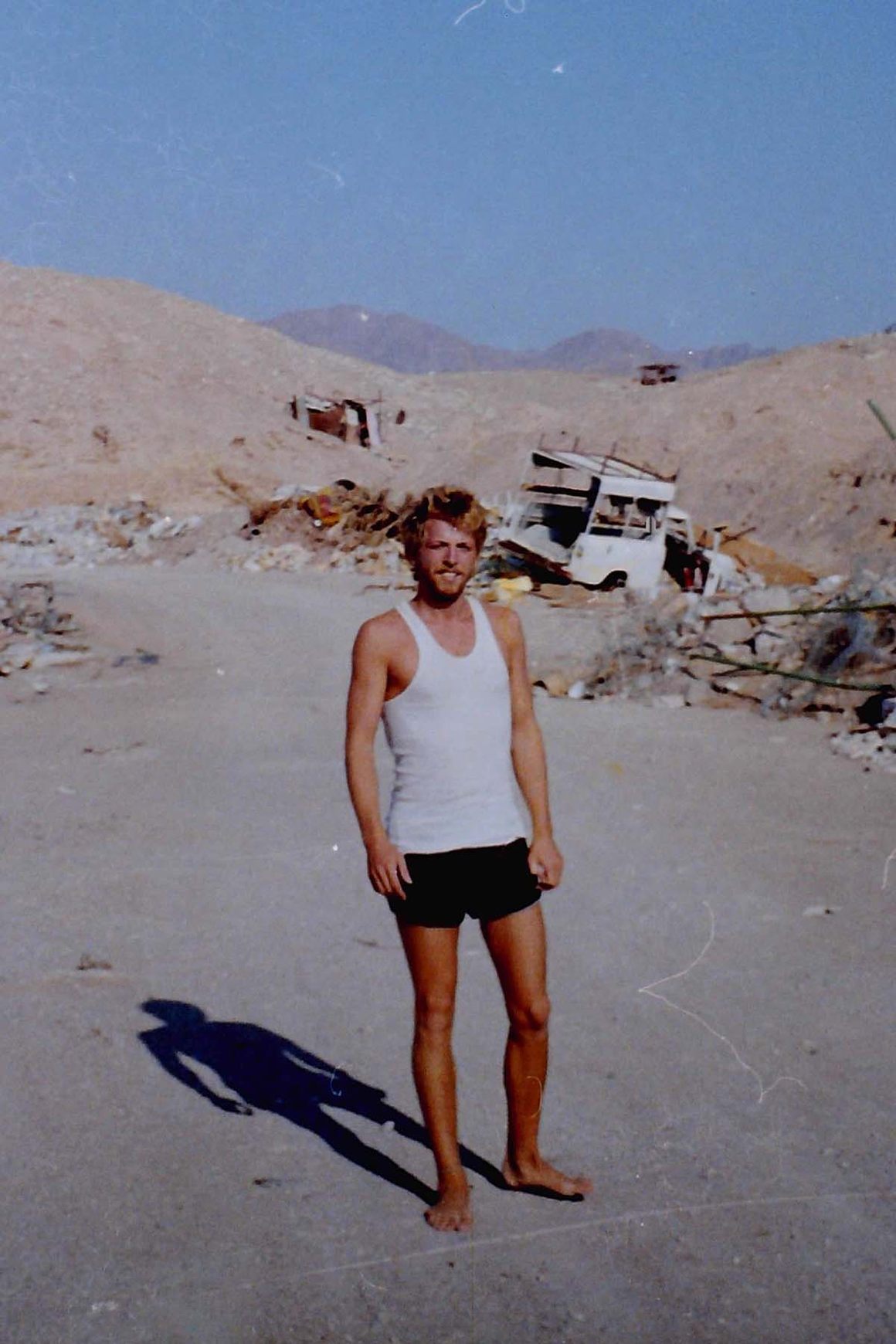
I’d arrived a week ago on a freighter from Greece. I had slept on deck for seven nights as we made our way from Piraeus to Crete and Cyprus and eventually to Haifa, Israel. The passage had cost me seventy-five dollars, which I’d thought fair until it started to rain, and I discovered that travelers on the deck were not allowed inside under any circumstances.
Before we departed, I spent my remaining money on supplies: cheese, bread, water, salami, cookies and vodka. I met a Danish guy with a tarp, and we used some twine to tie it down under a metal stairway and kept the sideways gusts of rain out.
When I disembarked in Israel, I still had some food left, but I was broke and needed money. I talked to every traveler I met about ways to survive cheaply and was told that I had to get to the very bottom tip of the country—to Eilat—and find work as a laborer.
I was trying to do that now.
About half an hour later, the bus pulled off the main road and into a square parking lot. Several stores—all locked up tight—and high fences contained three sides of the lot. High wattage lights above the fences dropped pools of light on either side of them.
The place seemed deserted, but then I saw two men leaning against the fence. They both wore sweatsuits with the top mostly unzipped, exposing lots of gold chains. Their hair was slicked back with sunglasses on their foreheads.
The bus driver’s assistant looked at me and grinned.
“Masada,” he said as he gestured for me to get out.
He followed me to the door, and when it hissed open, he whistled to the men leaning against the fence.
Immediately they began walking toward the bus.
I didn’t want to find out what they wanted, so I ran when I stepped off the bus.
The door closed behind me, and the vehicle roared away.
I had about twenty feet on the two men, but there didn’t appear to be anywhere to run. The buildings were all locked up, and there were no other structures in sight. The night was black, and the desert beyond the fence looked daunting, but there was nowhere else to go, so I ran straight for the fence.
I had no idea what was on the other side, and I managed to flop over the top just before they could reach me. The men stood on the other side of the fence, calling out and shaking it, but neither looked ready to climb after me.
I quickly stepped out of the light and away from the fence into the dark. I had to skirt several excavated trenches before I came upon a few shelters made from corrugated iron and wooden posts. It looked like a construction site, but in the darkness, I couldn’t quite tell. In one shelter, I found a deep ditch from where I could watch the thugs and settled down for the evening.
They’d gone back to where they’d stood before and smoked cigarettes under the bright glow of one of the lamps. After about an hour, another bus came by, and they boarded and left.
I stayed where I was and slept until just before sunrise.
I rose to find myself not in a construction site but an archaeological dig. The night before, it had been my refuge, but now I feared I was trampling on artifacts. A sign informed me that the Masada ruins were nearby. I had apparently slept in what had once been the Roman camp. An area about the size of a football field had been fenced off, and the only gate out that I could find was locked.
Two hundred feet away, I could see some of the shops in the fenced-in area where the bus had dropped me off. They were opening, and I could hear people moving about. On another side, I climbed the fence as quietly as I could and jumped down onto a footpath that led to the ruins on a nearby plateau.
Along the trail, placards told of the history of Masada, and I read how Herod the Great built the palace and fortress that sat on the plateau ahead of me. In the 1st century, Sicarii rebels held out against Rome from this stronghold. After an extended siege, the Romans finally entered to find the fortress silent.
And I had slept in the camp of the invaders. My father’s family came from Italy, but I sympathized less with the Romans than with the rebels. I kept walking, but the history of the place followed me up every step. A chill came over me as I pondered how desperate the outlook must have been for the people trapped there..
I climbed the long series of stairs that led up to the fortress and reached the top an hour and a half later, just as the first tourist buses pulled into the parking lot. I ate an orange from my pack while I watched the sun break away from the horizon and then explored Masada in those horizontal rays.
Another placard informed me that the plateau I had ascended was 1300 feet high on one side and 350 feet high at its lowest point. It fell off steeply into ravines and smaller valleys, effectively blocking intruders. I would have felt safe here—as the Sicarii rebels did—and like them, I wouldn’t have foreseen the determination of the Roman army.
A casement wall circled the plateau’s perimeter, twelve feet thick and 4,300 feet long. The inner area was complete with barracks, an armory, cisterns for water, and pens for animals.
At the northern end of the plateau sat Herod’s palace. It afforded an expansive view of the Judean Desert as seen from its eastern edge. To the north, I could see the Dead Sea stretching away.
In school, I’d learned that it was the lowest place on earth at a thousand feet below sea level. I thought of those who had once lived here. It must have been a desperate place. I sat on a terrace and stared off over the desert while I ate another orange.
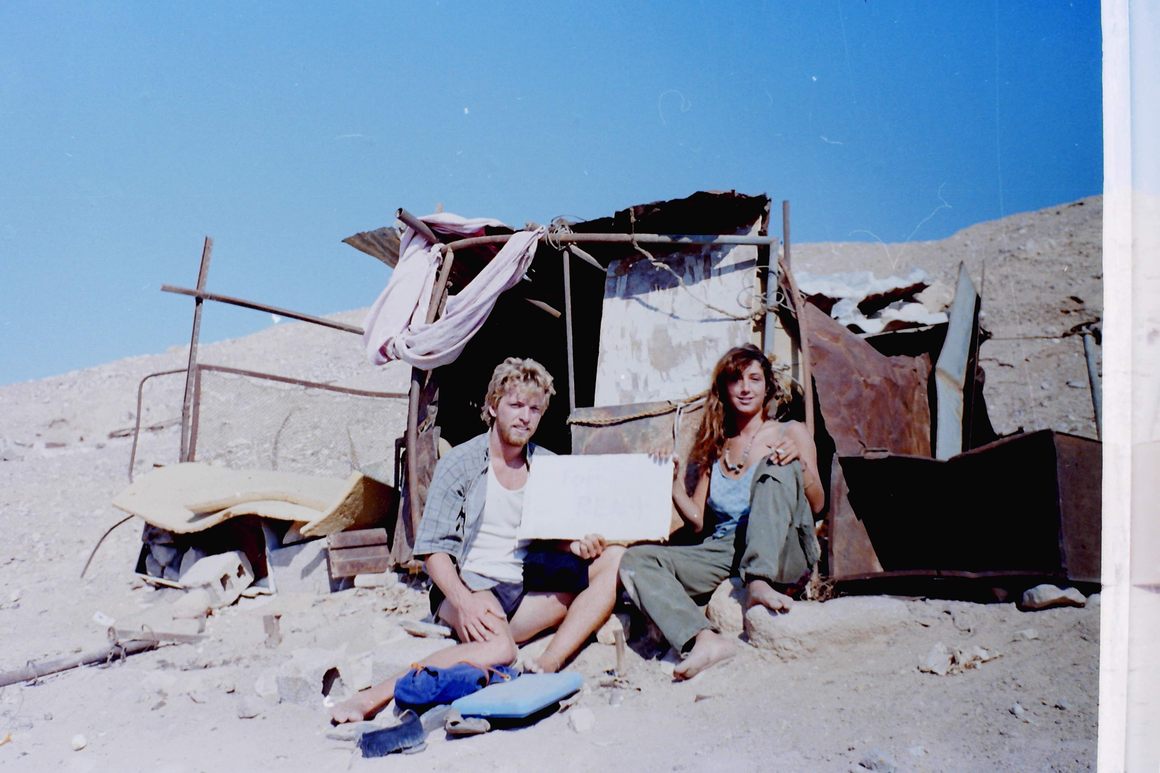
In the years since, that bus ride and solitary climb have stayed with me, eventually finding their way into my road-lit novel The Wayward Traveler, where this night at Masada marks one of the journey’s first true crossings into history.


