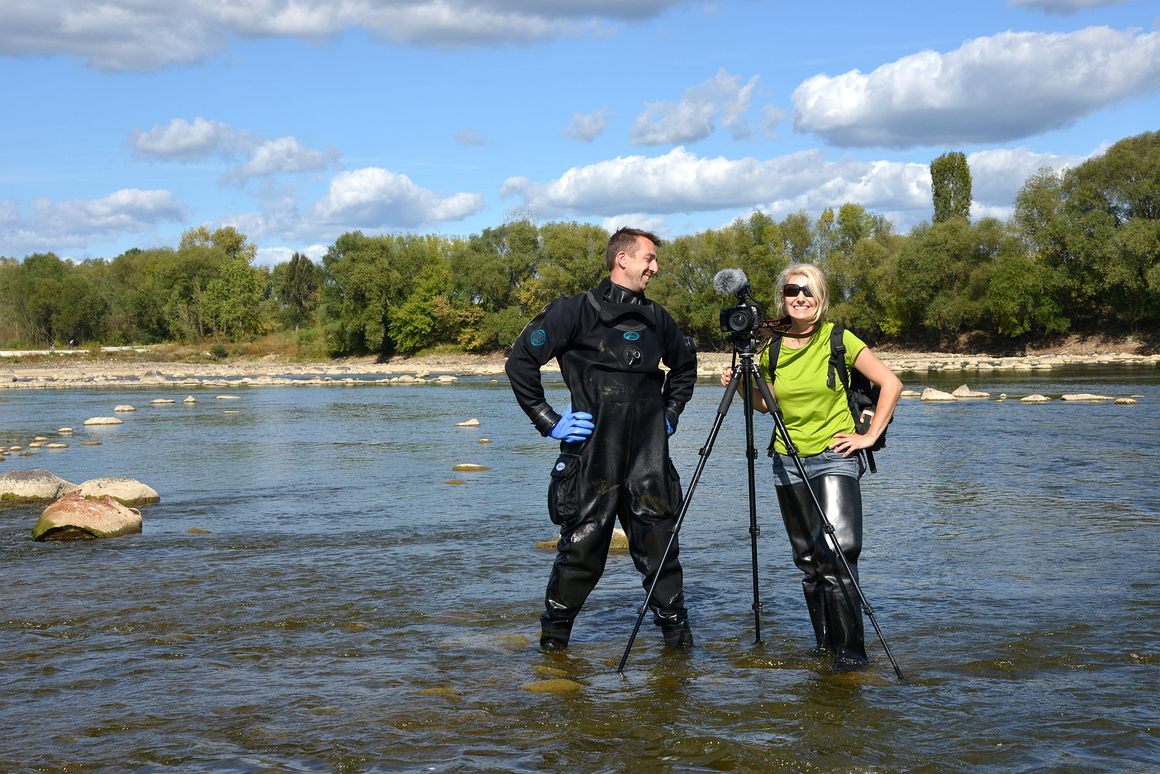
It was raining so hard that the recently dried-out riverbed of the Vistula had once again turned into a muddy swamp. Not a trace remained of the crowd of onlookers who had been watching our group’s work from the bank. Our group, which had numbered over a dozen people at its peak searching for missing artworks, had dwindled to just two in the rain: Hubert Kowalski and the author of this text. With the help of a massive excavator, we moved huge boulders from the riverbed as we combed through an area that we thought we knew like the back of our hands six, five, four, and three years ago.
But the river had deceived us. What we had thoroughly surveyed on the bottom of the Vistula one year looked completely different the following season after autumn rains, winter ice, and spring floods. Where the river had been several meters deep one year, the next year there was a shoal. Where we could wade in rubber boots one year, the next year, we were diving with scuba tanks.
In the pouring rain, Hubert and I combed through the area that had been previously surveyed with geophysical equipment. After looking at the density map, we dived into the muddy waters of the Vistula River. As we carefully excavated the mud, something flashed. It was a beautifully carved piece of marble over a meter long with a smooth finish. Despite having spent three and a half centuries in the water, Vistula sand, and silt, the artifact still gleamed with a polished surface.
By moving boulders weighing several hundred kilograms with an excavator, we gained access to new areas. We searched meter by meter by digging and flushing out the sand with firefighters’ pumps. The rain had softened the drying riverbed, turning it into a clay-filled swamp. The only way forward was to wade through it wearing scuba diving suits.
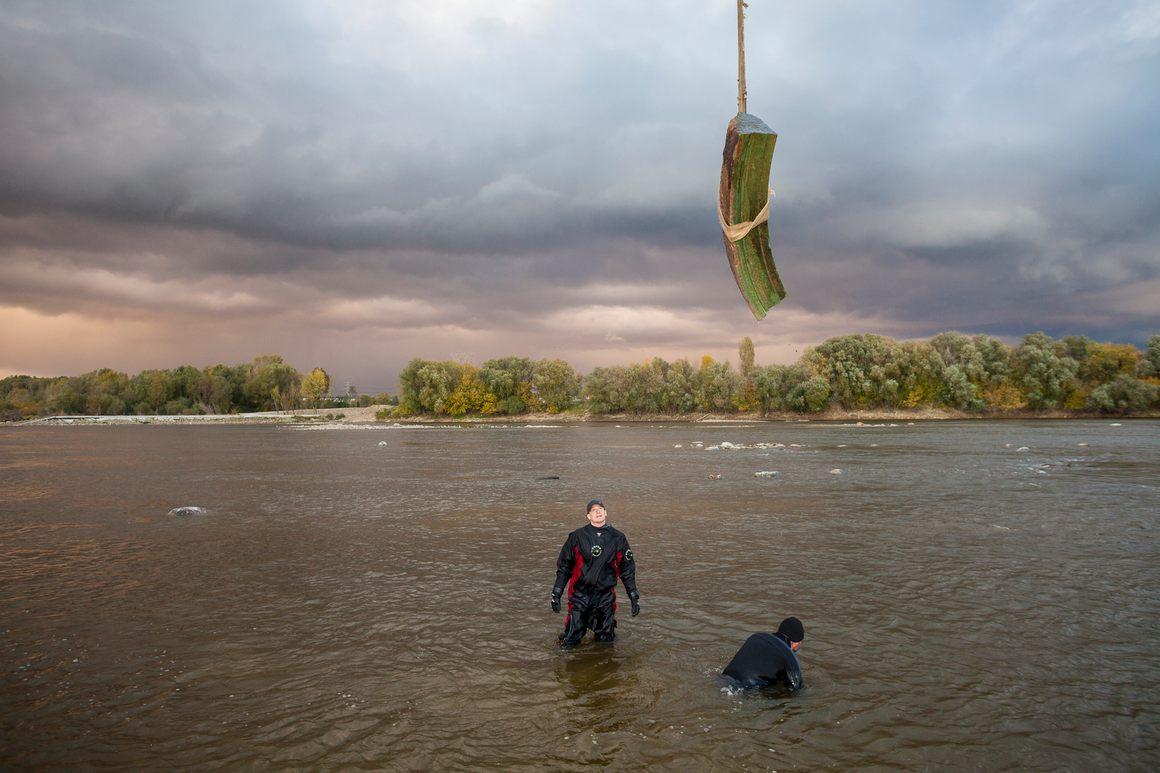
It was in that muddy swamp that we came across something with our hands that made our hearts race instantly. It was an object whose shape could not be mistaken for anything else: a massive 17th-century cannon! After securing the cannon underwater with special straps, we watched the crane lift the artifact out of the water. When we saw it for the first time, we began to cheer like little children.
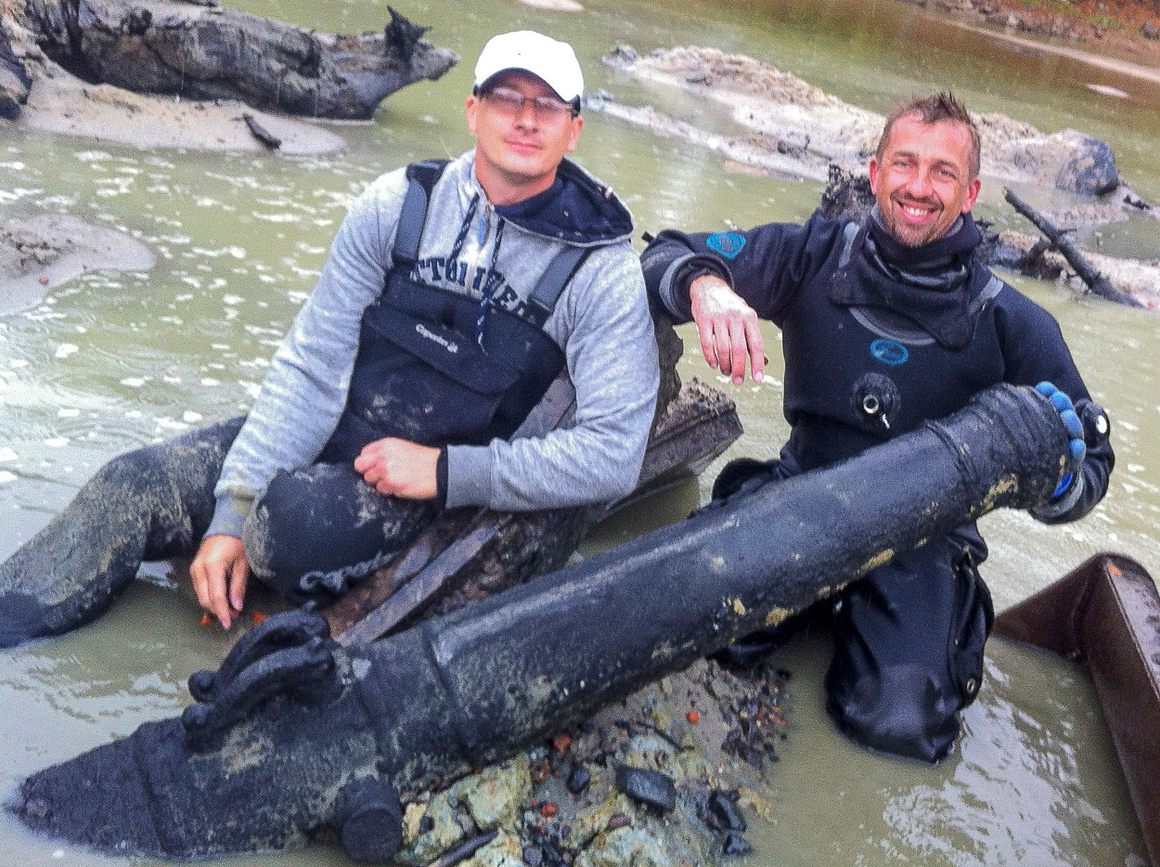
"I told you they'd be there!" Hubert Kowalski exclaimed.
"Six years! We’ve been searching for six years!" I shouted.
We were shouting so loudly that a bystander on the riverbank wanted to call an ambulance. He thought we were screaming for help. But we were celebrating!
The Golden Age of a Starving Empire
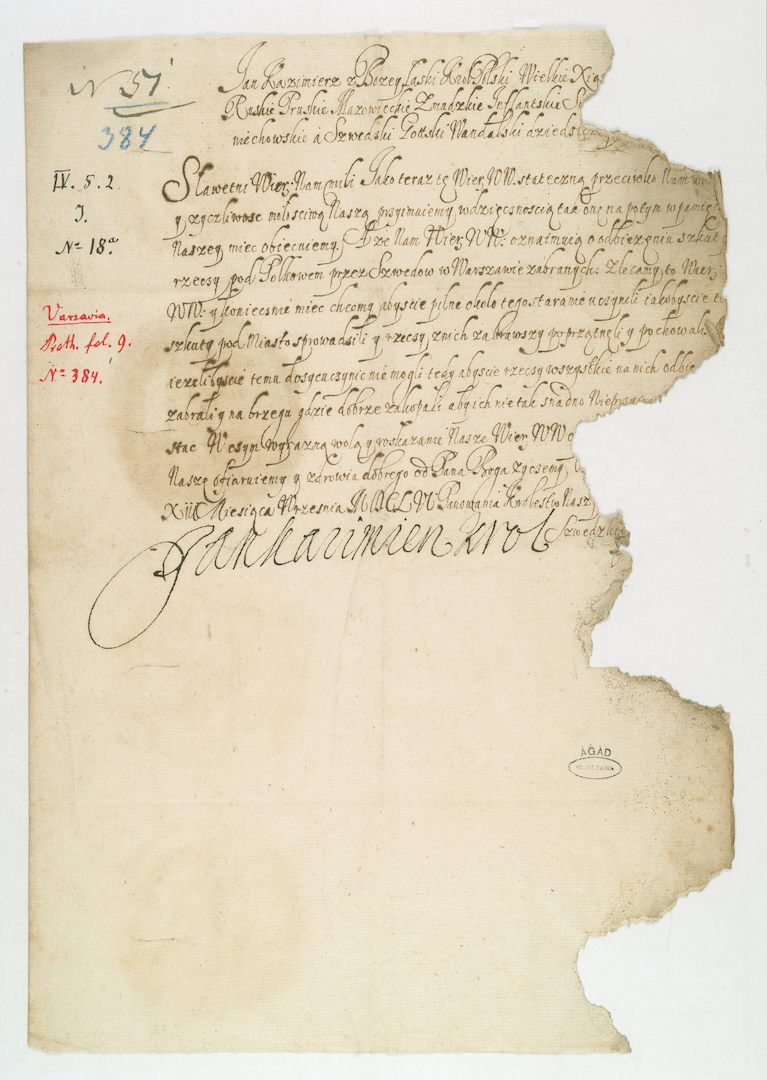
Our search for lost historical artifacts in the field began in 2009. Hubert's discovery of documents in the archives initially inspired us. Specifically, two half-burned letters from a Polish king.
Hubert Kowalski is a professor of archaeology who received his Ph.D. from the University of Warsaw. His area of interest is the reception of antique art in Renaissance Europe. I am a diver, an underwater explorer, and a film producer. We quickly realized that our skills complemented each other perfectly and that we could achieve something great together.
Hubert stumbled upon correspondence exchanged during the Second Northern War—commonly known in Poland as the Swedish Deluge—between the King of Poland, John II Casimir Vasa, and the mayor of Warsaw in the archives. Both men were concerned about the fate of the royal artifacts.
"During the Deluge, the Swedes stripped Poland of a vast number of valuable items. They looted libraries, valuables, church bells, clothing, and even furniture, bedding, and floor tiles from the residences of the magnates," Hubert Kowalski explains.
At that time, Sweden was not the country we know today—neutral, friendly, tolerant, and open. It was a backward backwater of Europe and a hungry empire that had decided to turn the Baltic Sea into its inland sea. The country sought to make a civilizational leap through plundering during the Thirty Years' War and century-long skirmishes with Poland, Russia, and Denmark. "To this day, the Swedes refer to the 17th century as the 'Golden Age,'" a friend of mine—an American archaeologist living in Scandinavia—told me.
According to scholars, no one before or since has plundered Poland as extensively as King Charles X Gustav’s Swedish subjects did from 1655 to 1660. Castles were reduced to rubble, including the entire Eagles’ Nest network of southern Polish strongholds, and plundered cities were depopulated. Only four towns resisted the Swedish armies among the major urban centers. In some areas, the population decline reached as high as 80 percent!
Warsaw suffered the most. It changed hands several times and was systematically plundered by the Swedes. For barely half a century, the city had been the capital of a wealthy country, made so by the grain trade. The city dazzled with the mansions of magnates, churches, and palaces. One by one, these architectural gems fell victim to Swedish Crown Field Marshal Karl Gustav Wrangel, who took great pleasure in overseeing the removal of everything of value.
Among the most magnificent of the looted residences was Villa Regia, the Warsaw palace of King John II Casimir.
Designed by Italian architects and adorned with imported marble, Villa Regia was one of the finest royal residences in Poland. Contemporary accounts describe its elegant courtyards, arcades, richly decorated interiors, and elaborate stonework, which reflected the ambitions of a European court looking westward toward Rome and Florence.
The palace was too valuable to destroy.
Instead, it was dismantled.
Columns were lowered from their bases. Marble portals were removed from the walls. Window frames, sculptures, fountains, and other decorative elements were carefully packed onto barges waiting along the Vistula River. The intention was clear. These were not chaotic acts of destruction, but rather an organized effort to transport an entire palace north to Sweden.
Somewhere along the way, however, the river intervened.
The archival record does not tell us exactly what happened. Perhaps the barges hit submerged obstacles. Or maybe they became overloaded. Or maybe the current caught them at precisely the wrong moment. Whatever the cause, at least part of the cargo disappeared beneath the water before the barges could leave Warsaw.
The Swedish army continued its march.
The river remained silent. For more than three hundred and fifty years.
From the letters, we learned that the king quickly replied to the mayor of Warsaw’s report by ordering an attempt to recover and secure the treasures.
Was this search successful? Were the royal marbles recovered from the water as early as the 17th century? We didn’t know when we began our search. We didn’t even know where to look because neither King John II Casimir nor the Warsaw authorities specified WHERE the barge sank.
Upon learning of Hubert’s findings, I immediately emailed him, expressing my enthusiasm with a simple, “LET’S DIG!”
An Eagle Without a Wing
As I would soon learn, Hubert is a modern-day archaeologist. He drives a sports car, dresses stylishly, and is open to extraordinary ideas. More importantly, we found that we were an ideal match in terms of skills, easily pairing his vast knowledge of archaeology and history with my experience in diving and underwater surveying. A mutual friend, Justyna Jasiewicz, soon joined us, and, over time, we assembled a small group of passionate researchers, including fellow filmmaker Konstanty Kulik and cinematographer Marzena Hmielewicz. Together, we decided to search for lost royal artifacts.
With the support of the University of Warsaw, the river police, the fire department, the Ministry of National Heritage and Culture, the National Heritage Institute, Warsaw City Hall, and municipal services, as well as researchers from two other universities, we organized an expedition that used various hydroacoustic methods, such as sonar, echo sounders, and a sub-bottom profiler, to attempt to see where "treasures" might lie on the bottom of the Vistula.
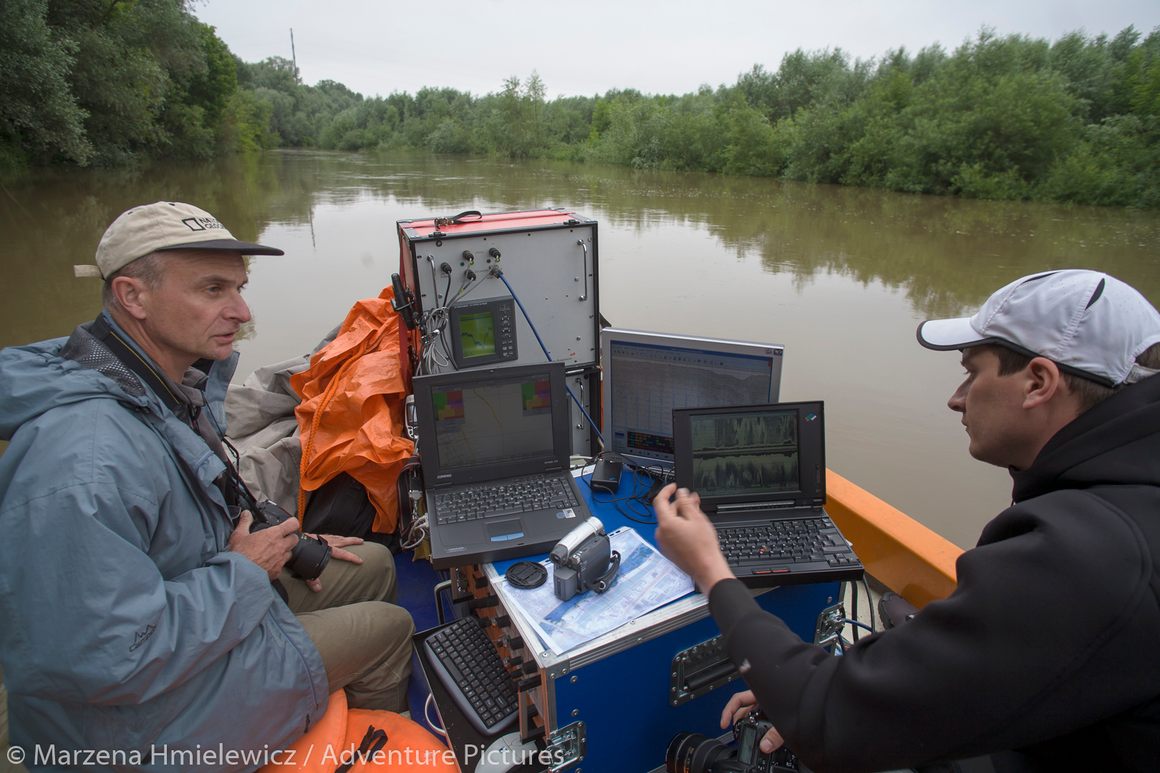
During the first two years of sailing the Vistula's waters, however, we found nothing but piles of natural, post-glacial river stones in the river. And tons of trash.
Then, Dr. Kowalski discovered another clue in the archives. It turned out that, in 1906, sand dredgers from Warsaw had stumbled upon fragments of the cargo carried on board the barge by chance. According to press reports from that time, the dredgers recovered a dolphin sculpture (part of a fountain), garden vases, and cannonballs. They attempted to retrieve an eagle sculpture as well, but its wing broke off and the artifact sank back into the current. Officials halted the search after just one day, and the wing was lost during World War II.
Unfortunately, like the king and the city administrator before them, the officials did not reveal the location of the treasure.
However, another document found by the archaeologist revealed that, 40 years after the sand miners' discovery and shortly after the liberation of Warsaw at the end of World War II, the son of one of the sand miners applied to the National Council in Warsaw for financial assistance. "In his application, he wrote that his father had recovered artifacts from the Vistula and that many more might remain underwater. To my great delight, he added that this had taken place 'near the Warsaw Citadel'!" Dr. Kowalski recounts.
The next day, we began diving nearby.
A River of Treasures
Diving to the bottom of the fast-flowing river was unlike any scuba diving experience I had in my decades of underwater exploration. You wear a harness on your chest so that you won’t be swept kilometers away right after jumping into the water. You don't wear fins because the current would tear them off your feet. You wear a full-face mask to protect yourself from the brown, smelly water. You wear an underwater communication device to stay in touch with the support crew on the surface. Oh, and you won't take any light because visibility is so poor—only a few centimeters—that you need to rely solely on your sense of touch underwater. But this sense can easily be deceived.
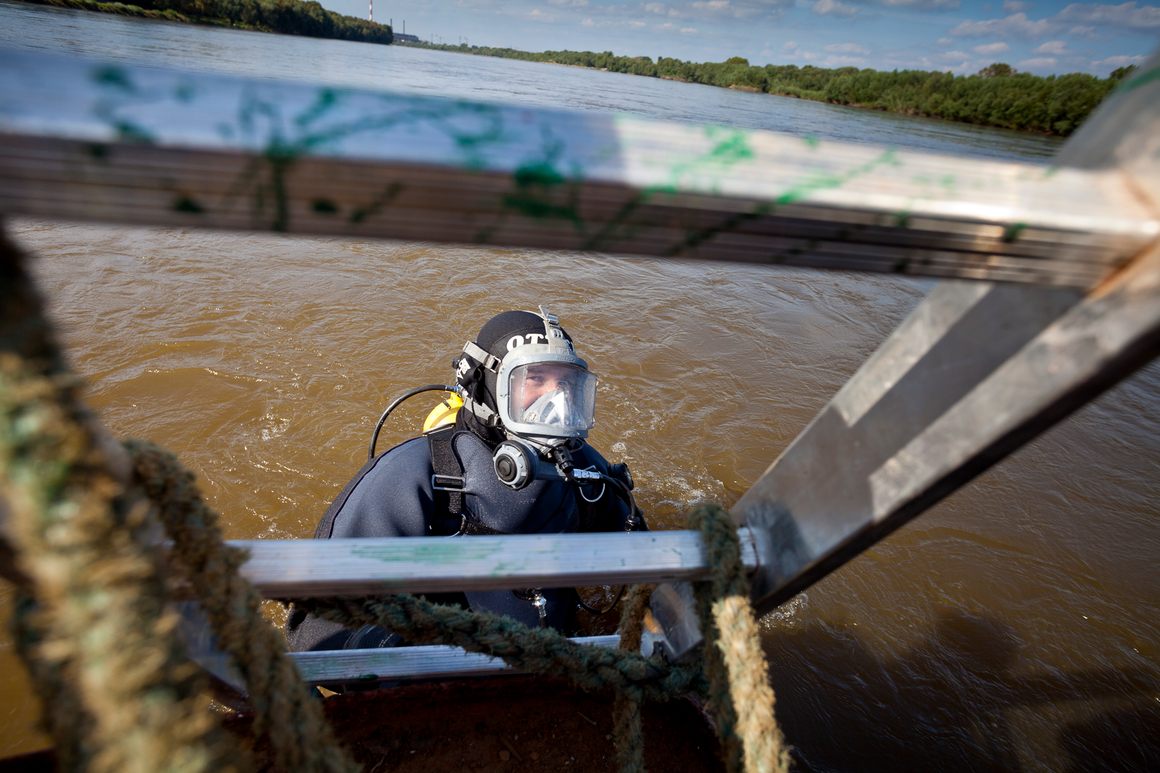
I once thought I had found the wing of the eagle sculpture, but it was just a huge oak log whose wood was broken in a way that resembled feathers under my fingers. Another diver was sure he had found a head! "You mean a body?" we asked, frightened, via the comms. "No! The sculpture! Chiseled. With a big nose! Like Chopin!" the diver shouted into his mask's mic, demanding that we pull the find to the surface with a floating crane. When we did, we saw just a boulder with a bump.
We found hundreds of ordinary boulders that season.
Things changed when we moved the diving platform closer to the Citadel. The water was shallow, but the current was stronger.
The first thing I touched was impossibly smooth.
At first, I assumed it was just another boulder polished by the current. The Vistula has spent thousands of years grinding stones against one another, and I knew that underwater, your fingers often perceive shapes that your eyes cannot confirm.
But this felt different.
I slowly moved my hand across the surface until it reached an edge that stopped me cold. It was perfectly straight. A few centimeters farther on, I found another edge that met the first one at a precise right angle. I traced the outline again, hoping I had imagined it.
I hadn't.
Rivers are many things. Architects are not.
I called the others over.
Within minutes, we were kneeling in the shallow water, digging with our hands as the current patiently filled every hole we made. The water was cold enough to numb our fingers, but none of us paid much attention. Little by little, the object began to emerge from beneath the compacted sand and gravel that had hidden it for centuries.
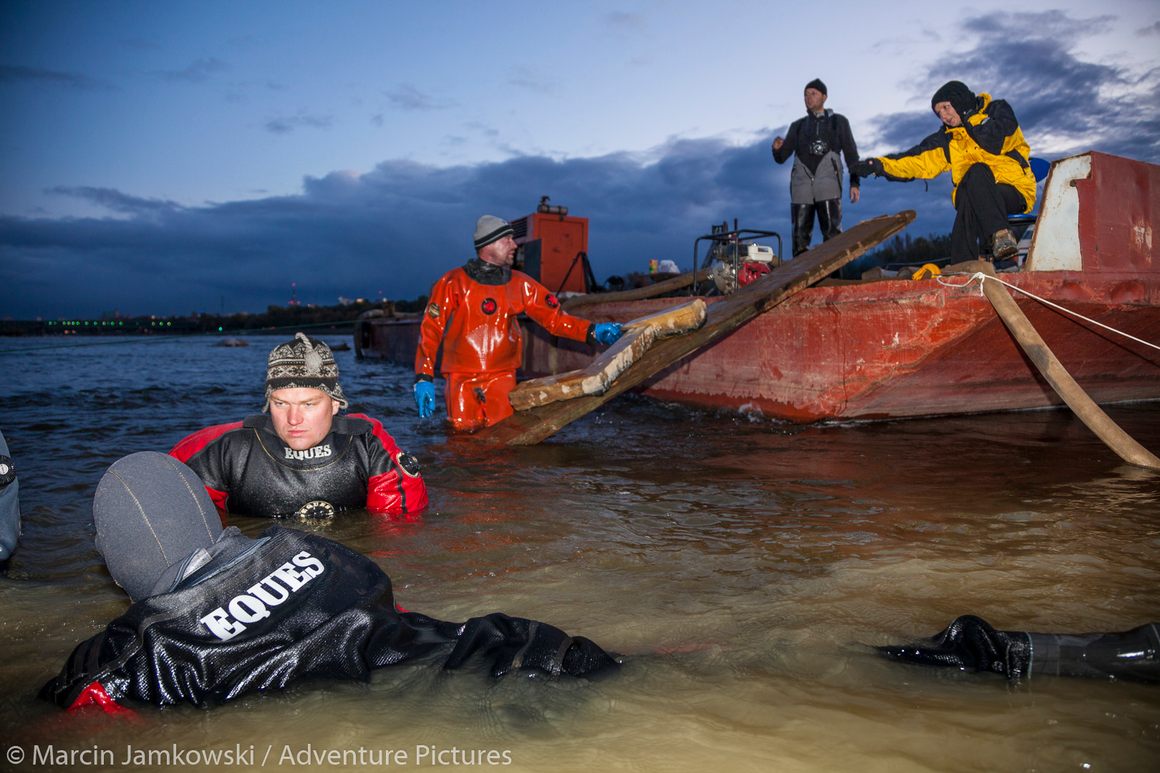
When we finally lifted it into the light with the crane, dark water streamed down its sides. Beneath a layer of algae and river silt, we found a block of polished black marble, unlike anything that should have been in the bed of Poland's largest river.
For a long moment, nobody spoke.
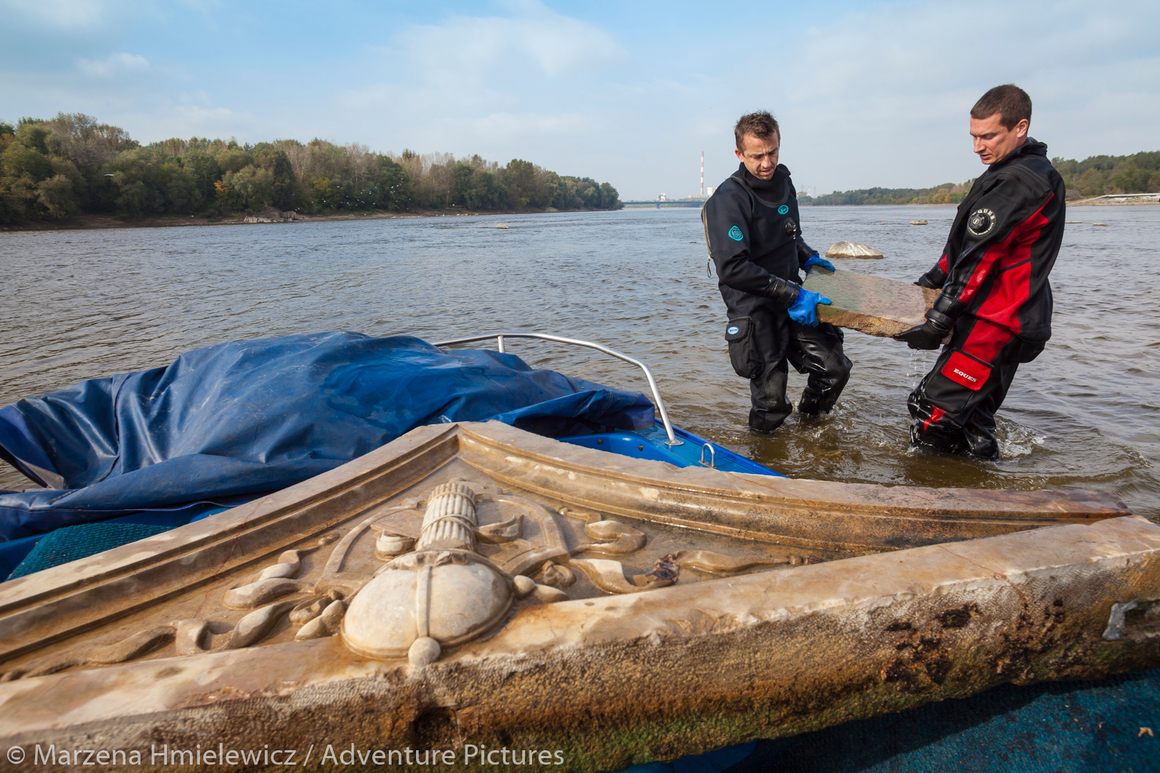
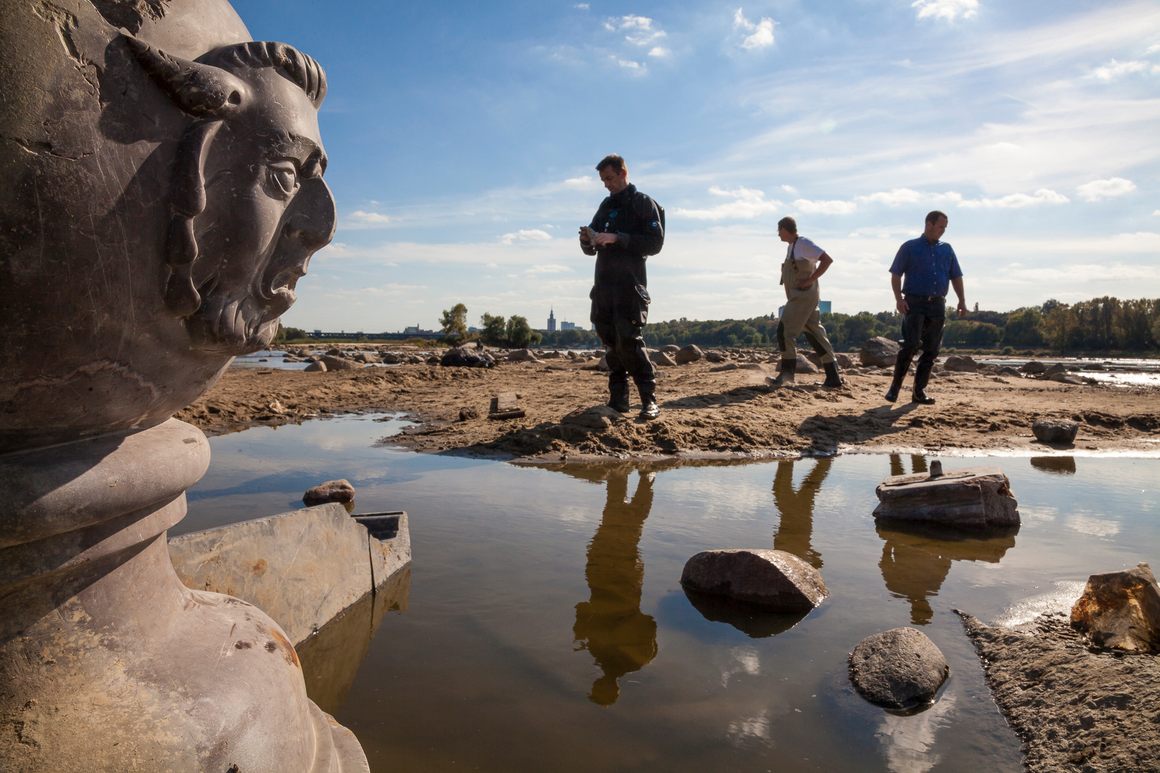
The capricious Vistula, which had previously chased us away by sending a flood wave crashing against our boat, finally smiled upon us. While diving in the current and searching the nearby shallows, we stumbled upon 99 artifacts—a total of six metric tons (!) of 17th-century masterpieces made of marble and alabaster. Documenting the finds, taking measurements, sketching, and describing the site took a week. Finally, with the help of divers and a floating crane, we lifted all of these carved "treasures" from the riverbed. We saw stone arches, marble door frames, windowsills, lintels, dozens of floor tiles, and decorative elements for the first time. They were smooth with visible joints secured by lead pins and covered with a layer of Vistula algae and silt. They had all been lying in the water for 350 years!
A two-meter-long, triangular, marble fragment of a decorative arcade (known as an "interlintel") was an absolute highlight. Once lifted, we discovered that it bore a carving of a huge sheaf of wheat, which is the royal coat of arms of the Vasa dynasty!
The marble comes from Polish quarries in Chęciny, Dębnik, and Zygmuntówka. The method of processing them points to the early 17th century. Some of the smaller items are imports, such as alabaster artifacts from the Netherlands," Dr. Hubert Kowalski summarized the findings.
If there is a goddess of the Vistula, she must have been pleased with our work. The following year, the water level dropped to a point not seen since records began about 200 years ago. We could see places with the naked eye that we had previously known only from sonar records. Places that had been 3–5 meters underwater during the surveys were now barely waist-deep.
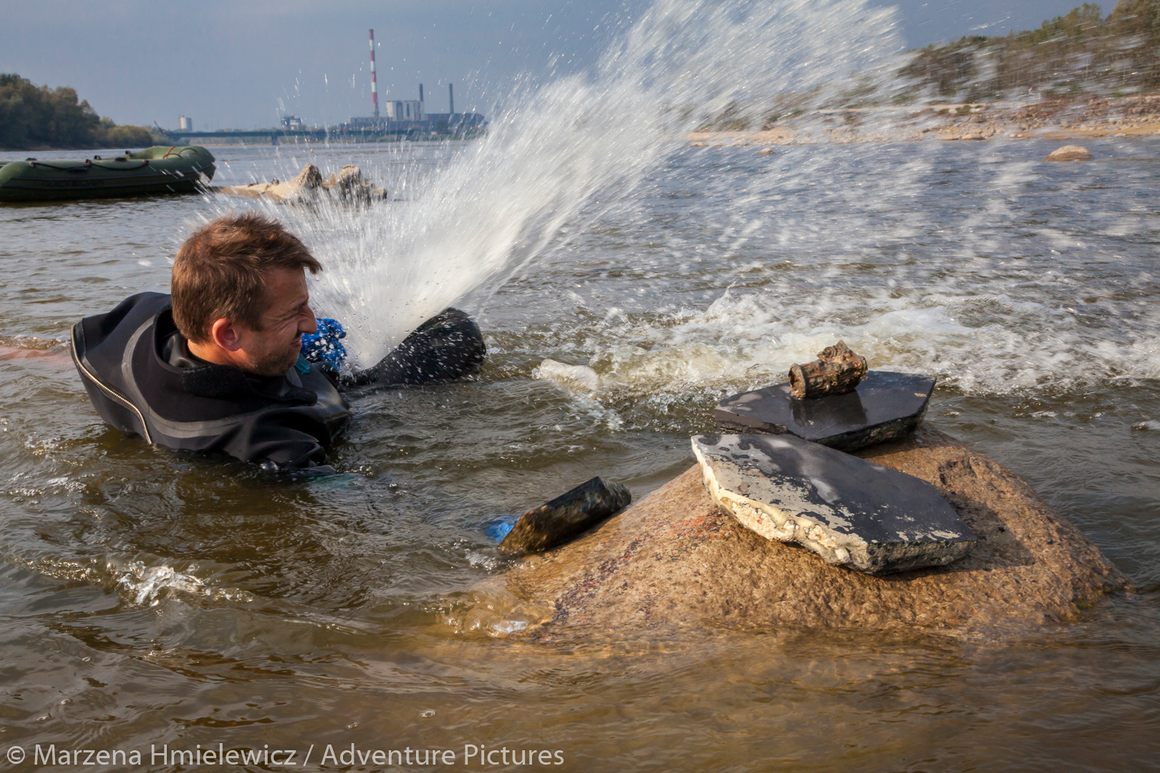
We quickly found fragments of a wooden wreck, including frames, pieces of the bottom plating, and planks from the sides. All of these pieces were joined with wooden pegs and large, irregular square rivets with notches for threading ropes to stabilize the structure. However, it remains unknown whether this was the wreck of "our" barge, which carried the royal treasures.
A hundred meters away, we stumbled upon a treasure trove of marble fragments—pieces of a facade, garden arcade, floors, and windowsills, as well as a 700-kilogram ornate lintel and 30 cannonballs. "This is a special find because the sand miners had mentioned the cannonballs." "We're in the right place!" Dr. Hubert Kowalski exclaimed excitedly.
We had to stop working several times when we saw more modern munitions—howitzer and cannon shells, grenades, and mortar rounds from World War II. The police would cordon off the area and call in the bomb squad.
Over the following years, our worlds gradually began to overlap. Hubert learned to dive so that he could experience the sites beneath the surface rather than just imagine them from our reports. I found myself spending more and more time with archaeological reports, historical maps, and excavation records. I discovered that understanding the objects we recovered was just as fascinating as finding them. Somewhere along the way, we stopped thinking of ourselves as an archaeologist and a diver. We had become explorers, working in two disciplines simultaneously.
Lost and Found Department
People often think of rivers as places where things are lost forever.
The Vistula, however, has taught me otherwise.
It rarely gives anything away. Instead, it buries things. Each time it floods, the riverbed is rearranged, with old channels being covered by fresh layers of sand and others being uncovered that have remained hidden for generations. Barges disappear beneath shifting banks. Timber becomes embedded in gravel. Cannons vanish, only to reappear decades later after an unusually dry summer. The river constantly rewrites its own landscape, preserving fragments of history almost by accident.
For underwater archaeologists, this makes the Vistula endlessly frustrating.
For explorers, however, it is irresistible.
We returned to the river every year for over a decade.
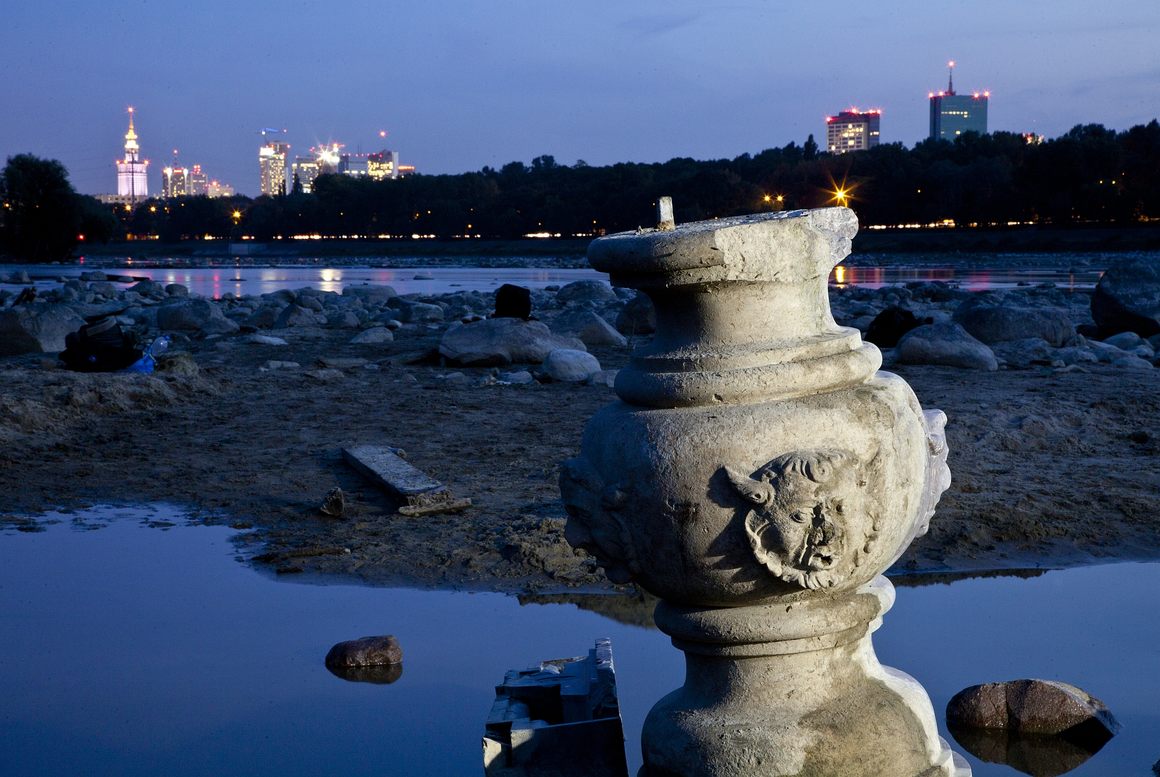
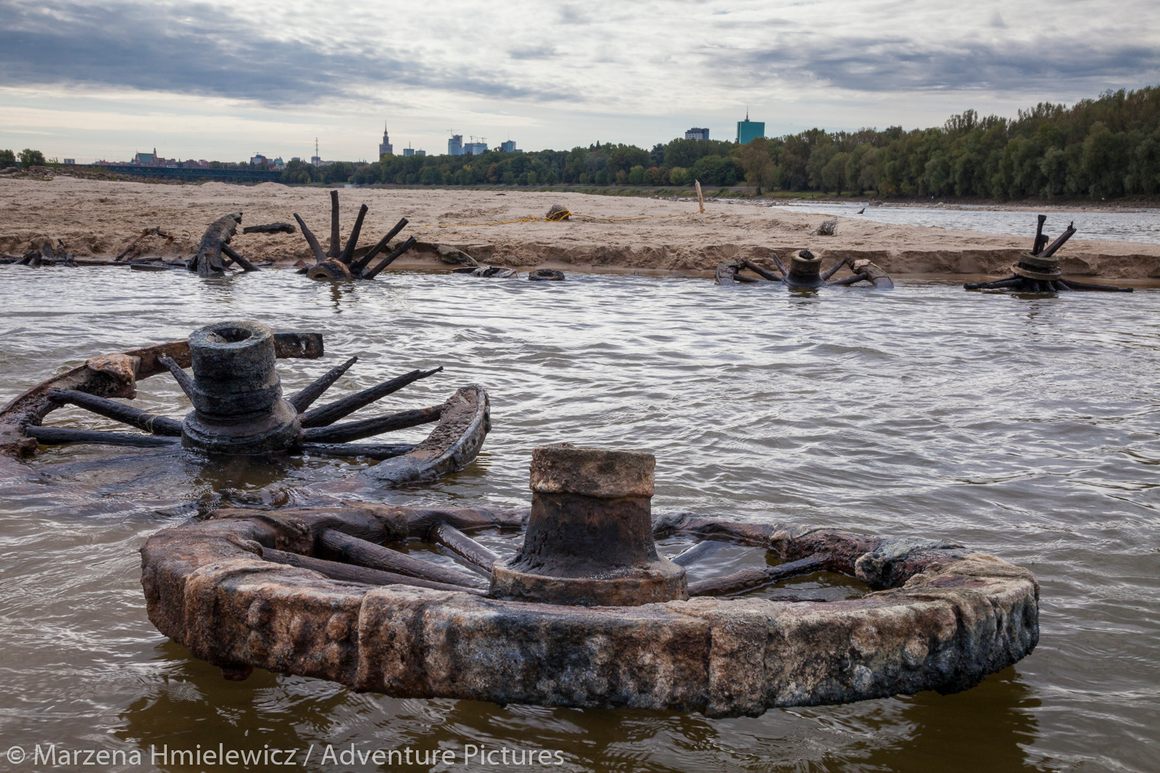
Most of the objects found during that time were simply beautiful. A Mannerist marble garden fountain with four carved faces spouting water caused quite a sensation. After spending 350 years underwater and buried in muddy sand, the faces looked brand new! Right next to it was a piece of a fireplace or a portrait frame made of black marble imported from the Netherlands that was "decorated" with 17th-century graffiti featuring names and dates. Nearby, we unearthed two-meter-tall heraldic cartouches, sections of a marble balustrade, fragments of columns, carved marble brackets for garden benches, stair fragments, and 250 marble floor tiles from the castle, as well as basins for garden fountains. The biggest surprise for all of us, however, was a dozen or so huge wooden cannon wheels. Some were preserved in excellent condition, while others were rotten and crumbling. Lying nearby were also many wagon parts, such as drawbars, axles, and metal fasteners. We quickly reached another six metric tons of royal marble.
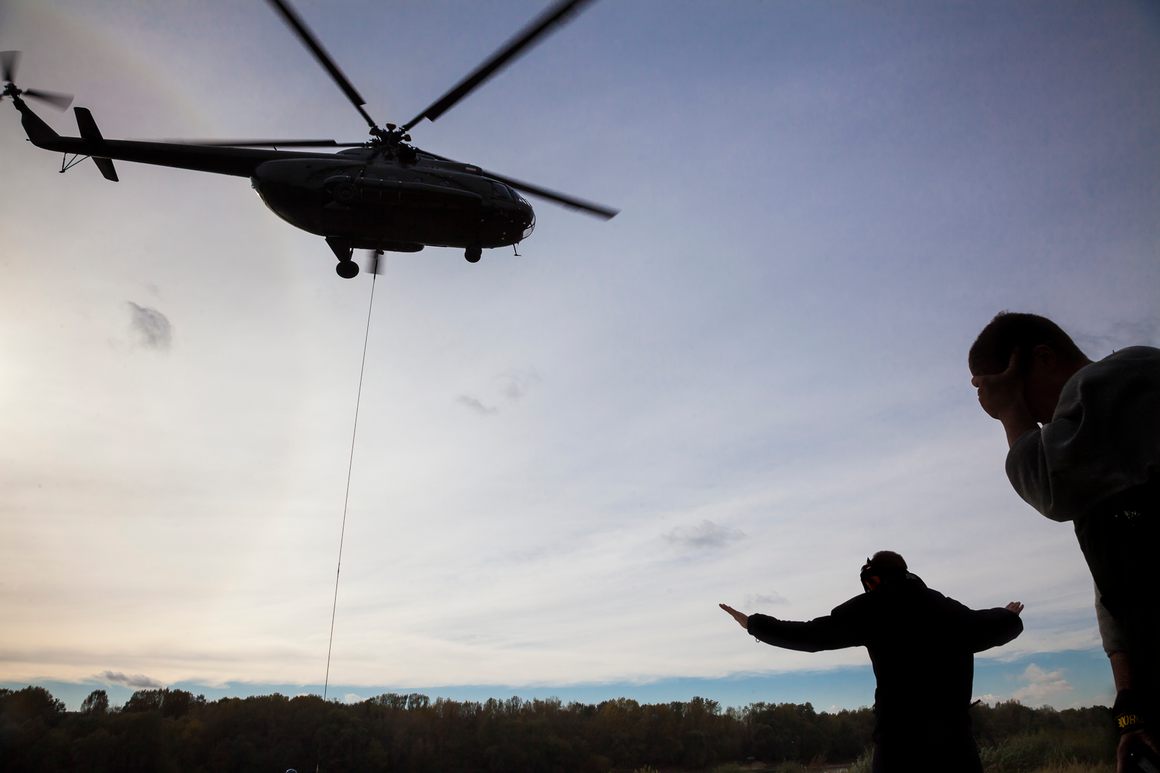
Some were so heavy that we had to call in a special favor and use a police helicopter to lift them!
I have to admit that, at the time, I was convinced we had uncovered everything. I thought that nothing else could be hidden at that spot on the bottom of the Vistula River. How naive I was! It only took two years, the use of two new geophysical methods, one major flood, and one colder winter, during which the ice carved into the riverbed and shifted the boulders, for more artifacts to "spring up" from the sand of the Vistula this year!
The Vistula welcomed us with open arms, dropping another eight centimeters below the previous record to reach 44 cm. We made the most of it, also breaking a record. Over the course of a month, we excavated eight more metric tons of marble. We were left breathless when we unearthed four stunning, two-meter-tall obelisks with magnificent bases. Each of these bases rests on four marble spheres with beautiful, dense grain patterns that resemble wood. We also found several arches weighing between one hundred and two hundred kilograms. We also found column capitals and bases, a corbel with carved medallions that supported the loggia, wooden wheels, two suits of armor, a wooden cardoon (a type of ancient grenade), portrait frames, more cannonballs, and decorated lintels.
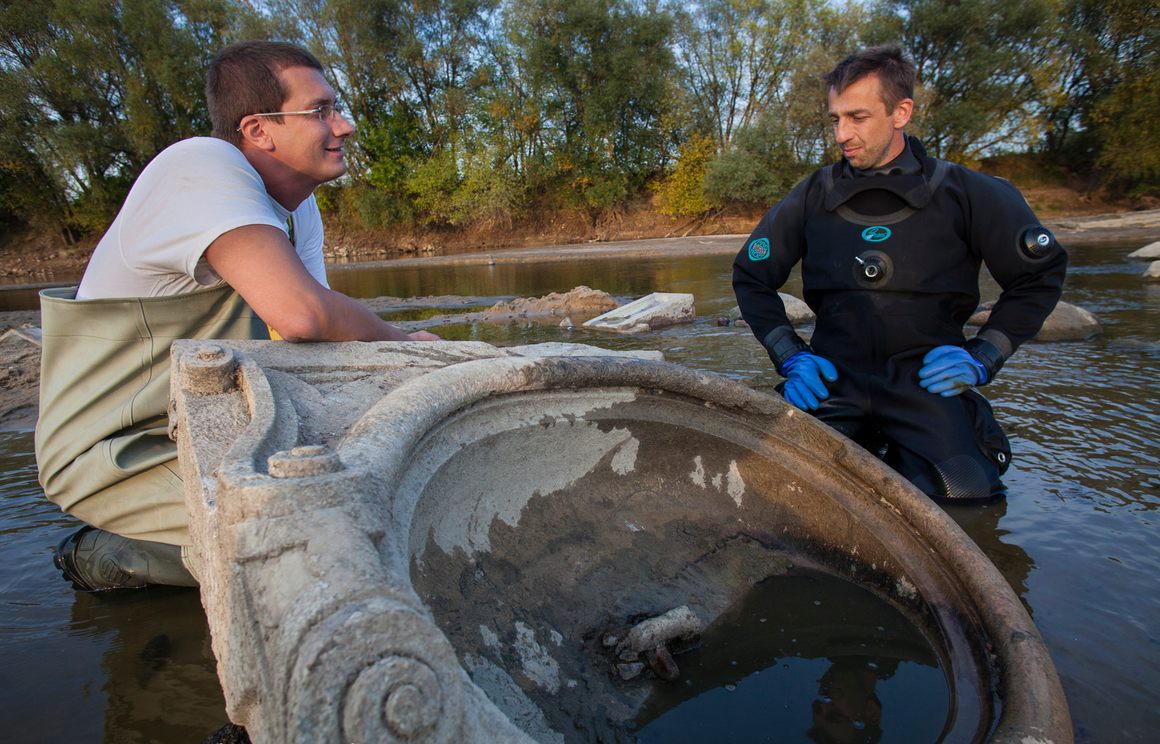
But the real highlight was the cannons. Two of them! We unearthed them that rainy morning from beneath several heavy marble slabs. They were one meter below the riverbed. Both cannons clearly belonged to someone of great importance. Handles shaped like two carved dolphins leaping through the waves adorned their upper parts. Their owner was most likely King John II Casimir Vasa. Much to the surprise of experts from the Polish Army Museum who came to examine them, the lead plates covering the ignition hole, where the fuse was inserted, had also been preserved.
"I told you they’d be there! If they were transporting cannonballs, there had to be cannons, too!" Hubert exclaimed triumphantly.
Putting Together the Puzzle Pieces
Ever since the first marble bearing the Vasa coat of arms surfaced in the Vistula River, Professor Kowalski and his colleagues have been trying to determine which of Warsaw’s residences these artifacts originated from. Initially, the balance of evidence favored the Royal Castle. However, Hubert now believes that they are more likely to have come from the King’s Palace, Villa Regia. Today, the palace houses the rector’s office at the University of Warsaw.
In the 17th century, however, it was known as Villa Regia and served as the king’s private residence. Due to its elegant surroundings, it was also sometimes called the Garden Palace. John Casimir II Vasa—who, contrary to flattering literary descriptions, was rather reserved and shy—gladly sought refuge there from the hustle and bustle of official life and the noisy Parliament, which was seated at the Royal Castle. It was there that he invited Italian architects to design his beautiful private residence and garden. The fountains we discovered most likely originated from these royal gardens. The numerous exquisite marble pieces may be fragments of an entrance staircase, of which no trace remains today, or of a portal or grand entrance gate. Unfortunately, no detailed sketches of the Kazimierzowski Palace from the time of the Deluge have survived.
Thus, researchers must piece together a massive puzzle!
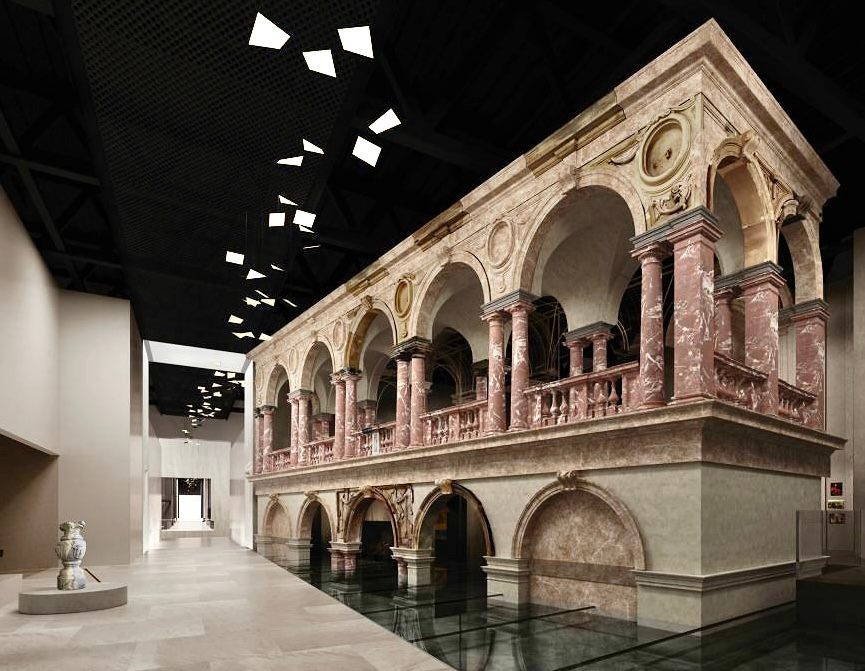
All the artifacts have undergone extensive conservation work. They will be put on display in 2027 at the Museum of Polish History, which is currently under construction at the Citadel, just a few hundred meters from where we found them.
In the meantime, we will conduct further Vistula explorations using sonar and divers. After all, we still don't have the eagle!
Marcin Jamkowski
Science documentary producer, director and expedition storyteller. Award-winning documentary producer and director, former Editor-in-Chief of National Geographic Poland with experience in producing international science, history and exploration stories.
Marcin directed feature documentaries, led filming expeditions, collaborated with scientists on six continents, and produced films for UNESCO, universities and broadcasters. His work is to create documentaries from real scientific expeditions that connect discovery with cinematic storytelling, making complex research accessible to international audiences.
He runs Adventure Pictures film production company with Marzena Hmielewicz and serves second term as vice chairman and treasurer of The Explorers Club Polish Chapter