About
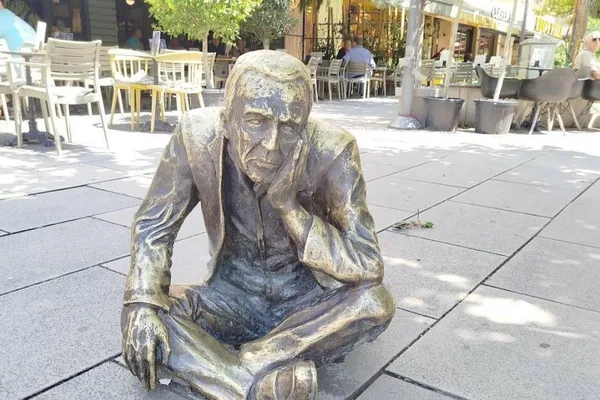
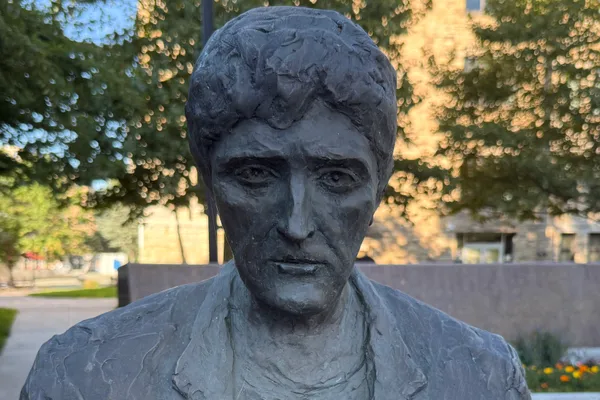
Back Bay is one of the busiest train stations in Boston. Serving the commuter rail, the orange line connecting to North Station, and a stop for Amtrak, there is no shortage of foot traffic. Within the waiting area for Amtrak departures, there is a large statue of a man in a sitting pose with informational guides posted nearby. Most commuters probably don’t notice it, but the man depicted played a significant role in shaping worker’s rights and civil rights during the 20th century.
Asa Philip Randolph was born in Crescent City, Florida on April 15, 1889. His family moved to Jacksonville, Florida in 1891 and growing up in the South, Randolph witnessed Jim Crow firsthand and learned from his parents the importance of education, self-defense, character, and conduct. He attended the Cookman Institute in East Jacksonville and graduated as the valedictorian for the class of 1907. Randolph read W.E.B. Du Bois’ book The Souls of Black Folk, which convinced him to become a fighter for social equality. However, with all jobs except manual labor off limits for African Americans, Randolph moved to New York City in 1911.
Shortly after arriving in New York, Randolph helped organize the Shakespearean Society in Harlem and became involved in many socialist political movements. In 1917, he and fellow activist Chandler Owen founded the magazine The Messenger which advocated against lynching, US participation in World War I, fighting for a more integrated society, and for Black Americans to join unions. In the early 1920s, Randolph ran for local government offices on the socialist platform but was unsuccessful. In 1925, he founded the Brotherhood of Sleeping Car Porters, the first labor union led by Black Americans to receive a charter in the American Federation of Labor. Randolph campaigned extensively for workers of the Pullman Company, a manufacturer of railroad cars and a major employer of African Americans at the time. After the election of President Franklin D. Roosevelt, the Pullman Company began to negotiate with the Brotherhood and settled on a contract in 1937 which guaranteed higher wages, overtime pay, and a shorter workweek.
In addition to labor unions, Randolph also worked extensively for civil rights in the United States. He worked closely with President Roosevelt during the Second World War to address racial discrimination in the war industry and to ensure Black Americans had the equal opportunity to serve their country. Roosevelt issued Executive Order 8802 in June 1941 which prohibited discrimination in the defense industry and the government backed Black workers during the Philadelphia Transit Strike in 1944. After the war, Randolph continued to work with the next administration and in 1948, President Harry Truman signed Executive Order 9981 which abolished segregation in the US military. Once the Civil Rights Movement began in the 1950s, Randolph was a key figure and formed an important alliance with Martin Luther King Jr. in 1957. On August 28, 1963, Randolph was one of the leaders during the March on Washington where King delivered his famous “I Have a Dream” speech which had a significant impact on the passing of the Civil Rights Act in 1964 and the Voting Rights Act in 1965.
On May 16, 1979, Randolph passed away inside his Manhattan apartment. On October 8, 1988, a group of retired Pullman car porters and dining car waiters gathered at Back Bay station to unveil a statue dedicated to Randolph who worked so hard on their behalf decades ago. The sculpture is located within a waiting area with many plaques and informational signs posted. If you would like to learn more about Randolph, his life, and his contributions, it’s definitely worth taking a look next time you’re at Back Bay station.
Community Contributors

Added By
Published
January 6, 2026
Sources
- https://susanives.com/2020/01/20/mondays-monument-a-philip-randolph-statue-washington-dc/
- https://www.cryan.com/daily/20200130.jsp
- https://www.libdemvoice.org/prominent-boston-ma-statue-of-aphilip-randolph-2-in-a-journey-through-african-american-history-55354.html
- https://newenglandhistoricalsociety.com/a-philip-randolph-leads-sleeping-car-porters-out-of-slavery/
- https://scholarworks.umb.edu/trotter_review/vol6/iss2/7/
- https://www.bwht.org/explore/back-bay-station-and-neighborhood/
- https://culturenow.org/site/605ff8e9-0819-4da6-823e-62ed43f727b2
- https://kinginstitute.stanford.edu/randolph-philip
- https://www.biography.com/activists/a-philip-randolph
- https://www.nps.gov/people/a-philip-randolph.htm
- https://guides.loc.gov/this-month-in-business-history/april/a-philip-randolph-born
- https://www.britannica.com/biography/A-Philip-Randolph
- https://www.history.com/articles/a-philip-randolph
- https://aflcio.org/about/history/labor-history-people/asa-philip-randolph