About
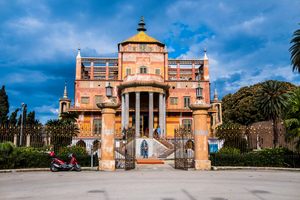
The Albergo della Povere (also known as Reale Albergo dei Poveri) is a fascinating monumental building, located in Palermo, just outside the city's historic centre. It can be found in the initial length of Corso Calatafimi, not far from both Porta Nuova ( https://www.atlasobscura.com/places/porta-nuova) and the monumental complex of the Royal Palace (Palazzo di Normanni) (https://www.theworldofsicily.com/en/sights/sights-of-palermo/palace-of-the-normans/) with its historic observatory. The site has a long history of occupation, during construction of the albergo sepulchres from the Punic and Pheonician periods were discovered on site.
In the latter years of its operations as an albergo dei poveri or alms-house it was managed by the Church of the Holy Trinity but management changed several times during its active life starting from its inception under Ferdinando Francesco Gravina, Prince of Palagonia. An institute dedicated to the history of the Prince's works now runs the building.
This vast and ornate, eighteenth-century designed building, was completed in 1829 as a refuge for disabled orphans. It was later converted to a women only hostal. It became a sort of workhouse slightly later when weaving equipment and a pasta factory was installed. For such purposes the building is, amazingly, palatial. The pasta factory and the spinning, hosiery, cotton and weaving factories were on the ground floor. Finally, on the top floor there were the rooms of the "workers".
Its long and impressive façade looks along the northern side of Corso Calatafimi where there is an imposing access portal. Above the door is a marble plaque which bears the shield with the arms of the House of Bourbon of the Two Sicilies. This can be clearly seen just below the balcony on the main portal façade. Once through the portal, a short staircase leads to the splendid central courtyard which is dominated by the majestic late Baroque façade of the complex's own place of worship, church of Maria Santissima della Purificazione (directly opposite the entrance). The internal decoration is amazing given the purpose of the complex. The church building is flanked by two bell towers. On the other three sides is a portico with round arches supported by Doric marble columns.
In the centre of the courtyard is the nineteenth-century monument dedicated to Francesco Paolo Gravina, who dedicated his life to helping the poor.
Two identical courtyards flank the central one on the sides, currently only the one on the right is accessible. Here, around the central garden with fountain and a huge banana tree, there is another amazing portico with Ionic columns. Returning to the central courtyard there are two monumental staircases on the sides of the church. These lead to the upper floors, the one on the left which allows you to see the impressive Crucifix on the landing.
Know Before You Go
Part of the complex is home to regional offices, part is home to the Carabinieri and part is only used for impromptu events such as temporary art exhibitions. However, during office opening hours the courtyards are accessible
Community Contributors

Added By
Published
July 27, 2018