About
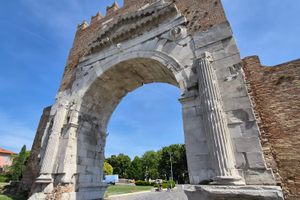
The construction of the Anfiteatro Romano in Ariminum (modern-day Rimini) was ordered by Emperor Hadrian. The building dates back to the 2 AD. Archaeologists have been able to date the amphitheatre to his reign because of a coin portraying him found within the walls.
Archaeologists have suggested that the amphitheatre was constructed with the aim of improving public approval for the emperor and lighten social tension by giving the population moments of collective distraction.
The amphitheatre was constructed on the edge of Ariminum, near the city's port. Its location was also easily accessible by road, facilitating visitors reaching it by land.
The Roman Amphitheatre is an oval shape with an arena measuring 76.40m by 47.40m. It is a concrete structure clad with bricks, constructed with two rows of 60 arches with a height of more than 15 m.
It was able to accommodate 10,000 to 12,000 spectators, not counting those who could be seated on the wooden balconies that were part of the original structure, making it only slightly smaller than the famous Colosseum in Rome.
After not much more than a century of use, the arena stopped holding gladiators and the structure became incorporated into the walls.
The ruined remains of the amphitheatre in Rimini are considered one of the most imposing in the region, as well as being the only one partially surviving in Emilia-Romagna!
Know Before You Go
It is possible to visit the ruins on request by contacting the City Museum, which organizes guided tours for schools and tourist groups.
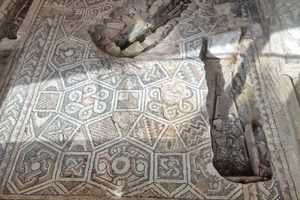
Some of the remains are on show in the archaeological section of the City Museum.
Community Contributors

Added By
Published
August 7, 2026