About
Before the 1850s travel by boat up the Amazon river, against the current, was nearly impossible, but with the arrival of steamboats new industries became possible. The most lucrative of these was the rubber trade, and from 1880-1912 the Amazon was flooded with adventurers looking to make their fortunes.
Steamboats like the Ayapua were the lifeline of this boom. They functioned as cargo boats, passenger liners, naval vessels, hotels, brothels, and everything in between. The Ayapua itself was built in 1906 in Hamburg, Germany, for the express purpose of carrying up to $2,000,000 worth of rubber per load in today’s money from the Peruvian Amazon to Europe and the United States.
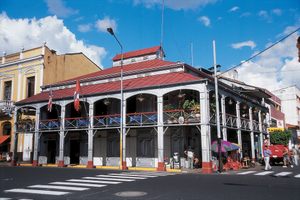
The Amazonian rubber boom, however, was doomed almost before it began. After the British managed to smuggle a load of rubber seeds to their Asian colonies the price of rubber plummeted. Reports of the brutal living conditions and wholesale slaughter of the indigenous rubber tappers also started to reach Europe and Lima, despite the propagandising of the Rubber Barons, and by 1912 most of the adventurers and speculators had fled Iquitos, leaving nothing but mansions, trauma, and steamboats.
Know Before You Go
The museum is open from 9am to 6pm every day except Wednesday, and entry costs 10 soles as of 2026. It is in the city center of Iquitos and has air conditioning. As well as period furniture and antiques the museum also contains an original 16th century map of the Amazon, conquistador sword, and an original copy of the 17th century Comentarios Reales.
Community Contributors

Added By
Published
February 6, 2026