About
Burgh Castle is part of a series of forts built by the Romans in the 3rd century AD to protect the southeastern coast of Britain from Saxon attacks. It was one of nine forts along this coastline and was originally known as Gariannonum.
The main purpose of Burgh Castle was to house soldiers who would defend against attacks from the sea. At its peak, the fort could accommodate about 500 troops. The soldiers here were likely part of the Numerus, auxiliary forces focused on guarding Britain’s coastline.
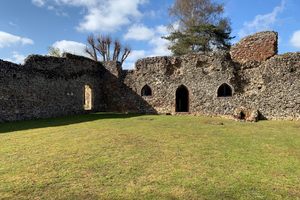
One of the most impressive features is its Roman walls, which have survived remarkably well over time. Three of the four walls are still standing, reaching up to 4 meters high in some areas and stretching around 205 meters long. These walls were constructed using flint and Roman bricks in a technique called opus mixtum, which alternates layers of stone and brick. This method not only strengthened the fort but also gave the walls a unique look that can still be seen today.
The fort's walls were reinforced with six towers positioned along its edges. These semi-circular towers would have held weapons like ballistae, which were used to shoot stones at attackers. While these towers are mostly in ruins now, the outlines of where they once stood can still be seen, providing a glimpse of the fort's original defensive strength.
It sits on a natural hill that overlooks the Norfolk Broads, giving it stunning views of the marshland and river below. The Romans could easily spot approaching ships from this vantage point.
After the Romans left Britain in the early 5th century, Burgh Castle continued to be used for local defense. It is thought that the Anglo-Saxons used it as a settlement and possibly even as a religious site. Some historians believe that Saint Fursey, an Irish missionary, may have established a monastery there in the 7th century, though this is still debated.
As time went on, especially during the medieval period, the fort’s importance for defense declined, and it gradually fell into disrepair. Still, Burgh Castle remained an important landmark and continued to be utilized in various ways, including as farmland and pasture.
Know Before You Go
The site is free to visit and is managed by English Heritage. There is a car park nearby, and it’s only a short walk to the ruins. The fort is accessible year-round, and the surrounding area offers beautiful walking paths. For the best views and most pleasant weather, consider visiting in spring or summer. The early morning or late afternoon light enhances the dramatic views across the Norfolk Broads.
The site is situated on grass and can be uneven in places, so comfortable footwear is recommended. The area around the site can also become muddy after rain.
Burgh Castle is near Great Yarmouth and Norwich, making it an ideal stop for those exploring Norfolk’s rich history and landscapes. The Norfolk Broads are also nearby for those interested in nature walks or boat trips.
Community Contributors

Added By
Published
June 19, 2026