About
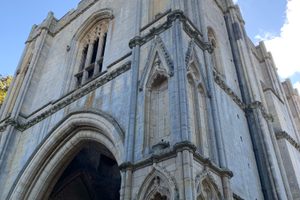
Built around 1300 by Abbot John of Northwold, the Charnel House in Bury St Edmunds was constructed in response to the overcrowding of the cemetery and the indecent treatment of old bones, which were often left scattered. The Charnel House provided a dignified place to store these disturbed bones, with two chamberlains entrusted to say prayers regularly over those interred in the crypt.
After the Dissolution of the Monasteries in 1539, it was repurposed as a blacksmith’s forge and even an inn. In the 1840s, the crypt was reopened or accidentally breached, revealing a stone floor covered two feet deep with human bones; later local accounts tell the more dramatic version that someone fell through the floor into the bone-filled chamber.
Notable Gravestones and Memorials:
- A notable figure connected to the Charnel House, Bartholomew Gosnold, was a lawyer from Bury St Edmunds who played a significant role in founding the first permanent English settlement in America, Jamestown. Gosnold named Martha’s Vineyard and Cape Cod. A memorial plaque commemorating him can be found on the Chapel of the Charnel in St Edmundsbury Cathedral's Churchyard, erected in 2007. His ventures included commanding the ship 'Godspeed' in 1607 and contributing to the early success of Jamestown before his untimely death four months later.
- A tragic story associated with the Charnel House involves Sarah Lloyd, who was executed for theft in 1800. Employed as a servant, she and her lover, Joseph Clarke, committed burglary and arson. Although Clarke was acquitted, Sarah was found guilty and sentenced to death by hanging. Her gravestone inscription reads, "May my example be a warning to thousands," reflecting her last words and serving as a somber reminder of her fate.
- On the south wall of the Charnel House is a memorial to Mary Haselton, a 9-year-old girl killed by a lightning strike in 1785 while saying her prayers. This incident had a profound impact on the community, leading to the erection of a permanent memorial in her honor.
Know Before You Go
There is no charge to visit the Abbey Gardens and the Charnel House.
Respect the historical significance of the Charnel House and the surrounding gardens. Avoid climbing on the ruins or disturbing the plant life. Photography is allowed, but be mindful of other visitors and the tranquil atmosphere.
Community Contributors

Added By
Published
June 19, 2026