About
In 1873, the city of Riverside was the nucleus of what would become the "second California Gold Rush" ~ the cultivation of citrus fruit. California citrus farming was not new, but the West Coast agricultural industry lacked adequate early- and midseason sweet orange varieties adapted to the climate.
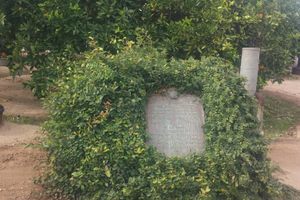
At the time, the US Department of Agriculture was test-cultivating Brazilian navel orange trees in Florida. Through a friend at the USDA, Eliza Tibbetts of Riverside, California, requested and received three trees of the "Washington Navel Orange" variety for her home garden. The Florida citrus plantings failed, and a cow trampled one of Tibbetts' trees. However, the two remaining trees, watered, out of necessity, with used dishwater, survived and grew.
Tibbetts' trees bore their first fruit in 1876. The fruit was first displayed at a California public fair in January 1879 by the Southern California Horticultural Society and a fellow planter, Thomas Cover. Plump, thick-skinned, and seedless, the orange's commercial attributes were immediately recognized. Farmers planted new California citrus groves with cuttings from Tibbetts' trees, and the California citrus industry took off.
The California Citrus State Historic Park was established in 1993 as a 240-acre open-air museum. It documents the history of the California citrus industry from Tibbetts' backyard to an industry producing 5.2 million tons of fruit annually. Park displays also recognize the contributions of immigrant and migrant workers to the industry over the decades.
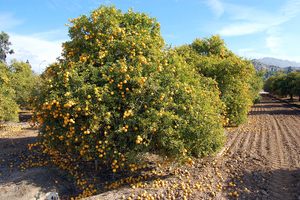
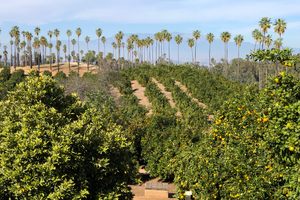
The Park is home to groves of citrus trees – oranges, lemons, limes, and grapefruit -- as well as a visitors' center with a citrus museum. The museum features a display of the colorful, iconic citrus crate labels. Sky-high palm trees rise above the groves to identify roads. The Park's Craftsman and California Bungalow-style architecture and landscaping were designed to look as they would in the early 1900s. Also displayed throughout the Park is antique citrus farming equipment.
A Varietal Grove Trail showcases over 75 citrus trees. Although picking is not allowed, visitors can sample unique citrus fruits such as citron and Buddha's hand at the Visitors' Center. And fresh, local citrus can be purchased from the Park's retro-style fruit stand that features a giant orange at the entrance.
Know Before You Go
Park Hours:
April – September Monday through Friday 8:00 AM to 5:00 PM Saturday and Sunday 8:00 AM to 7:00 PM
October – March 8:00 AM to 5:00 PM Daily
Museum & Visitor Center Friday, Saturday, and Sunday 10:00 AM to 4:00 PM
Community Contributors

Added By
Published
June 19, 2026