Places Foods Stories Newsletters
Loading...
Loading...
Loading...

No search results found for
“”

Make sure words are spelled correctly.

Try searching for a travel destination.

Places near me Random place

Popular Destinations

  • Paris
  • London
  • New York
  • Berlin
  • Rome
  • Los Angeles
Places Foods Stories Newsletters
Sign In Join
Places near me Random place
All the United States Puerto Rico Guaynabo Caparra Archaeological Site

Caparra Archaeological Site

The ruins of the first Spanish settlement in Puerto Rico.

Guaynabo, Puerto Rico

R Rachel Gould profile photo
Added By
Rachel Gould
Email
Been Here
Want to go
Added to list
CAPTION
Ruins of Juan Ponce de Leon’s residence at Caparra in Puerto Rico.   © Marine 69-71/cc by-sa 2.5
Plaque of Juan Ponce de León   CDVV86 / Atlas Obscura User
1519 Lic. Rodrigo de Figueroa Sketch of the Villa de Puerto Rico in anticipation to the transfer of Caparra’s residents to the harbor.   Lic. Rodrigo de Figueroa/Wikimedia Commons/public domain
A 17th century Spanish engraving (colored) of Juan Ponce de León.   Unknown illustrator/Wikimedia Commons/public domain
Been Here
Want to go
Added to list

About

In the early years of the 16th century, Spanish conquistador Juan Ponce de León established a settlement on the Caribbean island of Puerto Rico. Located in the northern municipality of Guaynabo, the settlement, which he called Caparra, remains the oldest-known relic of European presence in what is now United States territory.

As the first Spanish Crown-appointed governor of Puerto Rico, Ponce de León oversaw the cultivation of capital city Caparra (originally named La Ciudad de Puerto Rico). Caparra was built out from one original home, which was crafted using the tapia or “rammed earth” technique of compressing raw materials into a compact structure. Subsequent buildings including a military fort were constructed using stone and wood, and homes were outfitted with decorative tiles shipped over from Spain. In 1512, a cathedral was built to crown the small city, which is believed to have been inhabited by some 300 people in its heyday.

In the coming decade, residents of Caparra grew tired of the frequent attacks by neighboring indigenous peoples and the city’s impractical distance from the sea. Caparra was eventually abandoned around 1521 for the more favorable coastal region that is present-day Old San Juan. But the remains of Puerto Rico’s first capital serve as an indication of what life was like for the earliest European settlers in the New World as well as for the native Taíno people, whom Ponce de León enslaved to work in Caparra.

It wasn’t until the 1930s that a historian by the name of Don Adolfo de Hostos inaugurated a series of excavations at Caparra, which unearthed stone foundations, the remnants of what is believed to have been Ponce de León’s home, bits of Spanish tile, and Taíno artifacts by which archaeologists have pieced together a vision of Puerto Rico’s first European-settled city.

Today, Caparra is but a collection of small ruins belonging to The Museum of the Conquest and Colonization of Puerto Rico, a one-gallery point of interest in modern-day Guaynabo that houses artifacts and historical documents relating to the site.

Caparra was added to the National Register of Historic Places in 1984, and was declared a National Historic Landmark in 1994.

Places

Discover your next amazing Atlas Place.

Get more unusual and extraordinary places each week with the Atlas Obscura Places newsletter.

Your newsletter subscriptions with us are subject to Atlas Obscura's Privacy Policy and Terms of Use.

Know Before You Go

The Museum of the Conquest and Colonization of Puerto Rico is open Monday through Friday, 9 a.m. to 4 p.m. Visitors should note that all museum labels are in Spanish.

Community Contributors

R Rachel Gould profile photo

Added By

Rachel Gould

A Aramat Rehel profile photo CDVV86 profile photo

Edited By

Aramat Rehel, CDVV86

  • A Aramat Rehel profile photo Aramat Rehel
  • CDVV86 profile photo CDVV86

Published

June 4, 2019

Edit this listing

Make an Edit
Add Photos
Sources
  • https://en.wikipedia.org/wiki/Caparra_Archaeological_Site
  • https://www.nps.gov/NR/TRAVEL/AMERICAN_LATINO_HERITAGE/Caparra_Archeological_Site.html
  • https://www.lonelyplanet.com/puerto-rico/san-juan-around/attractions/caparra-archaeological-site/a/poi-sig/1419534/358130
  • https://www.puertorico.com/regions/la-monta-a-central/caparra/
  • https://www.puertorico.com/attractions/sights/caparra-ruins/
Related Tags

Archaeology Colonialism
Caparra Archaeological Site
Guaynabo, Puerto Rico, 00966
United States
18.40514, -66.113767

Nearby Places

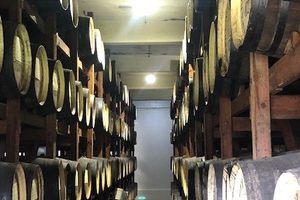
Ron del Barrilito

Bayamón, Puerto Rico

miles away

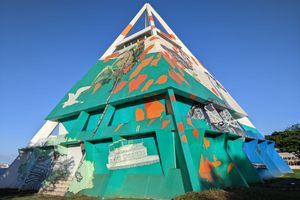
Pirámide de Cataño

Cataño, Puerto Rico

miles away

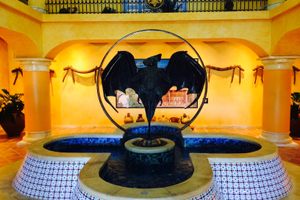
Casa Bacardí

Cataño, Puerto Rico

miles away

Explore the Destination Guide

Photo of Puerto Rico

Puerto Rico

United States

Places 57
Stories 13

Nearby Places

Ron del Barrilito

Bayamón, Puerto Rico

miles away

Pirámide de Cataño

Cataño, Puerto Rico

miles away

Casa Bacardí

Cataño, Puerto Rico

miles away

Explore the Destination Guide

Photo of Puerto Rico

Puerto Rico

United States

Places 57
Stories 13

Related Places

  • The ruins of El Cuartelejo.

    Scott City, Kansas

    El Cuartelejo

    The ruins of the northernmost pueblo in the Americas tell the story of a mixing of native cultures.

  • Ruins on Cubagua

    Venezuela

    Cubagua Island

    This island in Venezuela is known for its significance in early Spanish colonization and pearl trade.

  • Zona Arqueológica Cempoala

    Zempoala, Mexico

    Zona Arqueológica Cempoala

    Palace, temple, and pyramid ruins mark the ancient Mesoamerican capital of Totonacapan.

  • Abo kiva in foreground, church in background

    Mountainair, New Mexico

    Salinas Pueblo Missions

    The remains of Abó, Gran Quivera, and Qurai are monuments to the long, complicated history of the Indigenous people of the Southwest.

  • Russian Fort Elizabeth from above

    Waimea, Hawaii

    Pā‘ula‘ula / Russian Fort Elizabeth and King Kaumuali‘i Statue

    This ruined fort and statue are a testament to the last king of Kaua‘i’s savvy diplomacy skills, which briefly brought Russians to Hawai‘i.

  • The stone temples tower over the surrounding landscape.

    Kecamatan Prambanan, Indonesia

    Prambanan

    This massive complex is made up of hundreds of smaller temples that date back to the ninth century.

  • The former ball court and church.

    San Martín Huamelúlpam, Mexico

    Huamelulpan Archaeological Zone

    At this hillside site that was once home to a Mixtec community, you'll find ruins with a view.

  • The "flying man."

    Villa de Zaachila, Mexico

    Zaachila Ruins

    You can explore the halls of tombs in the abandoned former capital of the Zapotecs.

Aerial image of Vietnam, displaying the picturesque rice terraces, characterized by their layered, verdant fields.
Atlas Obscura Membership

Become an Atlas Obscura Member


Join our community of curious explorers.

Become a Member

Get Our Email Newsletter

Follow Us

Facebook YouTube TikTok Instagram Pinterest RSS Feed

Get the app

Download the App
Download on the Apple App Store Get it on Google Play
  • All Places
  • Latest Places
  • Most Popular
  • Places to Eat
  • Random
  • Nearby
  • Add a Place
  • Stories
  • Food & Drink
  • Itineraries
  • Lists
  • Video
  • Podcast
  • Newsletters
  • All Trips
  • Membership
  • Feedback & Ideas
  • Community Guidelines
  • Product Blog
  • Unique Gifts
  • Work With Us
  • About
  • FAQ
  • Advertise With Us
  • Advertising Guidelines
  • Privacy Policy
  • Cookie Policy
  • Terms of Use
Atlas Obscura

© 2026 Atlas Obscura. All Rights Reserved.