About
The Monastery of Santa María de las Cuevas, known as La Cartuja, is linked to Cristopher Columbus. In fact, in 1509 he was buried there, alongside his son Diego, until 1536, when his remains were transferred to Santo Domingo in the Dominican Republic. Yet something of his voyages to America still endures here.
Another son, Hernando Colón, brought ombú seeds from the American continent on one of his father's voyages, which he accompanied. He planted them later in the Monastery's gardens, so the ombú tree of La Cartuja became the first European specimen of this species.
The ombú (Phytolacca dioica) is a herbaceous tree native of the Argentine pampas and bordering areas of Uruguay, southern Brazil, and Paraguay. It is characterized by its longevity, its remarkable immunity to insect attacks due to its toxic sap, and its soft trunk containing a large amount of water. This was precisely the problem that nearly killed the tree in 1992, due to a poorly planned restoration.
In an attempt to repair the cavities caused by the humidity, technicians from the Andalusian Regional Government applied an obsolete technique: They filled them by injecting polyurethane foam. However it had the opposite effect from the one intended, since the tree absorbed even more water, generating in turn a growing amount of fungus.
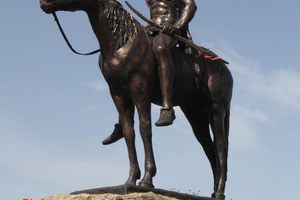
Fortunately, specialized gardening technicians managed to save the tree by removing the polyurethane foam. Thus, today we can see this five-hundred-years-old ombú tree, close to the statue of Columbus that was erected here in 1887 by the Pickman family, the British owners of the pottery factory that was established in the former monastery.
Know Before You Go
Crossing the Cartuja footbridge, follow the signs towards the C.A.A.C. (Andalusian Center of Contemporary Art) and before arriving there, next to the Christopher Columbus monument we will find the tree.
Community Contributors

Added By
Published
January 17, 2026