About
Along Old Connecticut Path and near one of the entrances to the Cochituate Rail Trail is a very small bridge crossing the Cochituate Brook. Most people probably drive by not realizing there is a bridge, and even fewer notice the small plaque in one corner. Although this location may not look like much, this bridge and plaque are dedicated to an individual who had a significant impact on the American Revolution.
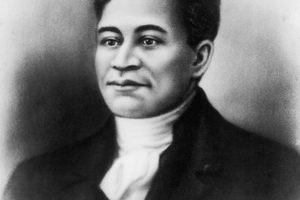
Crispus Attucks was born in 1723 in Framingham, Massachusetts. Historical records seem to indicate he was the slave of Deacon William Brown although it’s unclear if Brown was the original owner. Attucks is believed to have been of mixed African and Wampanoag ethnicity. He lived and worked near the present-day location of the bridge and escaped in 1750. He headed east and eventually found employment as a whaler, sailor, and stevedore along the waterfront. He occasionally used the alias “Michael Johnson” to avoid potential slave catchers.
On March 5, 1770, Attucks was in Boston having recently returned from the Bahamas and scheduled to leave soon on a ship bound for North Carolina. On that evening, Captain-Lieutenant John Goldfinch was confronted by 13-year-old wigmaker's apprentice Edward Garrick about allegedly not paying a bill to his master. Goldfinch ignored Garrick, but sentry Private Hugh White intervened when Garrick began prodding Goldfinch with his finger. The situation rapidly escalated with many colonists gathering to observe the altercation with Crispus Attucks being among them. As tensions between the British Army and residents of Boston were already high, more troops from the 29th Regiment of Foot arrived and the crowd became unruly carrying clubs, throwing snowballs, oyster shells, spitting, and taunting the troops. One soldier, Private Hugh Montgomery, was struck in the head and fell to the ground. He angrily discharged his weapon into the crowd, although no order had been given by his commander, Captain Thomas Preston. Soon after, the other soldiers fired their muskets in an unorganized volley killing five and injuring six. Crispus Attucks and two others died instantly, and it’s believed Attucks fell first, having been struck with two musket balls to the chest. This event would go down in history as the Boston Massacre.
Attucks’ body was carried to Faneuil Hall where it lay in state for several days and then buried at Granary Burying Ground with the other victims. The British troops involved in the incident were put on trial and defended by future Founding Father and 2nd President of the United States, John Adams. Adams successfully argued the mob had incited the violence, and the troops had acted in self-defense. Therefore, all the soldiers were acquitted except two who were found guilty of manslaughter and punished by branding of the thumbs.
Attucks’ death was extensively documented and many engravings and illustrations of the time, including the iconic one made by Paul Revere, clearly show Attucks among the dead and dying. Attucks is often described as the very first person killed during the American Revolution. However, the death of 11-year-old Christopher Seider who was shot by British customs officer Ebenezer Richardson during another protest in Boston a little over a week earlier on February 22, 1770, is a more likely candidate for the first colonial casualty of the American Revolution. Regardless, the death of Attucks and others would play a crucial role in fomenting revolutionary discord among the residents of Boston and Massachusetts which would culminate 5 years later with the Battles of Lexington and Concord.
Decades after the massacre, the significance of Attucks’ death was highlighted again by members of the abolitionist movement. The fact that one of the first people killed in the Revolution was an African American of mixed ethnicity became an important message, and variations of Paul Revere’s famed engraving were created showcasing Attucks front and center. Over the years, Attucks has been memorialized and remembered through artwork, books, poems, songs, films, and the namesake of many schools and institutions across the US.
On March 5, 2000, exactly 230 years after the Boston Massacre, the Town of Framingham dedicated the small bridge crossing the Cochituate Brook originally built in 1965 to Crispus Attucks. Although Attucks might not be as famed or renowned as other individuals from the American Revolution, his death and the impact it had remain just as significant. If you have an interest in the history of the American Revolution and would like to pay your respects, the bridge is worth taking a look next time you’re in the area.
Know Before You Go
There are some offices and other locations nearby where you can park and walk over to see the bridge.
Community Contributors

Added By
Published
June 19, 2026
Sources
- https://www.history.com/articles/crispus-attucks-american-revolution-boston-massacre
- https://www.biography.com/history-culture/crispus-attucks
- https://www.boston.gov/news/black-history-boston-hero-boston-massacre-crispus-attucks
- https://library.indianapolis.iu.edu/digitalcollections/CAttucks
- https://www.pbs.org/wgbh/aia/part2/2p24.html
- https://www.nps.gov/people/crispus-attucks.htm
- https://biographies.framinghamhistory.org/crispus-attucks/
- https://www.westfield.ma.edu/historical-journal/wp-content/uploads/2018/06/Anita-Danker-combined-winter-2008.pdf
- https://www.fiftyplusadvocate.com/2024/02/01/crispus-attucks-of-framingham-became-an-icon-of-the-american-revolution/
- https://www.cryan.com/blog/20210902.jsp