Places Foods Stories Newsletters
Loading...
Loading...
Loading...

No search results found for
“”

Make sure words are spelled correctly.

Try searching for a travel destination.

Places near me Random place

Popular Destinations

  • Paris
  • London
  • New York
  • Berlin
  • Rome
  • Los Angeles
Places Foods Stories Newsletters
Sign In Join
Places near me Random place
All the United Kingdom England Denby Dale Railway Viaduct

Denby Dale Railway Viaduct

Before this fine stone viaduct was built, trains ran across a rather wobbly wooden trestle, and the original abutments are still there.

Denby Dale, England

Dr Alan P Newman profile photo
Added By
Alan Newman
Email
Been Here
Want to go
Added to list
CAPTION
Old abutment clearly visible on left   Chris Morgan
  Ian S
Demolition of the wooden structure   Anon
  Steve Fareham
Stone arch abutments visible on right   Anon
Looking up at the former abutment from Wakefield Road   Dr Alan P Newman / Atlas Obscura User
A frame over Wakefield Road can be seen on left   Anon
View from the train on the viaduct looking towards Denby Dale town   Dr Alan P Newman / Atlas Obscura User
The abutment for the old wooden viaduct from a train on the stone viaduct   Dr Alan P Newman / Atlas Obscura User
Been Here
Want to go
Added to list

About

This impressive 21 arch viaduct is on a railway line currently called the "Penistone Line" and originally built in  by the  Huddersfield and Sheffield Junction Railway (later to become part of the Lancashire & Yorkshire Railway ). The valley of the River Dearne was a major barrier to the line between Huddersfield, West Yorkshire, England and the town of Penistone (NW of Sheffield) to join up with the Manchester, Sheffield and Lincolnsire Railway and so provide a shorter route to London via the North Midland Railway. The viaduct is 112 feet above the valley at its highest and the arches have a span of 40 feet. Overall the viaduct is around 1100 feet long. It is thus not particularly impressive even compared to other local viaducts,  but the back story, and the remains of that story, is fascinating.

The original (1847) plan was to build the viaduct in Stone but the local suppliers demanded such high prices that the original viaduct was built from timber (another version of this story is that the local stone masons were on strike). Building railway infrastructure from timber rather than stone was a common expedient in mid 19th century railway building, The idea was to build a cheap ,if temporary, structure then either generate revenues to pay directly for the stone replacement or use the traffic figures generated to encourage further investment. The best example of this practice was the use of wooden structures (such as the Loughor Estuary Viaduct) by Brunel on the extensions into Wales of the GWR. It is not clear whether there was an intention, from the start, to upgrade the Denby Dale Viaduct to stone but in any event the upgrade seems to have been forced upon the company by local regulators.

 The original wooden viaduct was, for the most part, a rather spidery trestle style viaduct which did little to inspire confidence, particularly because, during construction (in January 1847)  a storm managed to collapse 27 of the 40 upright structures (this cost £5,000 to put right in 1848 prices). At each end of the wooden viaduct were abutments in the form of two stone arches and even here it seems that economy was preferred over structural stability. On the southern side of the valley the viaduct had to accommodate Barnsley Rd (now the A635) and on the northern side  the Wakefield Rd (now A636) passed underneath. Instead of extending the abutment so the roads passed under a strong stone arch the trestle was weakened at each end by creating an arch in the wooden structure about 3 times wider than the normal separation of the uprights with a rather unattractive, and less than reassuring, "A frame" over it.

 Even from the start there was a worrying amount of movement on the viaduct when trains passed over it and this was further not helped by the fact that maintenance of the wooden structure was less than rigorous. It was reported that as late as 1860  the bridge had had neither a coat of paint or an application of preservative. The timber had already started to decay. Famously, the viaduct wobbled so much that water buckets, required to be kept on the bridge in case the wooden structure caught fire, had to be re-filled daily because of water losses caused by passing trains. 

The station was north of the viaduct and  the local Alderman reported that many people, in fear of crossing the viaduct , would opt to travel to Wakefield (15 miles to the northwest, over bad roads at the time) rather than take the train southwards over the viaduct  when travelling to London. The story of how the company were "persuaded" to replace the wooden structure is told in excellent detail by the "Huddersfield Exposed" website , involving an inspection by none other than the famous,Robert Stephenson. 

Work started on the stone viaduct, built alongside the wooden structure on the inside of its curve (radius about 2600 ft), in 1877 with completion in 1884. Dismantling of the wooden structure around the same time. The stone structure was built over mine workings which had to be back filled after the structure was complete.

The timbers etc of the wooden bridge were sold off by auction, as were probably the masonry foundations as there is little trace on the valley floor today. The  arched abutments at either end are however still visible as a lasting reminder of the wooden structure that put fear into the hearts of the locals.

Places

Discover your next amazing Atlas Place.

Get more unusual and extraordinary places each week with the Atlas Obscura Places newsletter.

Your newsletter subscriptions with us are subject to Atlas Obscura's Privacy Policy and Terms of Use.

Know Before You Go

To visit this structure I suggest you take a train from Penistone. Parking is free at the station and a single fare is between £2 and £3 depending on the time of day. For this you will get a magnificent ride over this amazing piece of Victorian engineering. The Denby Dale station is near the N end of the viaduct and a public footpath passes  along the foot of the viaduct on the western side of the structure.

Community Contributors

Dr Alan P Newman profile photo

Added By

Dr Alan P Newman

Published

August 4, 2026

Edit this listing

Make an Edit
Add Photos
Sources
  • https://vclco.com/trestles-viaducts

Related Tags

Infrastructure
Denby Dale Railway Viaduct
Denby Dale, England, HD8 8QD
United Kingdom
53.572556, -1.658748

Nearby Places

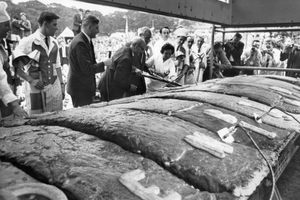
Denby Dale Pie Tin

Denby Dale, England

miles away

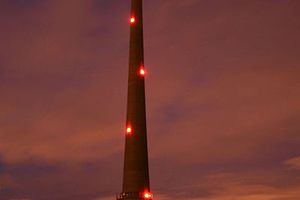
Emley Moor Transmitter Tower

Emley, England

miles away

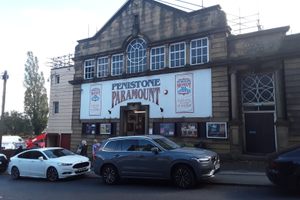
Penistone Paramount Cinema

Penistone, England

miles away

Explore the Destination Guide

Photo of England

England

United Kingdom

Places 2,557
Stories 145

Nearby Places

Denby Dale Pie Tin

Denby Dale, England

miles away

Emley Moor Transmitter Tower

Emley, England

miles away

Penistone Paramount Cinema

Penistone, England

miles away

Explore the Destination Guide

Photo of England

England

United Kingdom

Places 2,557
Stories 145

Related Places

  • The pump station

    Durham, North Carolina

    Durham Pump Station

    Reachable only by foot, the ruins of the 1800s pump house and dam that supplied water to Durham, North Carolina, until 1927 sit by the scenic Eno River.

  • The Liberty Bridge replaced the destroyed Ferenc József Bridge in 1946.

    Budapest, Hungary

    Ruins of the Ferenc József Bridge

    When the water level in the Danube in central Budapest is low enough, there is a secret site telling the history of one of the most iconic bridges of the city.

  • Kanmon Pedestrian Tunnel

    Shimonoseki, Japan

    Kanmon Pedestrian Tunnel

    One of the world’s few undersea pedestrian tunnels connects Honshu and Kyushu islands.

  • Oculus Tower

    Ferrara, Italy

    Oculus Tower

    A seven-story circular concrete tower, once the heart of Ferrara’s Eridania distillery, resembles a modern industrial Colosseum.

  • Abandoned Monorail

    Malacca, Malaysia

    Abandoned Monorail

    A monorail that was built to serve a new development but technical problems, lack of users, and a pandemic caused it to be closed and abandoned.

  • Catwalk along the river

    Hood River, Oregon

    Hood River Pumping Station and Pipeline Trail

    Raised catwalk walk through the trees alongside a river starting from an abandoned and colorful pumping station.

  • Connell Lake Dam

    Ketchikan, Alaska

    Connell Lake Dam

    Once a vital asset for Southeast Alaska’s timber industry and the backdrop for the gritty 1954 film noir classic Cry Vengeance, the Connell Lake dam now stands as a tragic yet scenic barrier blocking vital fish passage.

  • Entrance to the bridge behind the bus stop.

    Gurtnellen, Switzerland

    Intschi-Reuss Bridge

    Walk underneath a railway bridge over the river Reuss with just a metal grating under your feet.

Aerial image of Vietnam, displaying the picturesque rice terraces, characterized by their layered, verdant fields.
Atlas Obscura Membership

Become an Atlas Obscura Member


Join our community of curious explorers.

Become a Member

Get Our Email Newsletter

Follow Us

Facebook YouTube TikTok Instagram Pinterest RSS Feed

Get the app

Download the App
Download on the Apple App Store Get it on Google Play
  • All Places
  • Latest Places
  • Most Popular
  • Places to Eat
  • Random
  • Nearby
  • Add a Place
  • Stories
  • Food & Drink
  • Itineraries
  • Lists
  • Video
  • Podcast
  • Newsletters
  • All Trips
  • Membership
  • Feedback & Ideas
  • Community Guidelines
  • Product Blog
  • Unique Gifts
  • Work With Us
  • About
  • FAQ
  • Advertise With Us
  • Advertising Guidelines
  • Privacy Policy
  • Cookie Policy
  • Terms of Use
Atlas Obscura

© 2026 Atlas Obscura. All Rights Reserved.

Keep Reading

Create a free Atlas Obscura account to unlock the rest of this story and explore more extraordinary places.
Create a Free Account or Log In