About
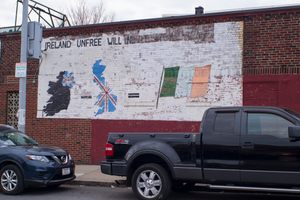
South Boston, commonly known as “Southie” among locals, has a long history and it’s predominantly known for its working-class Irish community. It’s where the annual St. Patrick’s Day parade is held in Boston and the area of Dorchester Heights is the center of another holiday, Evacuation Day. One that is celebrated only in the Boston area, and many lifelong residents in other areas of the state may not know about it. However, Evacuation Day celebrates one of the most crucial and impactful moments not only in Massachusetts history, but also for the entire United States.
After the Battles of Lexington and Concord on April 19, 1775, the British forces retreated into Boston and the colonial militia laid siege to the city. On June 14, the Second Continental Congress created the Continental Army, and command was given to the newly appointed General George Washington. On June 17, British troops in Boston tried to break through colonial defenses at the Battle of Bunker Hill. Although the British managed to capture the Charlestown Peninsula, it was a pyrrhic victory as they sustained over 1,000 casualties while the colonial forces suffered less than half the amount. From that point forward, the British were exceptionally cautious and reluctant about launching future large-scale attacks.
On July 2, George Washington arrived in the Boston area and set up his headquarters in Cambridge. Despite having superior numbers, he found the Continental Army and the militias in a state of disarray, lacking weapons, ammunition, artillery, supplies, and basic equipment. He was unable to launch an attack, either, resulting in a stalemate which would last for months. On November 16, he ordered Colonel Henry Knox to travel to Fort Ticonderoga in New York to retrieve large amounts of artillery, which had been captured earlier on May 10 by Commander Ethan Allen and his militia, The Green Mountain Boys, without any resistance. Knox arrived at Ticonderoga on December 5 and hauled 59 artillery pieces across the Berkshire Mountains in the middle of winter and returned to Cambridge on January 24, 1776, a total of around 300 miles.
Once winter was nearing its end, Washington ordered the bombardment of British positions on March 2. On March 5, Washington ordered some of the guns moved to Dorchester Heights south of Boston and closer to the city. Colonial troops worked quickly to fortify the position and the British forces soon realized they were within target range. They tried to retaliate with artillery of their own but were unable to reach the American guns, which were located on higher ground. Unwilling to launch another ground assault and having received no reinforcements, General William Howe of the British Army ordered the evacuation of Boston on March 10. The British spent the next week making preparations and waiting for favorable weather. On March 17, all remaining British troops along with around 1,000 American loyalists evacuated Boston and sailed for Halifax, Nova Scotia.
The evacuation of Boston was the first victory for George Washington and marked a major turning point in the American Revolution. It proved that the British military, despite its size and might, could be defeated by a ragtag group of inexperienced soldiers and militia. It also convinced members of the Second Continental Congress in Philadelphia that the British Empire wasn’t invincible and Representative Richard Henry Lee of Virginia introduced a resolution to declare independence from Britain in June 1776. A motion which would pass a month later on July 2 and be approved on July 4.
The Dorchester Heights Monument was completed in 1902, standing at 115 feet tall and made from white marble. The monument grounds contain many plaques and other informational markers along with a couple of commemorative cannons. It offers a stunning view of the Boston area, allowing you to see great distances in all directions. The tower itself is usually closed but open to the public on special occasions such as the annual Evacuation Day ceremony, which occurs every year on March 17. If you have an interest in Revolutionary War history, the area is absolutely worth a visit, and try to imagine the sound of cannonade and the sight of George Washington commanding the colonial forces to victory.
Community Contributors

Added By
Published
June 19, 2026
Sources
- https://www.masshist.org/online/siege/index.php
- https://www.history.com/this-day-in-history/march-17/british-evacuate-boston
- https://www.mountvernon.org/library/digitalhistory/digital-encyclopedia/article/siege-of-boston
- https://www.americanacorner.com/blog/siege-of-boston-ends
- https://www.battlefields.org/learn/revolutionary-war/battles/boston
- https://www.boston.gov/news/day-1776