About
Centuries before all roads led to Rome, the Etruscans conquered the area now known as Perugia and the hilltop city that shares its name. They declared it one of twelve Etruscan city-states and occupied "Perusia" beginning in the 9th century BC. It remained under Etruscan control until the city was annexed to the Roman Empire in 89 BC.
Perugia has architectural features dating to the Etruscan occupation. The Etruscans were skilled urban planners and excelled in hydraulic engineering. They excavated a communal well at the site of their acropolis in what is now downtown Perugia. The well was created in the second half of the 3rd century BC. There is evidence of its continued use by the local population since its establishment.
The well is cylindrical, measuring 5 meters wide and 37 meters deep. It holds up to 424,000 liters of water and is fed by still-active subterranean springs. Beginning 16 meters below street level, it gradually narrows until reaching a diameter of 3 meters. The narrowing may indicate that the excavation was originally intended as a rainwater cistern. When the builders hit water, they kept digging. The surrounding ground is an amalgam of clay and round pebbles.
The first 12 meters of the well shaft are made of perfectly fitted travertine blocks. Travertine also forms the roof and trusses above the well. The stones are dry-laid, and each truss weighs eight tons. Grooves in the ceiling blocks mark where the rope-and-pulley system once drew water.
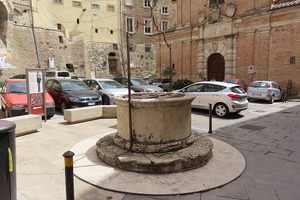
Well renovations began during the 15th century. Perugia's layout also evolved over time. The 17th-century Palazzo Sorbello now stands over the wellhead. However, in 1780, the Marquis Uguccione III Bourbon di Sorbello ensured Perugians would always have access to water from the Etruscan Well. The well's curb, once used to draw water from the underground tank, is situated nearby in Piazza Piccinino.
Since 2016, the archaeological site has welcomed the public and features a museum. Visitors descend underground and walk along suspended walkways to observe the original masonry and active groundwater springs. The vertigo-inducing views from a steel-and-glass walkway spanning the open well highlight the remarkable achievement of its ancient construction.
Know Before You Go
The Etruscan Well is open from Monday to Sunday, 10:00 am – 2:00 pm / 3:00 pm – 5:30 pm. Last access is 15 minutes before closing.
A full-entry ticket is €4,00 EUR.
Community Contributors

Added By
Published
June 19, 2026