About
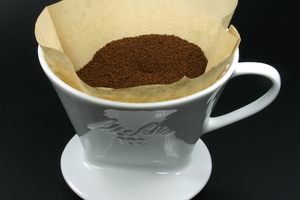
Melitta Bentz liked to drink coffee. But at the beginning of the 20th century, coffee was not prepared as it is today. When enjoying coffee, the coffee grounds in her mouth and the somewhat bitter aftertaste were annoying. Melitta couldn't come to terms with that. So she kept trying different things until she finally got the right idea. She used a hammer and nail to poke a few holes in a tin pot, took the blotting paper from her sons' notebooks, cut it, and placed it in the punctured pot. Then she filled it with ground coffee and poured boiling water over it. Lo and behold, the coffee was perfect. At the next coffee party, she served the filtered coffee to her friends and they were thrilled.
Melitta Bentz was born on January 31, 1873, in Dresden as the daughter of the Dresden bookseller Liebscher. Melitta's husband was the merchant Emil Hugo Bentz from Clausthal-Zellerfeld. The couple had three children, Willy, born in 1899, Horst, born in 1904, and Hertha, born in 1911. After Melitta Bentz had invented her coffee filter, she registered it as a utility model with the Imperial Patent Office in Berlin in 1908. This was very unusual, because until then very few women had been granted a patent, at least not in Germany. In 1909, Melitta registered her company M. Bentz with the trade office in Dresden and managed it herself, which was also unusual. At the time, she had equity capital of 73 pfennigs. The first employees were her husband and later her sons.
The coffee filters sold so well that production in the apartment in the Pirnaische Vorstadt soon became impossible. From 1914 production took place in a multi-story building in a backyard in the Trachau district of Dresden. Then came World War I, and Melitta's husband and eldest son were drafted into the army. Now she was completely on her own. The import of coffee was soon stopped. Although Melitta switched to making cardboard boxes, this set her company far back.
That changed quickly after the war. Everybody wanted the coffee filters. As early as 1920, an additional building had to be purchased. Melitta left the company in 1923 and left the business to her husband and eldest son. Another building was bought in 1924, but soon there was no longer enough space for the company's production, which was meanwhile being sold internationally. The search for a suitable manufacturing facility in Dresden failed, and so the family business moved to Minden in Westphalia, where it is still based today, managed by Melitta's great-grandson Jero Bentz.
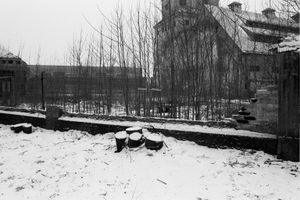
Melitta Bentz died on June 29, 1950, in Holzhausen at the Porta Westfalica and is buried in the Minden North Cemetery. In 2000, she was voted one of the 100 most important Dresden citizens of the 20th century. In 2020, the memorial stone with a commemorative plaque was erected and ceremoniously unveiled at the home of the former Dresden production facility in the Trachau district.
Know Before You Go
The memorial is in the backyard of the front building. It can be visited at all times.
Community Contributors

Added By
Published
July 20, 2026