About
Most megalithic structures across Europe are generally associated with locations in rural settings where the remoteness of the sites adds to the mystique of the locations. Additionally, these historic locations are simply more likely to be preserved if they are in places in the countryside that are less likely to be built over.
In this sense, the Tarxien Temples in Malta are unusual because they sit in what is now a suburban area close to the nation’s capital. The temples were discovered in 1913 (during the time Malta was a British colony) by local farmer Lorenzo Despott before this part of Malta became urbanized. Since their discovery, the Tarxien Temples have been recognized as one of the most important Neolithic sites in the Maltese Islands.
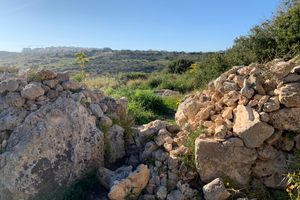
The Tarxien Temples are the largest surviving structures in Malta to have been built in the late Neolithic period (with the exact construction date being somewhere between 3600 and 2500 BC). The complex consists of four interlinked temples that were thought to be used for religious practices, including the sacrifice of animals, although in the Bronze Age, the site was repurposed as a cremation cemetery. Notably, the site features a substantial amount of bas-relief sculptures depicting spirals and animals.
Since its discovery, the temples have been granted protection against their destruction even while the United Kingdom was expanding its military facilities around the nearby harbors during the latter part of Malta’s colonial era. The site is now managed by Heritage Malta and is now formally referred to as the Ħal Tarxien Prehistoric Complex. Additionally, in 2015, the site was recognized as a UNESCO World Heritage Site, underlining the importance of the site not only in terms of Malta’s history but also in terms of the history of the Mediterranean and of Europe.
Related Tags
Know Before You Go
The Ħal Tarxien Prehistoric Complex is located in the suburban area of Tarxien south of the capital city of Valletta and the Grand Harbour. Most buses travelling to the area originate from Valletta; people from areas west of Valletta will potentially need to take a bus to Valletta and then switch to another bus there or in the Bombi area. Alternately, it is possible to take a ferry from Valletta to Cospicua and then walk about 30 minutes or take a bus. For people travelling by car, street parking is available near the site.
The temples are open seven days a week, with detailed information as well as entrance fees available on the Heritage Malta website. Note that the site is fully accessible.
Community Contributors

Added By
Published
January 7, 2026
Sources
- https://timesofmalta.com/article/protective-tent-over-tarxien-temples-completed.596507
- https://nanovic.nd.edu/research/research-initiatives/student-research-projects/sites-of-memory-in-contemporary-europe/malta-tarxien-temples/
- https://www.visitmalta.com/en/attraction/tarxien-temples-malta/
- https://whc.unesco.org/en/list/132/
- https://heritagemalta.mt/explore/hal-tarxien-prehistoric-complex/