About
In Victorian England a town’s tradesmen typically owned or rented premises and his family would live over the shop. The yard at the rear was usually filled with a workshop, wash-house, privy and often a stable. This usually left no room for a kitchen garden. If such a tradesman wanted to cultivate food and have the pleasure of growing flowers, he would find a suitable plot to rent outside the town.
Such plots were commonly found on the edges of English towns, before suburban development covered them. By the 19th century, these gardens were to be found around most market towns and cities. They are now called ‘detached gardens’, as they have no house attached to them. Whilst in the UK “allotment gardens“ are very common (local authorities have a duty to provide them for rent) these, rather more up-marke, "detached gardens" are now very rare.
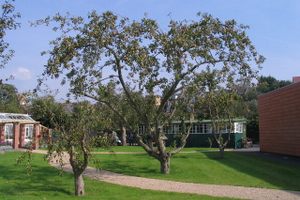
In 1845, pasture land overlooking Warwick Racecourse began to be sub-divided into individual garden plots which Warwick tradesmen rented. The plots were separated by hedges. The tennents grew vegetables and flowers and were able to keep pigs and poultry. All such gardens had an abundance of fruit trees. At Hill Close there are still around 60 different varieties of apple and 11 varieties of pear.
They also built summerhouses in order to shelter from rain or to sit and enjoy the view. Here, a stove often kept the chill of the evening at bay and was used for making the essential cups of tea. Several of the unusual brick built summerhouses remain at Hill Cross and are protected as grade II listed buildings.
Later, the freeholds of these plots were purchased individually, and later still some were sub-let. In the early twentieth century, part of Hill Close Gardens was sold off for housing but fortunately the remainder has been saved and restored. It was the fragmentation of the freehold that preserved the gardens from building development until the late 20th century.
After plans were put forward to build a retirement home on site the Hill Close Gardens Trust was established to fight the development and later to lease and manage most of the site (although some plots remain in private hands). A visitor center has been built to illustrate the history of the site and also to provide a retail outlet for the fruit and vegetables produced by a dedicated team of volunteers who maintain the gardens much as they would have been in their Victorian heyday.
Community Contributors

Added By
Published
February 2, 2019