About
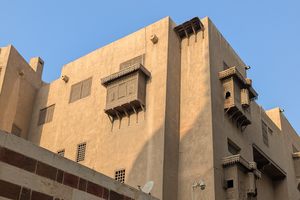
Leave the tourist scrum at the pyramids behind and go on an architectural treasure hunt! In the heart of Cairo’s Al-Helmiya neighborhood, you’ll find the astonishing House of Mohamed El Sayed, a prime example of the city’s fling with Art Nouveau architecture in the early 1900s. Designed by the Italian architect Antonio Lasciac, the building’s facade is heavily ornamented with the intricate, sinuous flourishes popularized by Art Nouveau.
Antonio Lasciac was born in Italy in 1856 in Gorizia, a town in northeastern Italy on the Slovenian border. Gorizia was at the time part of the Austrian Empire, and Lasciac is occasionally also referred to as Anton Laščak, his Slovenian name. After training at the Vienna Polytechnic Institute, Lasciac moved to Egypt, and in 1907 he became the Egyptian court architect to Khedive Abbas II. Lasciac is responsible for several historic Cairene buildings, including the Assicurazioni Generali di Trieste building at the intersection of Kasr Al Nile and Al Sharifain, the original Banque Misr headquarters at 151 Mohammed Farid, and the Suares building on the northeast side of Mustafa Kamel Square.
Little is known about the building’s history, including the date it was built, and it’s referred to both as the House of Mohamed El Sayed and as the Abdul Salam Pasha Khalil Palace. Wikipedia has an extensive list of Lasciac’s major buildings, but the list omits this lesser-known beauty. Pictures of the building on social media are often heavily edited to minimize the building’s decay, and it’s rarely visited by tourists, even hard-core architecture enthusiasts. Although it’s not possible to visit the inside (and probably not safe anyways), feel free to linger and admire the fanciful exterior.
A cautionary note to those who are game for the hunt: As of 2025, there are two pins on Googlemaps for the building, both incorrect. One is on 6 El-Amir Youssef, and the other is on the nearby larger street. The actual address is 6 Ali Mobarak as shown here in the entry. Confusion notwithstanding, locals know this place is special—a search on Googlemaps for the larger neighborhood, Al-Helmiya, turns up multiple pictures of the palace.
The building’s level of decay raises alarm bells that it could soon fall prey to a developer’s wrecking ball. But Egypt’s tourist trade and its burgeoning appreciation of its more recent cultural history is cause for hope that a munificent benefactor will step in and salvage this underappreciated architectural gem. Egypt is so much more than pyramids and tombs!
Know Before You Go
Important to note that the actual address for the building is 6 Ali Mobarak, not 3 or 6 El-Amir Youssef, one block to the south. Entries on Google maps sometimes default to an address on El-Amir Youssef.
Community Contributors

Added By
Published
October 9, 2025