About
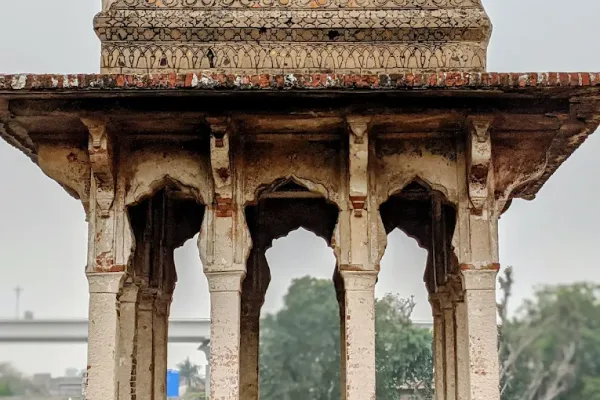
Turabek-Khanum Mausoleum is a mausoleum in the ancient city and now archaeological site of Konye-Urgench. Known for its beautiful mosaics and arches, the mausoleum gets its name from Turabek-Khanum, the daughter of a Khan who brought Islam to the area. However nobody knows for sure who is buried here. Many assume that it is the tomb of some Sufi kings as well as Turabek-Khanum herself.
The mausoleum is known for its symbolism of time. Four large windows symbolize weeks of the month. The mosaic has 365 sections, one for each day of the year. There are 24 pointed arches and 12 larger arches below.
Legends say that this building was constructed to win the heart of Mongolian princess Turabek-Khanum by someone named Gulgardan. Gulgardan proceeded to construct this building. However, the story goes that Turabek-Khanum did not fulfill her promise and married the governor of Khoresm Kutlug Timur. Gulgardan, devastated, threw himself off the top of his own building.
Inside, one can find an open and light hexagon-shaped hall with the about one hundred square meters in area. At the top of the building is a large dome which is tied on the top, as was tradition. The inside of the dome contains a mosaic featuring stars and flowers.
Kunya-Urgench, or "Old Urgench", is a municipality in Turkmenistan that holds the archeologial ruins of Ürgenç (Urgench). Urgench was the capital of the Khorezm region of the First Persian Empire, also known as the Achaemenid Empire. Monuments ranging from from the 11th to 16th centuries can be found in the ancient city, such as a mosque, the gates of a caravanserai (roadside inn associated with the Silk Road), fortresses, mausoleums and a minaret.
The minaret, known as the Kutlug-Timur Minaret, is one of the most popular attractions in Kunya-Urgench, as it is very visually striking. It stands at 60 meters tall, 12 meters wide at the base, and 6 meters wide at the top.
The ancient city was deserted in the 17the century after its citizens left to develop a new settlement, and has remained largely undisturbed since then. The ancient city became an UNESCO World Heritage Sites in 2005.
Know Before You Go
This location can be found in northern Turkmenistan, right near the border with the country of Uzbekistan.
Community Contributors
Added By
Published
October 15, 2025