About
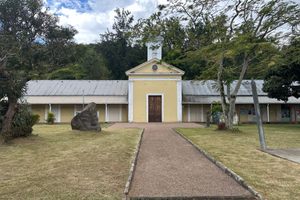
Leprosy, also known today as Hansen's disease, was historically one of the most misunderstood diseases known to humankind. Believed to be far more contagious than it actually is, "lepers" were placed in isolated communities up until the 20th century. On the French island of Réunion, those suspected of being infected were sent here to the Leprosy of Saint Bernard, located in the hills above Saint-Denis and founded in 1853. Here, they lived in dark, primitive, and ironically unsanitary conditions.
The patients were managed by nuns from the Congregation of the Daughters of Mary as well as doctors who visited sporadically. Perhaps the most famous person to work here was Father Clément Raimbault, who made invaluable contributions to the knowledge of Africa's botanical medicine. Despite the difficulty of life and the stigma that patients faced, many considered the colony preferable to a hospital because there was more freedom of movement and opportunities for activities such as gardening.
From the 1940s onwards, attitudes towards leprosy changed as advancements in treatment were made, and isolation was relaxed. Saint Bernard was closed for good in 1982 when remaining patients were transferred to hospitals, making it the last leper colony in France. It has since been renovated as a local shopping center with a permanent exhibit on the former colony. Nearby is the cemetery where many of the patients are buried.
Community Contributors
Added By
Published
June 19, 2026