About
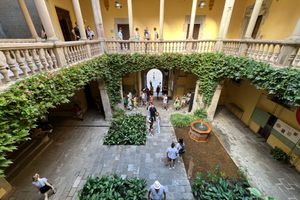
During the Corpus Christi celebrations, the dancing egg, or L'ou com balla in Catalan, has been a deep-rooted local tradition for four centuries. In Barcelona's Gothic Quarter, a dancing egg is placed in various fountains. But it is in the cloister of Barcelona's Gothic cathedral where the origins of this tradition can be found.
We are taught the magic of simplicity by L'ou com balla. This rather elementary act of placing a bird's egg on a stream of water that flows from a fountain and is so emblematic of the Corpus Christi celebrations in Barcelona has evolved over time to represent one more aspect of the city's joyous character.
The egg, the water, and the profusion of flowers are the three elements of L'ou com balla. These three have symbolic meanings of fertility and renewal, typical of the spring season in all its vigor. L'ou com balla is a common representation of the Sacred Form inside a lavish monstrance studded with beautiful stones.
Finding the source of this tradition is challenging. According to a record in the cathedral workers' account books, it is likely to have been established in the year 1440. An annotation states that the Barcelona Cathedral's cloister was hired to prepare the chapel for the Corpus Christi feast, and it lists the price of a shipment of eggs for the fountain.
The similarities between L'ou com balla and the water games the Muslims played in the inner courtyard fountains of their homes must also be considered when trying to determine its origin. One of these games entails precisely getting a little ball to balance on a fountain's water stream.
Know Before You Go
If you're visiting Catalonia in early June, do find out if the local church of the city you're in has a "L'ou com balla." The date for the Corpus Christi celebration changes every year, but always happens in early June.
Community Contributors

Added By
Published
August 7, 2026