About
The complex relationship between Catholicism and the indigenous peoples of the Americas, in Mexico in particular, is well-represented in the city of San Cristóbal de las Casas. Originally established under the name Villa Real de Chiapa in 1528, it was renamed San Cristóbal in 1829, in honor of its patron saint, Saint Christopher. The city surname “De Las Casas” would be added 19 years later as a tribute to Bartolomé de las Casas, a Spanish friar who arrived to the Americas in 1502.
Upon his arrival, he joined many European colonizers in the practice of owning land and having it worked by enslaved people, practically all of them indigenous. Witnessing destruction and abuses during his participation in the 1513 invasion of Cuba proved defining, leading to a moral realization and his initial proposal. In it, he called for the freeing of indigenous slaves and their replacement with enslaved people from Africa instead. Eventually, de las Casas would advocate for the complete abolition of slavery.
In 1543 he was named Bishop of Chiapas, reaching what was then Ciudad Real, the provincial capital (now San Cristóbal, and no longer the state capital) two years later. During this period and until his death in 1566, he continued to defend indigenous peoples before the Spanish Crown, asking for and partially gaining them greater self-determination and equality.
Within the context of the wider aims of Catholicism, acceptance of the human condition of indigenous and Black people often represented a goal, as it meant more likely converts and more souls to save. After de las Casas's death, Spanish authorities instituted the Inquisition in territories like what is now Mexico, which would lead to coercion being used as a more active tool for conversion.
By the time of Samuel Ruiz's birth in 1924, many indigenous populations in Mexico had embraced Catholicism, while others remained wary of the institution based on historical and recent abuses predominantly aimed at them. This was particularly true in Chiapas, long known for having the highest proportion of indigenous population of any state, and where Catholicism is often only nominal and in practice incorporates several pre-Columbian rituals.
Ruiz joined the Catholic seminary in his native state of Guanajuato aged 13 and was made Bishop of San Cristóbal de las Casas in 1959. In this position, he was able to witness and empathize with the extreme poverty situation in Chiapas, a lot of it caused by systemic racism. This made him particularly receptive to the aims of the EZLN (Zapatista Army of National Liberation).
Named after Emiliano Zapata, a leader of the Mexican Revolution of 1910-17, the Zapatista army consists mostly of indigenous people seeking greater equality and self-governance for their communities, usually under the banner of socialism. Their fight against capitalist exploitation of the land and repression lead to their declaration of war towards the Mexican government in 1994.
As Bishop of the main city that the EZLN occupied during their campaign, Samuel Ruiz didn't denounce the uprising and instead took on the role of mediator between the Army and government. He continued his mediation even after leaving the position of Bishop in 1999. His actions lead to him being granted the title Jtatik, which means “Father” in both the Tzotzil/Tsotsil and Tzeltal/Tseltal languages of the Mayan family.
Upon his passing in 2011, Jtatik Samuel had been awarded several international peace prizes and was widely regarded as having assisted in keeping the Zapatista uprising from further escalation, while also helping them achieve some of their objectives. As of mid-2025, the EZLN remains in control of certain areas of Chiapas, with some towns practicing a form of self-governance. Their organization has often restructured in the face of agreements unfulfilled by mainstream governmental institutions, changing means of communications and evolving needs.
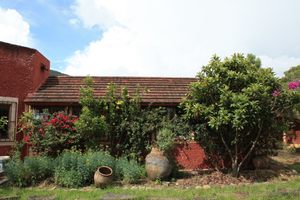
Six years after Jtatik’s passing, this museum dealing with his life and legacy was opened in a colonial building with ample gardens. In this quiet space, exhibits showcase his clothing, which often incorporated Chiapanec textiles, and interactive screens offer even young visitors a chance to learn more about the state's indigenous populations (most of them Maya peoples), Jtatik's upbringing and the context of the conflict he mediated.
Additional textiles feature in another room, while the area dedicated to Colonial Mexico's “caste portraits” brings to mind the institutionalization of racism in what would later become the society of independent Mexico. One of the most interesting items on display is a carved tree stump, roots and all, referred to as the museum's “first trunk.” This “primer tronco” is based on indigenous practices, where the roots and tree symbolize a strong base for an institution, also reminding visitors of the role that nature preservation has played in the aims of both the EZLN and Jtatik’s life.
Know Before You Go
The museum is located on the way out of San Cristóbal towards Zinacantán and Chamula, two of the best-known and most visited indigenous-majority towns near the city. A collective van taxi (colectivo) to either town can drop you off at the museum.
These colectivos depart from Honduras Street, a couple blocks north of San Cristóbal's Mercado José Castillo Tielemans, the main food market.
Community Contributors

Added By
Published
August 10, 2025
Sources
- https://unamglobal.unam.mx/global_tv/ezln-30-anos-de-resistencia/
- https://piedepagina.mx/el-legado-de-jtatik-samuel-ruiz-a-13-anos-de-su-partida/
- https://www.chiapasparalelo.com/noticias/chiapas/2022/11/a-98-anos-del-natalicio-jtatik-samuel-ruiz-garcia-el-obispo-de-los-pobres/
- https://www.gob.mx/agn/articulos/los-papeles-de-la-dominacion-el-agn-y-los-expedientes-de-la-inquisicion?idiom=es
- https://www.catholic.com/magazine/print-edition/the-church-and-the-native-americans
- https://www.vaticannews.va/en/vatican-city/news/2023-03/vatican-formally-repudiates-doctrine-of-discovery.html
- https://www.cndh.org.mx/noticia/nace-en-sevilla-espana-bartolome-de-las-casas-teologo-filosofo-fraile-dominico-sacerdote-y
- https://origins.osu.edu/milestones/july-2015-bartolom-de-las-casas-and-500-years-racial-injustice
- https://www.lanzadigital.com/opinion/historia-del-otro-ciudad-real-de-chiapas-mexico-fundado-en-1528/