About
After the demise of Napoleon's Empire, the Congress of Vienna (1814–15) redrew the map of Europe. What is now Belgium was incorporated into the new United Kingdom of the Netherlands. One small area bordering the Netherlands and Prussia, however, was granted an unusual status: a 900-acre strip of land that remained independent and neutral for over a century.
This territory, known as Neutral Moresnet, was 1 mile wide and 3 miles long. In the modern era, only Vatican City and Monaco are smaller.
The peculiar arrangement came about because of the presence of a valuable zinc spar mine, named Altenberg in German or Vieille Montagne in French. In the 19th century, deposits of this kind were rare: one of the few other places in Europe where Zinc was being processed was Bristol. Neither the Netherlands nor Prussia was willing to concede the mine, so they both agreed to administer the district jointly as a neutral condominium in 1816.
Neutral Moresnet had its own flag (based on the emblem of the mining company), coat of arms and anthem (set to the tune of O Tannenbaum), but it did not have its own currency. The French franc was the legal tender, although the currencies of Prussia (replaced by Germany in 1871), the Netherlands, and, after 1830, Belgium were also in circulation.
Life in Neutral Moresnet was dominated by the mining company, which wasn't only the major employer but also operated residences, shops, a hospital, a school and a bank. It also founded shooting clubs, a concert band, a carnival club and a gymnastics club.
When the mine was exhausted around 1885, the survival of Neutral Moresnet was in doubt. In August 1903, a casino was opened after the Belgians closed all such resorts in their territory, but Prussia soon forced it to shut down. The production of hard liquor in several distilleries also generated income. In 1908, Dr. Wilhelm Molly, the mine's doctor, proposed to turn Neutral Moresnet into the world's first Esperanto‑speaking state, named Amikejo, or "friendship-place". The World Congress of Esperanto even declared Neutral Moresnet the capital of the Esperanto community.
Germany annexed it during the First World War, but the Treaty of Versailles awarded the territory, along with several nearby villages, to Belgium. Neutral Moresnet was renamed Kelmis (in French: La Calamine) and converted into a Belgian municipality in 1920. Today, it’s in the francophone Walloon Region, but belongs to Belgium’s small German-speaking community.
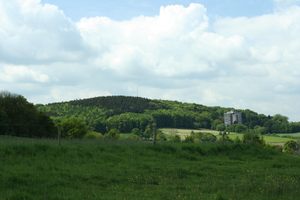
Visitors can learn more about Neutral Moresnet at the Vieille Montagne Museum, housed in the former mansion of the mine's director. Of the 60 border markers for the territory, more than 50 are still standing, and traces of the open-air mining operations can still be seen in the landscape. Kelmis is also the only place on earth where the yellow zinc violet grows. The former quadripoint (Belgium, the Netherlands, Germany, and Neutral Moresnet) on top of the Vaalserberg is now a tripoint, marked by a border marker.
The mining company Vieille Montagne survived the dissolution of Neutral Moresnet and continues to exist as VMZINC, a part of Umicore.
Related Tags
Know Before You Go
The Vieille Montagne Museum is open Tuesday through Friday from 10 a.m. to 5 p.m, and Saturday to Sunday from 11:30 a.m. to 5 p.m.
Community Contributors

Added By
Published
October 6, 2025