About
Since the pre-Columbian era, oysters served as a primary food source in the Chesapeake Bay. In the 1800s, harvesting of oysters — known as “Chesapeake White Gold” — increased exponentially with the introduction of dredging techniques from New England, leading to an oyster decline in some areas.
After the Civil War, clashes began occurring between Virginia watermen, intent on raiding Maryland’s more abundant oyster beds with dredges, and Maryland watermen, many of whom used traditional hand tongs due to a dredging ban in the state. As a consequence of the violence, legislators created the Maryland Oyster Police Force to enforce laws that countered over-harvesting.
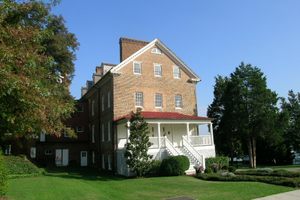
Due to the intense passions of all parties in the conflict, the Oyster Police were often compelled to outfit their vessels with weaponry. An example of one, a cannon possibly recycled from the Civil War, is on display at the Annapolis Maritime Museum and Park, which is housed in a waterside building previously operated by the McNasby Oyster Company.
Know Before You Go
The museum is open Tuesday to Sunday, 10:00 a.m. to 3:00 p.m. Around half a dozen parking spots for museum visitors are located on the north side of the building; street parking is available, but limited, as the museum is on a residential street.
Community Contributors
Added By
Published
July 17, 2025