About
Haniwa are perhaps the most distinctive surviving artworks of Japan's Kofun period (c. 300-538 CE). Made of terracotta, they were placed on and around kofun mounds where important individuals are believed to be buried. They could be made in the shape of humans, animals, tools, or houses. Although their purpose remains uncertain, haniwa may have been meant to protect those buried in the kofun or contain the souls of the deceased.
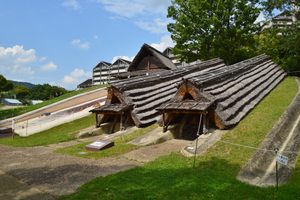
The Shinike Haniwa Factory is the largest complex of kilns where haniwa are known to have been produced. Founded by Korean immigrants according to ancient records, it was used from around 450 to 550 CE for the many kofun in the area. In addition to 18 kilns, three workshops and a village for workers have been excavated on the site.
Today, Shinike is unique among such factories in that it has been partially reconstructed to appear as it might once have. There are also outside replicas of the haniwa found on site and an indoor exhibit showing the excavated interior of another kiln.
Community Contributors
Added By
Published
June 19, 2026