About
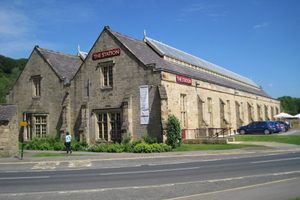
The Station in Richmond, Yorkshire, is based on the Victorian (1848) railway station which was a terminus of a branch line on the Newcastle to York main line railway. Initially, the coming of the railway brought boom times to the town with tourists attracted to the area. However, by 1963 passenger numbers had fallen and the station was listed for closure. Despite a local campaign to keep it open, it closed to passengers in 1969 having been closed to freight in 1967. During WW1, a further branch line, in the form of a military railway, was built off the line from Catterick Bridge to the Catterick Garrison some 4 miles away. This line played an important military role in both World Wars but in peacetime, the soldiers and their families who lived at Catterick Garrison only had access to one train per week direct to the main line. All other trips involved a change at Richmond.
In 1974 the building was put to re-use as a farm and gardening supply centre. This business closed in 2001 and the station building remained derelict until purchased by the Richmondshire Building Preservation Trust. After a fundraising effort, work started on the conversion in 2001 and the building now houses a 3-screen cinema, an art gallery and a dance school alongside a cafe and various retail outlets alongside the various historic information boards and video screens. Particularly poignant is a video recording of child evacuees arriving in Richmond from the industrial cities of the North of England during WW2. The engine shed next to the main building has been converted to a gym.
The building, in local stone, retains its extensive glass roof supported on cast and wrought iron works by John Walker of York, who later became iron master to Queen Victoria and also produced the iron gates for the British Museum in London. The covered area included a platform line and two sidings, often used to house horse boxes used by numerous local racehorse trainers. The sidings external to the building were used for the loading of timber. There was also a locomotive turntable.
The Station is now a popular visiting spot for tourists and locals alike and the magnificent building (grade 3 listed) is now well preserved for the future.
Know Before You Go
Parking is available (pay and display).
Community Contributors

Added By
Published
June 19, 2026