About
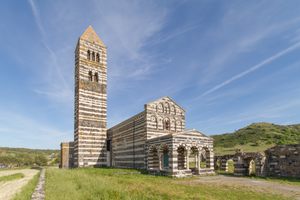
Porto Torres, in Sardinia, Italy, is one of the most Roman-influenced parts of the island. Even the magnificent Basilica San Gavino (built as late as the 11th century) in the main town has several Roman sarcophagi in its crypt. The archaeological site of Turris Libisonis is just outside the ferry port. It had been a Roman colony since the 1st century BC, when it was, apparently, founded by Julius Caesar himself. As a "colony" it was a town reserved for Roman citizens. It developed extensively under Roman control for the next three centuries. Next to the main archaeological site, and really part of the same place, is an ancient bridge over the Rio Mannu, still usable by foot traffic, and, at over 500 feet long, it is the largest Roman bridge in Sardinia.
Under the extended period of Roman control, the town underwent several redevelopments. This includes the building of the complex road system, three thermal bath houses, an aqueduct and the creation of an important port with important connections to Ostia (near Rome). The colony, between the end of the 2nd and 3rd centuries AD, was, in terms of Sardinia, second only to Caralis (currently Cagliari) for population size, the grandeur of buildings and the important maritime traffic. Important remaining buildings are the Domus di Orfeo and the Terme di Pallottino thermal baths as well as the baths in Palazzo di Re Barbaro, where you will find large rooms with extant baths and some wonderful mosaics.
Community Contributors

Added By
Published
June 19, 2026