About
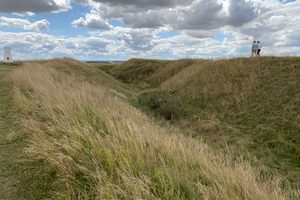
Uffington Castle was first built around the 7th century BC and acted as a protective stronghold for the local communities during the Iron Age. Its location on White Horse Hill was strategic, offering a great view of the surrounding area, with high chalk ridges that provided natural defense. The fort is characterized by its impressive earthworks, which include a large circular area surrounded by a deep ditch and bank, likely topped with wooden fences long ago. Although much of it has worn away over time, what remains still shows how large and important it used to be.
Uffington Castle is closely linked to the famous Uffington White Horse, a giant chalk figure carved into the hillside just below the fort. This ancient artwork, believed to be more than 3,000 years old, is the oldest chalk figure in Britain and has captured people's imagination for generations. The hillfort and the White Horse are often thought to be part of a larger ceremonial area, suggesting that Uffington Castle served more purposes than just a military one. Some historians think it may have had religious or cultural importance, possibly being a gathering place for ancient rituals.
The area around Uffington Castle is filled with myths and stories. The White Horse is tied to various legends, with some claiming it symbolizes a Celtic god, while others say it honors a victory by the Anglo-Saxon king Alfred the Great. Nearby Dragon Hill, a flat-topped mound below the White Horse, is said to be where St. George fought a dragon, with the bare patch of chalk at the top thought to be where the dragon's blood scorched the earth.
The fort would have been a lively center, providing shelter and safety for local tribes. Its high position was perfect for watching over the valley below, giving plenty of advance notice of any approaching threats. Today, the fort offers a spot for visitors to enjoy stunning views that stretch across the Vale of White Horse and, on clear days, all the way to the Bristol Channel.
One of the most interesting things about Uffington Castle is how it connects to a larger network of ancient sites in the area. The Ridgeway, an old pathway running through southern England, is close to the fort, and other prehistoric sites like Wayland's Smithy, a Neolithic burial mound, are within walking distance.
Know Before You Go
Uffington Castle is located near the village of Uffington, Oxfordshire, and is easily accessible from the A420 road. There is no charge to visit Uffington Castle or the White Horse, as both are managed by the National Trust and are part of the North Wessex Downs Area of Outstanding Natural Beauty.
The hillfort is open year-round, but visiting on a clear day offers the best views of the surrounding countryside. Spring and summer provide good weather for walking, while the autumn landscape can be particularly beautiful.
There is a National Trust car park near the site. From the car park, it's about a 10-15 minute walk up a steep path to the castle and the White Horse. The terrain is uneven and can be steep in places, so comfortable walking shoes are recommended. The surrounding area offers plenty of scenic walking trails, including along the Ridgeway. Besides the White Horse and Dragon Hill, be sure to explore Wayland’s Smithy, a short walk from the fort, and enjoy the rural scenery.
Community Contributors

Added By
Published
June 19, 2026