

About
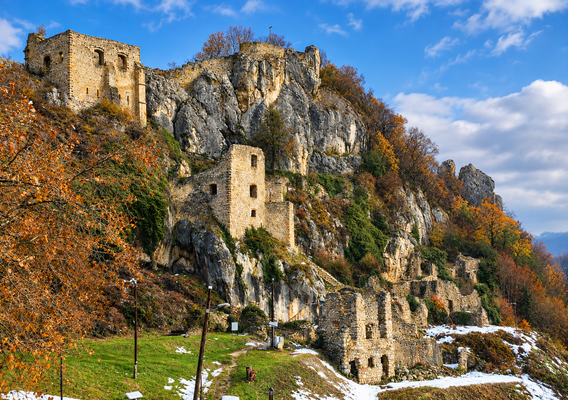
Above the village of Kalnik in northern Croatia, the walls of Veliki Kalnik Castle rise from a jagged rocky ridge. Built across several levels, the medieval stronghold follows the natural contours of the rock, making its surviving towers and walls appear to grow out of the mountain.
First documented in 1243, the castle is best known for a story involving King Béla IV of Hungary and Croatia. According to local legend, the king took refuge here during the Mongol invasion of the 13th century. As the siege dragged on and supplies dwindled, villagers kept the defenders fed with plums.
The grateful king is said to have rewarded his rescuers with noble status. They became known as the kalnički šljivari—the “plum nobles of Kalnik.” This tale remains part of the region’s identity, connecting an imposing fortress with an unexpectedly humble fruit.
The ruins visible today developed over centuries. Their towers, fragments of walls, and elevated viewpoints reveal how the builders used the steep terrain as part of the castle’s defenses. From the heights, the view opens across the villages, fields, and wooded hills below.
Know Before You Go
Approach via the village of Kalnik and head toward Planinarski dom Kalnik, the mountain lodge immediately below the ruins. The castle is a short walk uphill from the lodge.
Wear sturdy shoes for the uneven stone steps and rocky surfaces. Visit in daylight and take particular care in wet or icy conditions. Follow posted signs and barriers when exploring the ruins.
This is Veliki Kalnik Castle above Kalnik village, rather than the separate Mali Kalnik ruins near Gornja Rijeka.
Community Contributors
Added By
Published
November 18, 2026