
Catskill Game Farm: Explore the Ruins of America’s Once-Largest Private Zoo
Once a haven for middle-class vacationers, the zoo closed in 2006. With visitors and animals gone, nature started reclaiming the property.


I wasn’t sure what to expect when I met Cathy Ballone outside the entrance of the abandoned zoo she and her husband, Ben, had recently purchased. Over the ticket kiosk in the parking lot was a sign that read “Catskill Game Farm” and, beneath it in smaller letters, “Fun for the Whole Family.” The gate we passed through still bore the shadow of the hand-painted giraffe that had once adorned it. What remained inside was a mystery.
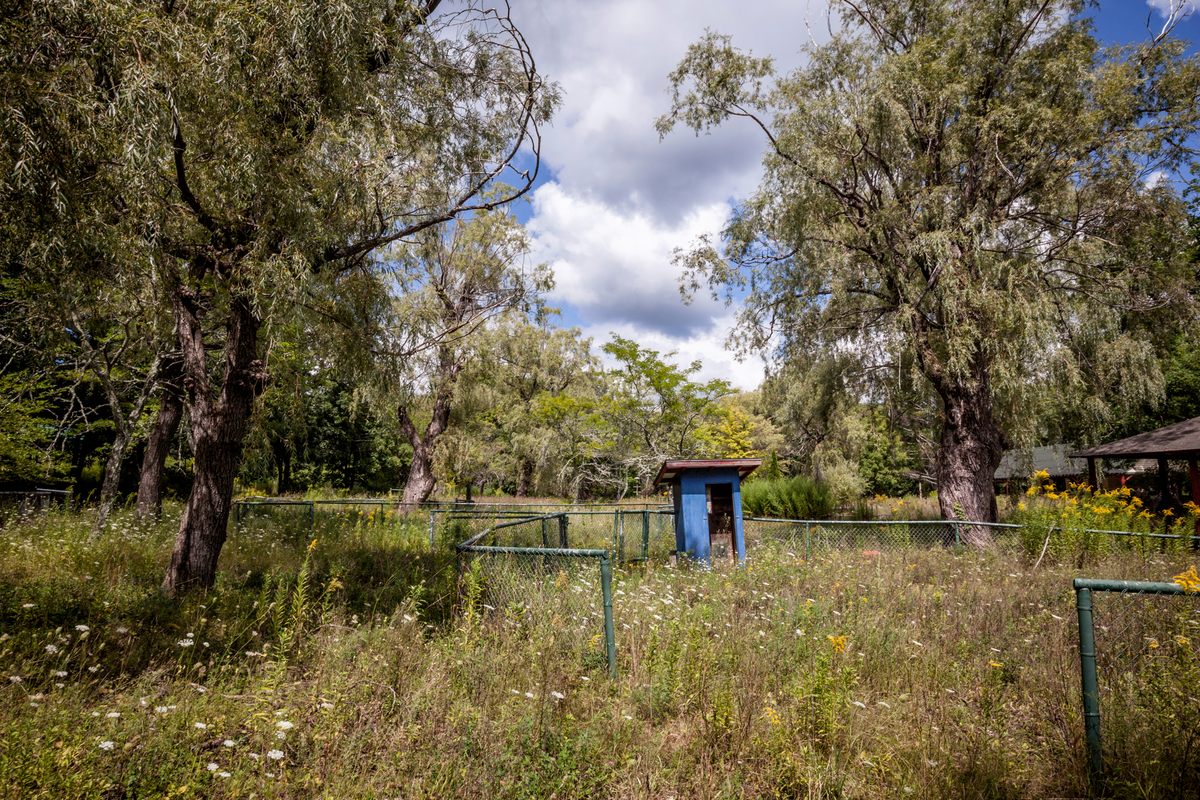
I knew much had been removed after the Catskill Game Farm closed. The animals, of course, were all gone, and the amusement park rides had been auctioned off. As we passed by dozens of pens, huts, and cages, I found it hard to figure out what would constitute a “good” photograph of this place—something that would communicate its spirit. I was used to photographing the architecture of large buildings, but aside from the mid-sized giraffe house and rhino enclosure, most of what remained was small and obscured by weeds.
As we passed a little stand that had once held a cauldron tourists could take photos of their children in, my confidence wavered. You can’t photograph what isn’t there. Cathy, a petite dynamo whose eyes sparkled with kindness and determination, told me about the plans they had for the site: a bed and breakfast, a campsite/RV park, maybe music festivals. It seemed like a tall order. Before it was abandoned, the Catskill Game Farm had grown to a staggering 914 acres, with 136 open to the public at its peak. Cathy and Ben had purchased around 200 of these acres but with no regular maintenance, the sprawling park had become overgrown. I couldn’t see how they would manage.

Pinning down when the Catskill Game Farm opened is harder than you might expect. Most sources say 1933, but founder Roland Lindemann told the Tucson Daily Citizen in 1959 that it was 1945. A sign in the park implies it was 1939. Maddening for a historian! What’s certain is that Lindemann began with a private collection of various species of deer on his farm in Catskill, New York. As his menagerie grew, he started selling and trading animals and eventually opened the property to paying guests. Visitors came to see bison, buffalo, yaks, llamas, alpacas, camels, antelopes, mountain lions, goats, and several exotic varieties of deer.
The Game Farm was located in the perfect spot for growth: it was easily accessible to visitors from New York City and neighboring states, and the Catskill region was a flourishing vacation destination that was only growing more popular in the postwar years. By 1950, it welcomed 200,000 visitors a year and hosted attractions such as dancing bears and a meadow where guests could bottle-feed free-roaming baby deer and goats. Lindemann used his success to fund conservation efforts, believing nurturing the public’s love of wildlife could inspire efforts to protect species endangered by colonialism and war. In 1958, the Department of Agriculture recognized it as the first privately owned zoo in the United States.
The zoo’s popularity endured into the 1980s, but as air travel became cheaper, the Catskills lost their luster as a tourist destination. In 1989 Lindemann sold the zoo to his daughter, Kathie Schultz, and her husband, Jurgen—an animal importer and exporter with ties to the “canned hunt” industry, in which animals are sold to be shot by trophy “hunters” at point blank range. The New York Times later reported that over 150 animals from the farm had been shipped to Texas, and their fate afterwards was unclear. Other zoos stopped trading with the Catskill Game Farm. Citing “mounting financial difficulties, dropping attendance, and legal regulations,” the Catskill Game Farm was closed on Columbus Day 2006. Protests erupted as many animals were sold off to hunters. Attractions were auctioned, and the park fell silent.

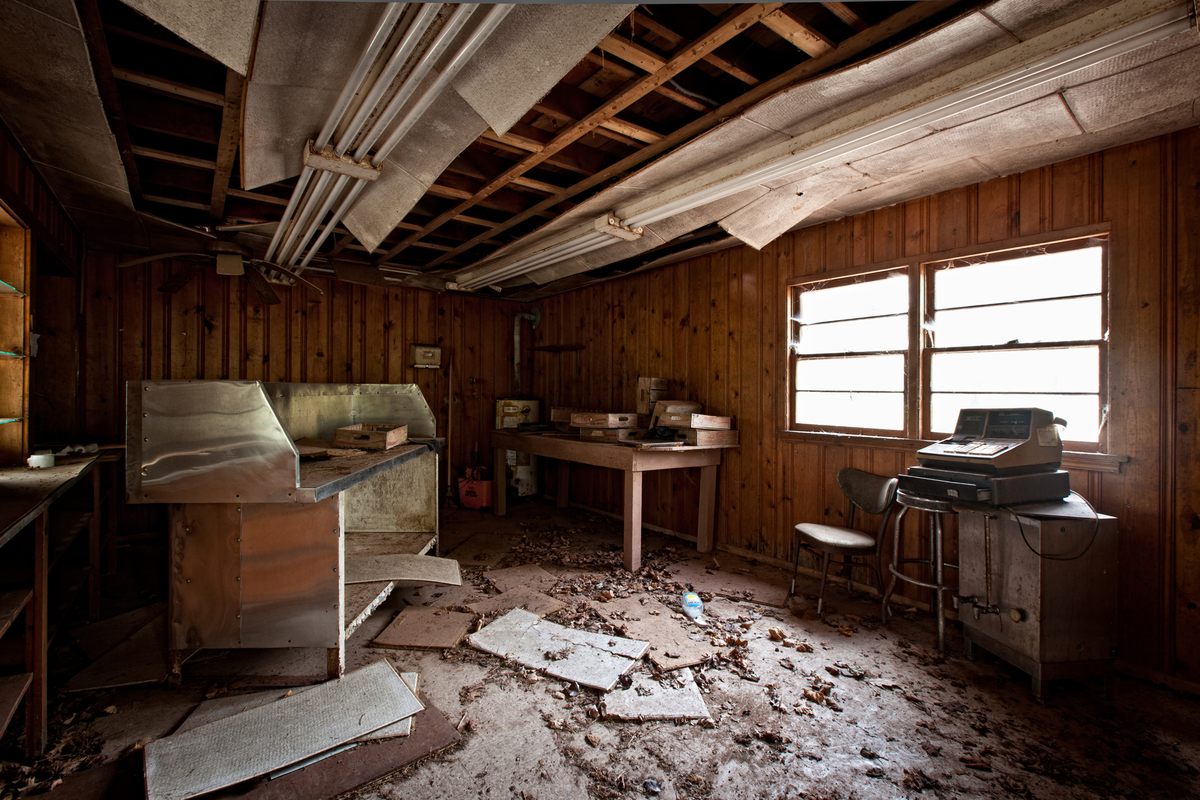
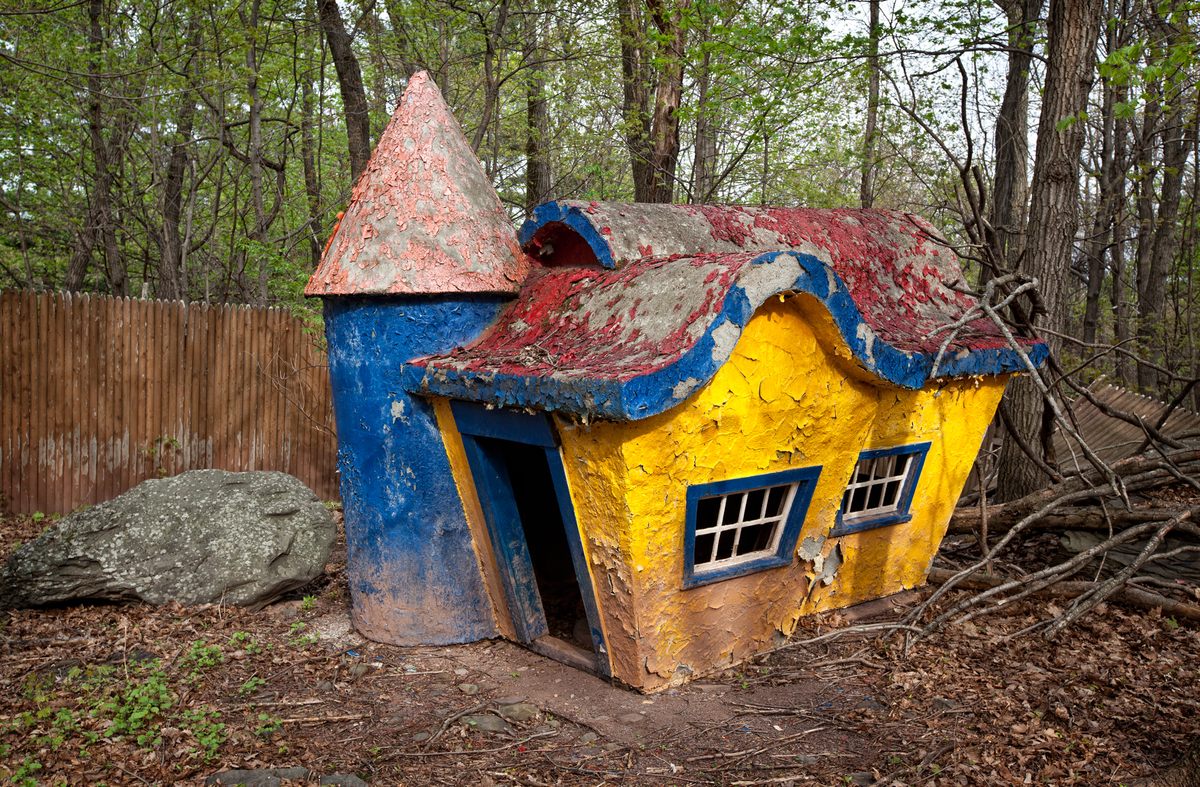
Cathy and Ben Ballone bought the site in 2012, two years before I met them in 2014. I returned often to teach photo workshops and document their progress. At first, I didn’t know how to photograph what was, essentially, absence. Gradually, I came to realize that the subject wasn’t grand architecture, but rather the beauty of the landscape, slowly reclaiming what had once been the source of thousands of fond memories. Moss crept over a miniature golf course, its booth dappled in sunlight. A Kodak kiosk stood beside the crumbling plaster remains of the fairy-tale nursery.
My favorite memory from my first visit was when Cathy invited me into the Lindemanns’ old home—part office, part residence. It was falling apart, but inside were shelves of souvenirs and uniforms. The attic was treacherous, full of gaping holes, but also full of treasures: coloring books, toys, postcards, hand painted signs. Cathy warned me to stay near the stairs, but, as she poked around, she kept sharing her discoveries. Soon we were both rooting through the mess. It felt like we were uncovering something magical. Someone else who bought the property might have considered it all trash, and it was clear to me then how much the Catskill Game Farm meant to Cathy. She wanted to repurpose it for a new future, but honoring the former zoo’s past while doing so was an essential part of the process.
Bringing the Catskill Game Farm back to life wasn’t easy. It couldn’t—and wouldn’t—be a zoo again. It was remote, the region no longer a tourism magnet. The Ballones cleared paths and debris and opened for tent camping, chipping away at the project while Cathy continued her day job as a wedding planner. Years passed without securing the funding they needed, and I could see Cathy’s faith in their ability to complete their plan was starting to flicker. Many of the guests who attended my photo workshops confided that they wanted to see the Ballones’ vision realized, but it just seemed like too much work. I felt the same way: I cared about the Ballones, but rehabilitating even one of the buildings was a daunting and expensive task.


Then, seemingly out of nowhere, the Ballones secured an angel investor for the project, and work began transforming the Giraffe House into a bed and breakfast. Witnessing the rather barren building as it was transformed into a stylish inn was the best kind of surprise, and I was shocked by their progress every time I visited. Ben’s skill as a carpenter and Cathy’s knack for design were proudly displayed during a visit in 2019 as work neared completion. Guest rooms were animal-themed, and mementos of the zoo’s past were everywhere. Cathy was excited for the grand opening in 2020. Then the pandemic hit.
For a moment, it appeared all might be lost. But in another twist, the Ballones sold the property, turning a handsome profit and paying off their investors. Maybe, in a different timeline, they would have kept the inn and operated it themselves. But in ours, they walked away with the satisfaction of having finished what they started. The Longneck Inn still welcomes guests today, and visitors can explore the Catskill Game Farm’s remains on their own.
Most restoration stories don’t end like this. The work is too hard. The costs are too high. Even when their ideas are beautiful, reality often wears people down. It’s easy to become cynical, to call these efforts pipe dreams to shield yourself from disappointment.
But I’ve learned that skepticism shouldn’t eclipse hope. Sometimes, hard work and determination really do win out. The Ballones proved all the doubters wrong. They brought something extraordinary back to life—and reminded me why I keep seeking out places like this. They showed that even in the face of daunting odds, sometimes the dreamers manage to come out on top.
For more Catskill Game Farm photos and history, including an interview with Cathy Ballone, visit Abandoned America.
Matthew Christopher is a writer and photographer who has explored abandoned locations across the globe for more than two decades, chronicling many of the lost landmarks in our midst. You can find more of his work on his website, Abandoned America, or listen to his Abandoned America podcast.


Follow us on Twitter to get the latest on the world's hidden wonders.
Like us on Facebook to get the latest on the world's hidden wonders.
Follow us on Twitter Like us on Facebook