Unusual Love Stories: Traveling Unprepared With Susan Orlean
Author Susan Orlean talks travel romance, burning books, and how ditching the itinerary can make a trip better.

Listen and subscribe on Apple Podcasts, Spotify, and all major podcast apps.
Dylan Thuras: So, my guest today, you could describe her as a travel writer. She’s certainly not one in the conventional sense. Her books do not contain any restaurant recommendations, no cafes in Paris or walking tours of New York. But if you do want to know about the vet clinic treating donkeys in Fez, or the origami lab, where a professional paper folder creates elaborate little creatures, writer Susan Orlean is a pretty good travel guide.
Susan Orlean: I’m a terrible tourist. You know, I get somewhere, if I’m a tourist, and I feel like, well, what am I supposed to be doing? I guess, I’m not sure. You know, I get somewhere, if I’m a tourist, and I feel like, well, what am I supposed to be doing? I don’t get it. When I’m traveling for a story, I’m on a mission. I’m looking for something, and I’m pursuing something, and it makes the trip so much more interesting.
I’m Dylan Thuras, and this is Atlas Obscura, a celebration of the world’s strange, incredible, and wondrous places. And Susan Orlean has an eye for strange, wonderful, and incredible places. She has this way of digging and digging until she finds a detail that makes you see a place in a totally new way. She’s also sort of answering the question about why we live the way we do. Susan has traveled all over the world searching for stories, and today she is taking us to a few of the places that helped shape her work and her life. She talks about throwing out the guidebook, letting herself find whatever it is that is waiting out there for her.
This is an edited transcript of the Atlas Obscura Podcast: a celebration of the world’s strange, incredible, and wondrous places. Find the show on Apple Podcasts, Spotify, and all major podcast apps.
Dylan: You did not grow up gallivanting around the world. I think we both share Midwestern roots. What was your sort of life like as a kid? Where were you growing up?
Susan: My parents didn’t put us in the back of a van and move to Morocco and travel with us through Africa. We did a lot of more traditional, conventional family vacations to warm places, to the Caribbean, to Florida, to Hawaii, not so much adventuring around the world. Then I began traveling, both for my own curiosity, but then really traveling a lot for stories.
Dylan: Today, we are talking about a couple of places that have kind of defined the way you move through the world, and one place in particular was the library. You even wrote a book called The Library Book, all about the Los Angeles Public Library, which was destroyed in a fire. What role has the library played in your life, both as a kid and as something that you’ve returned to as a writer?
Susan: I grew up almost walking distance from a branch library in my suburb in Cleveland. My parents were great library supporters and users, and from the time I was very young, my mom took us to the library several times a week. Those trips really were magical, and it was because, in the library, I could have anything I wanted. It was all free. There were no limits. And for a kid, that is an intoxicating experience. You go to a toy store with your parents, or a bookstore, your mom might say, “You pick one book or pick two books, that’s it.” You go to the library, and you come with eight books. And in fact, a lot of parents are very pleased because they feel like, “Well, this is a sign that my kid loves books and loves reading.” So you’re almost rewarded for your greediness, in a way that most of childhood is about being told what you can’t do. The library, then, is the sort of sacred place of possibility.
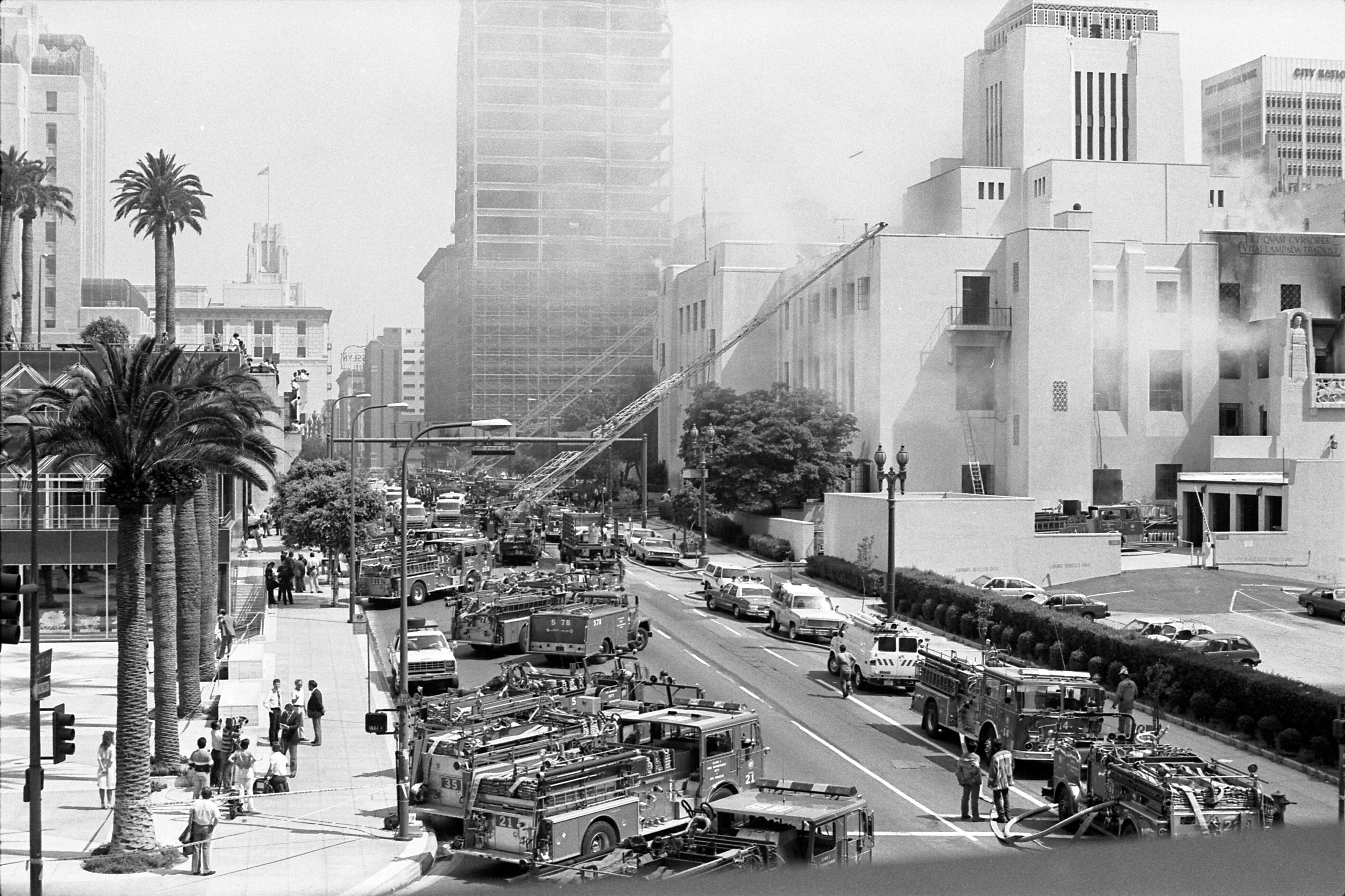
I see one’s relationship to libraries as often having many different stages. Then I had my own child, and suddenly, I was taking my little son to the library. And then, when I moved to Los Angeles, I was given a tour of the downtown library, which is a really exceptional building. It’s built in the 1920s, it’s very eccentric, it’s very beautiful, and I just immediately fell in love with it architecturally. On that tour, I also found out that there had been a terrible fire at this library, which was something I knew nothing about. Turned out it was the largest library fire in American history, 400,000 books were destroyed, 700,000 were damaged. So, the minute I heard this—and also marveled at the fact that I had never heard of it before, this took place in 1986.
And, of course, I found out later why that was, why this fire, which was such a profoundly damaging event, had managed to go somewhat unnoticed, and it was because it occurred on the same day as the Chernobyl meltdown. And I spent the next close to seven years researching and writing about that fire, about the history of library fires. I mean, as soon as we began building libraries, we began burning libraries as well. So, you would not go to the trouble of burning a library unless you felt it was a very important place.
Dylan: And if I’m not mistaken, in researching this book, you performed kind of the ultimate writer’s sacrilege. You yourself burned some books as research. Am I right about that?
Susan: You know, I felt I had to. It was really funny. Here I was writing about the burning of 400,000 books. It occurred to me that I had never seen a book burn. I’ve seen newspapers burn, and I thought, well, I think, in the interest of accuracy, I really should burn a book so that I know what it looks like, and so I can describe it vividly. For my book, back in the 1600s, if a book burned, that might be the one and only copy. If I burn a paperback book, I can go buy another one for $17. Still—and this, I found really fascinating—still, it is a taboo. You know, nobody burns a book for a good reason. Many of us are very familiar with scenes from the beginning of the Nazi era in Germany of huge bonfires of books that were considered suppressive and written by people who were out of favor with the Nazi regime. So our association is with all the most negative impulses of human nature, which is to keep people from a certain kind of knowledge.
Dylan: What book did you choose to burn? Like, how did you choose the book?
Susan: Well, it was very tough. At first, I thought I would burn a book that I didn’t like, and then I felt like that was really mean, that it felt really evil to take a book I didn’t like and burn it. So I thought, well, I’ll burn one that I like, because it won’t have so much hostile kind of energy. And then I thought, but I don’t want to burn a book I like. That seems really almost worse. So I thought, well, I have a lot of copies of my own books. I’ll burn one of those. And then I thought, well, wait, I don’t want to burn one of my books. That’s really creepy. So I said to my husband, you know, I thought this was a great idea, but I can’t do it. I just feel too weird. And one day he came home and he was smiling, and he said, “well, I found the book for you to burn.” I said, “all right.” And he had a bag. He opened the bag and took out a copy of Fahrenheit 451. And he said, “here you go.” And I thought, well, of course. And not only was it topically appropriate, but coincidentally—and I didn’t know that until I began doing more work on my book—Ray Bradbury wrote many of his books sitting in the LA Public Library, the library that I was talking about in the book. And he was very involved in helping raise the money to replace all the books that were burned. I thought Ray Bradbury, who wrote a book about book burning, would appreciate someone writing a book about book burning in the real world, who is burning his book for the book about book burning.
Dylan: I think that’s right. I think that that is a very good choice.
Susan: It was very meta, very meta.
Dylan: You know, the beauty of the library is that it is this shared communal experience. We’ve all been to a library. But the second place that really shaped Susan’s life and her thoughts about travel is a little bit more remote, a little bit harder to get to than a library, and perhaps harder to find on a map.
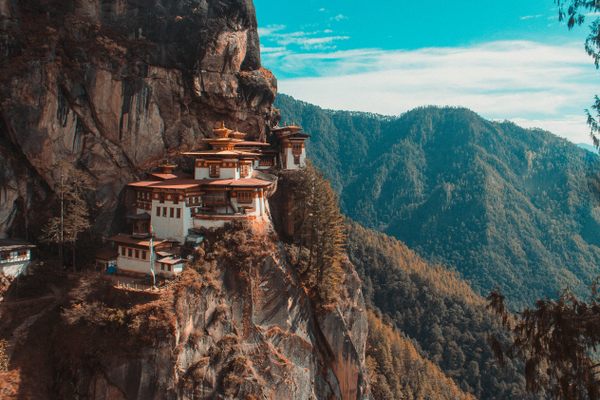
Susan: Well, I will say that before I went to Bhutan, I would not have been able to find it on a map. I’m not sure I’d even heard of it. I mean, I’m embarrassed to say that, but it’s a tiny country. It has fewer than a million people. This was in, let’s say, 1999 or 2000, when there was very, very little tourism in Bhutan. I believe they capped it at 2,000 visitors a year. There were no hotels. It’s now in a very different state of accessibility. But back then, it was a place people rarely went. I happened upon an ad, and it said, “Fertility Tour.” I love stumbling across a strange headline, and I would say that counted as a strange headline. And it said, You know, we will attend all these festivals and visit these different shrines. And in small print, it said, “It is not required for you to have a baby.” And you know, I just thought, “This is catnip.” I mean, come on.
Dylan: What’s going on here? What is going to happen? Who’s on this trip? Yeah, yeah, yeah.
Susan: I’ve got to do this trip. Yeah. So I signed up as quickly as I could, and the minute I learned a little bit about Bhutan, I knew that I was going somewhere very special. It is the only Buddhist nation in the world. It’s now famous for, among other things, their national motto, and fixation is called Gross National Happiness. Their main concern is, how can we make the people of Bhutan happier? It is stunningly beautiful in the Himalaya Mountains, and really unspoiled, truly unspoiled. It’s just extraordinary. I had never been anywhere that beautiful in my life.
It also is a country that, besides its fixation on happiness, has this supercharged interest in fertility. And the most important iconography in Bhutan is that of an erect penis. These are painted … it’s almost like in Pennsylvania, you see hex signs painted on people’s barns. This was everywhere in Bhutan. Everywhere. And nobody thinks it’s pornographic. It’s like, well, this is how fertility happens, and we’re celebrating it. There are a lot of stone phalluses everywhere, wooden phalluses. You come from a culture like the United States, where there’s a lot of priggishness about genitalia and sexuality. And it’s like, you cannot believe it.
At that time, they didn’t have the internet, they didn’t have American movies. They had very little Western influence. So, you felt like you were seeing a country that truly was an intact cultural and social entity. And it was just an enormous relief from being confronted with the sort of detritus of American culture everywhere you go in the world.
Dylan: Bhutan, obviously, it romanced you in all of these ways you’re describing. But it also came in a very particular moment in your life where—it’s sort of this thing that happens to people sometimes, when they travel, these moments of kind of conversion to a new way of being kind of happened to you.
Susan: I had originally planned to do this trip with my husband, and we ended up getting separated right before I left on the trip. So there was a lot of poignancy and heartbreak for me going on this trip that I imagined going on with him, and imagined that even though I was there to write the story, I was also doing these fertility rituals for real, because we had begun thinking about starting a family. And then I had what I feel everyone should have at one point in their life, which is, I had a travel romance, and many people have a travel romance, and they’re quite aware that it’s a travel romance, and that it’s specific to a time and a place. I actually thought, no, this is like now my future partner, and we will split our time between Manhattan and Bhutan. I was very caught up in this kind of fever dream of this new life, and we ended up parting ways, which broke my heart at the time.
Dylan: I’m curious about how that trip and, honestly, how all that—you’ve spent so much time, sort of, in the field doing pretty deep investigative journalism, spending lots of time with your subjects. How has that all shaped your sense of travel? You’ve talked about this idea of getting lost. I’m curious about how you think about travel now, having done so much of it.
Susan: I hate preparing for travel, and it’s funny. My husband and I are very different that way. Like, he likes to read about where we’re going and buy a bunch of guidebooks and be prepared. And I feel like I can’t see things if I’m prepared, because if I’m prepared, then what I’m looking for is just confirmation bias. I’m just looking for the things that I was told I should look for. I would rather waste a certain amount of time, missing the highlights in exchange for just truly being somewhere new and being surprised by it, and being a little lost. I just compare it always to, like, an outward bound trip where you’re given a match and you know, maybe a blanket, and then you’re told, “Figure it out.” And to me, what’s interesting is the figuring it out. And it is often, initially, at least, uncomfortable.
I’m not saying you have to be somewhere exotic. I remember doing a story about Midland, Texas, when George W. Bush was running for president. He made this big point of saying, like, “If you want to know who I am, you need to know Midland, because I am Midland, Texas.” And so I said to The New Yorker, “Well, I want to go to Midland, Texas.” You know, I arrived there, and I was completely unprepared on purpose. I felt like I needed to be like the person landing behind enemy lines in the middle of the war, and I’ve got to find the hostiles and the friendlies, and claw my way to understanding, and I had a fantastic trip.
In the beginning, I thought, “What the hell am I doing?” And I just found a coffee shop, and it turned out to be kind of a cool coffee shop. And at some point, a guy was sitting there, and we started chatting. And he said to me, “Oh, well, I’ll show you Midland. I’ve lived here my whole life, and I kind of know the way it works.” And off we went, and then I stopped in a realtor’s open house and started chatting with the realtor to say, “What’s selling? What’s not selling? What are people looking for in Midland, Texas?” So I had to really see it and really be there, and not say, “Oh, Well, I think you’re supposed to go to the Midland Museum and the Midland, blah blah.”
My purpose was to try to describe the character of the city. A normal tourist might not feel like they want to go to a realtor open house, although I have to tell you, it’s quite interesting to see the way people live in different cities. It’s really fun.
I travel that way, even when I’m traveling for fun. I feel like the way I’ve traveled for work has completely influenced the way I travel for pleasure. I sometimes even enjoy having a little secret, kind of mission. One year when I went to France, I thought I just … I’m on a goat cheese trip. I just want to try as many kinds of goat cheese as I can, and it was a really fun way to be in France. I can, and it was a really fun way to be in France. To be in France. One time I went back to France, and I just wanted to buy beautiful lingerie. Again, you know, France is very big in lingerie, and it became a really fun way to see a different part of France that wouldn’t be in the guidebook—and I loved it.
Dylan: Well, Susan, what a joy to talk to you. What a joy it is to read your writing. You are just someone whose verve and, and curiosity for the world is so evident on the page and just fills you with that same sense. It’s been lovely to get to chat with you.
Susan: Well, thank you so much. This has just been a real treat for me, and I hope we’ll do it again.
Dylan: Susan Orlean is the author of The Library Book, The Orchid Thief, and so many other great books. Go get a copy of her work at your local bookstore, or perhaps your local library.
Listen and subscribe on Apple Podcasts, Spotify, and all major podcast apps.
Our podcast is a co-production of Atlas Obscura and Stitcher Studios. This episode was produced by Alexa Lim. The production team includes Doug Baldinger, Chris Naka, Kameel Stanley, Manolo Morales, Johanna Mayer, Baudelaire, Gabby Gladney. Our technical director is Casey Holford. This episode was sound designed and mixed by Luz Fleming, and our theme and end credit music is by Sam Tyndall.



Follow us on Twitter to get the latest on the world's hidden wonders.
Like us on Facebook to get the latest on the world's hidden wonders.
Follow us on Twitter Like us on Facebook