Listen and subscribe on Apple Podcasts, Spotify, and all major podcast apps.


Dylan Thuras: Hey, everybody. This week on the show, we are going underground, as in literally subterranean. We are going to spend the whole week sharing stories that happen beneath our feet. We will talk about sewers and particularly about something called a fatberg, but we’re also going to talk about citrus groves and incredible temples carved in secret. There’s a whole world happening under there, and you are just walking by totally unaware. If you have a favorite underground place, maybe a tunnel you explored as a teenager or a cave you used to go to, we want to hear about it. Tell us about your favorite underground places at 315-992-7902. Leave us a message telling us your name and story. You can also record a voice memo and email it to us at hello@atlasobscura.com. Okay. Now, we are headed underground. See you down there.

Wherever you’re listening to this right now, probably, very likely, beneath you, there is a whole subterranean world going on. The sewer underneath our streets and our feet is a vast labyrinth. Water rushes through these dark pipes, some of them big enough to hold elephants and whales.

Every time you flush your toilet or wash your dishes, whatever’s in there, the water, the poop, the food scraps, the hair, the toilet paper, it all spins down your drain and gets spit out into this mysterious underground highway. It just gets taken care of. It disappears.

Unless, perhaps, it meets something sinister along the way, waiting in the dark. Something that swallows the walls of the sewer. Something butter yellow, glossy, and sickly smelling.

What is a fatberg?

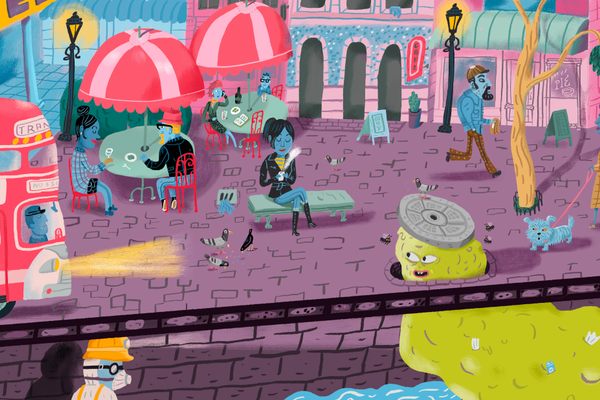
Jessica Leigh Hester: Yeah, I love this question. Well, I think fatbergs have kind of accumulated this reputation for being almost sentient. They’re like monstrous behemoths underground. I guess I have contributed to this by running stories with illustrations of fatbergs that have gaping maws and eyes.

I’m Dylan Thuras, and this is Atlas Obscura, a celebration of the world’s strange, incredible, and wondrous places. Today, writer Jessica Leigh Hester joins us on a deep dive into the sewer, the subject of her new book. We’ll talk about some of the interesting and truly disgusting things that she discovered there.

This is an edited transcript of the Atlas Obscura Podcast: a celebration of the world’s strange, incredible, and wondrous places. Find the show on Apple Podcasts, Spotify, and all major podcast apps.

Bart Everson/Wikimedia Commons (CC BY 2.0)

Dylan: What is a fatberg? Some of you may be familiar with these monstrous sewer blobs. But for those of you who aren’t, Jessica Leigh Hester is here for you.

Jessica: It is true that they can sprawl hundreds of feet underground and weigh thousands of pounds, but they are most fundamentally masses of built-up fats, oils, and grease. Wet wipes, dental floss, hair, candy wrappers, other sorts of trash that ends up in the sewer. It is a sticky thing that keeps attracting other fats, oils, and greases, and it’s just a foul party of stickiness, basically.

Dylan: Are you going to get mad at me if in this script I call you the Queen of Fatbergs?

Jessica: I would be extremely honored.

Dylan: Excellent. Good. Good. Jessica Leigh Hester, a.k.a. Queen of the Fatbergs, used to be one of my colleagues at Atlas Obscura.

Jessica: I was. I was a staff writer and senior editor at Atlas for, I think, around three glorious years before I fell so in love with one of the stories that I was writing that I decided that I wanted to spend five to nine years thinking about it.

Dylan: And ever since she worked at Atlas, Jessica was interested in the kind of science-y, offbeat, and often quite disgusting stories.

I went back through your archives and just kind of started to try and follow your beats, the gross beat, and it is a rich oeuvre. Some of my favorite examples are “The Secret Life of ‘Sea Pork,’ The Organ-Like Blobs on Your Beach,” “Meet the World’s Least-Charismatic Orchid” has got to be one of my favorite headlines of all time. Have you always been interested in this kind of stuff?

Jessica: Yeah, I think so. I think I’m very interested in textures. And so sliminess and gloopiness have always intrigued me. Like I always was a big slug fan. I mean, imagine my joy as an adult to learn that this was a sustainable career, just being interested in slimy things.

Dylan: So it wasn’t super surprising to anyone who knew her when she said she was working on a book all about sewers. It is classic Jessica Leigh Hester. You come for the disgusting fatberg, and you stay for the profound ideas about how we all live.

Jessica: I’ve spent the last, wow, like 10 or 11 years trying to understand how humans leave traces of ourselves around the world and how we then make sense of those traces once we realize that we’ve shed them.

Dylan: So have you ever seen a fatberg in person? Have you been able to interact with one?

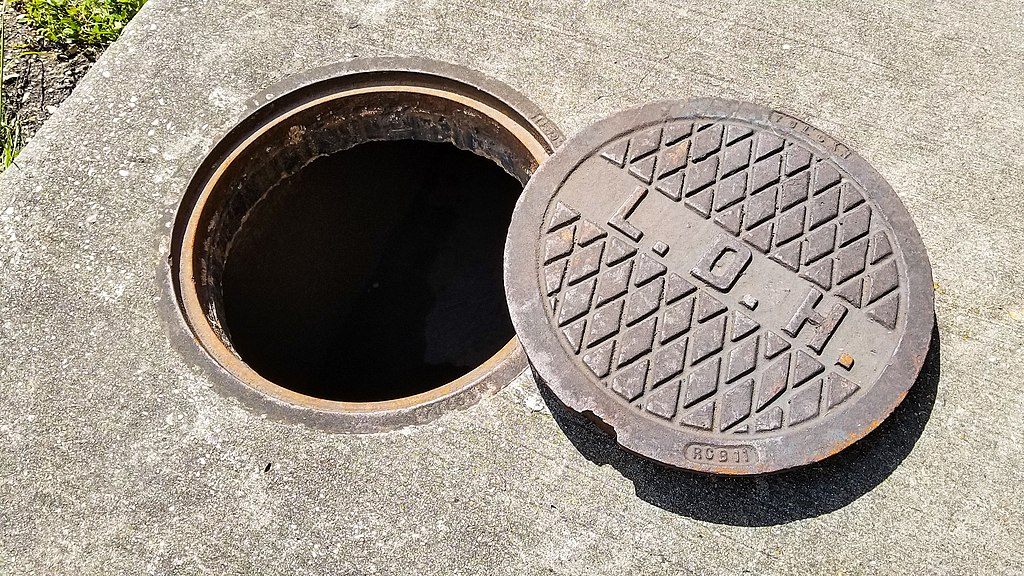
Jessica: I have. I would say it wasn’t very interactive with me, but I did get to see one. So, I have seen them both in situ and hauled to the surface. So in London, when I was following a sewer crew overnight, they were trying to dislodge a fatberg. And I got to kind of crouch over the maintenance floor cover and watch for frothing bubbles that were a signifier that the fatberg had started to fall apart and the fat was gurgling. So I saw little traces of it. I mostly got to smell it.

Dylan: I have to ask, what was the smell?

Jessica: So it’s not fecal. People often think it’s fecal. It kind of smells like rotten eggs, but also it smells like really cold, rancid fries, which grossed me out because I love fries. And I don’t like this blasphemy against potato products, because you have all of this oil that’s been languishing, attracting dirt and other oil and fecal matter and all this stuff. So it does sort of smell like the grossest fry grease you can imagine.

Dylan: Just help us understand the scale. Why is this sort of lump of fat such an issue?

Jessica: The scale can be enormous. And I think the reason that it’s such a problem is that the whole point of the sewer is that sewage travels through it. When you have a fatberg, the space for sewage to flow gets narrower and narrower. So the worst case scenario is the fatberg claims so much of the pipe, there’s no room for the sewage to flow. But ideally, you would catch the problem long before you get to that point.

Dylan: Speaking of texture, have you touched one?

Jessica: I haven’t. I would love to.

Dylan: This is a very Jess Hester answer to that question.

Jessica: That’s probably true.

Dylan: And then you also went around with the fatberg task force that you described. Can you tell me about that? What what were they like? What was that experience like?

Jessica: Yeah, they’re amazing. They were very funny. Humor is probably very helpful for this job where you’re like, ankle deep, if not deeper in gross stuff all the time. You know, they work overnight too. So it just helps to try and have a positive attitude at 3:00 a.m. when you’re in the middle of a fatberg.

So their job is to unclog pipes that are backed up for any reason, whether it’s because someone has flushed wet wipes or a fatberg has started to accumulate. So I just sat in the passenger seat of their big truck and we just bopped around the city, which is really fun.

Dylan: What does it mean to bust up a fatberg? What are they doing when they arrive at a location?

Jessica: Yeah, so they do a lot of safety stuff, which I think is really something I hadn’t thought that much about. Like the fact that this is a really super confined space with a buildup of potentially dangerous gases. It’s really dark. You have to clip yourself in. They put on PPE. They secure a perimeter around the maintenance hall where they’re entering.

And ideally, they don’t actually have to send a person down. They usually start by sinking a camera down to kind of get a lay of the land and then hope that they can break a fatberg up with jets of water and then suck the bits up through a vacuum into a truck on the surface. But if that doesn’t work, then they do send a person down.

Dylan: Yeah, I hadn’t really considered the danger of this. This work has a certain level of risk involved. I mean, I wonder, is it slippery? Can you walk on a fatberg?

Jessica: People can sink into it. So they’re concerned about that because, I mean, rats sometimes get trapped and die in them. So they’re definitely worried about people sinking too far. It is far more dangerous than I had thought about. And I have tremendous respect for the people who do it.

Dylan: Yeah, because sinking into a fatberg is not the kind of thing that most people put a lot of thought to as a way to go out. One of the things that made me realize how international this problem was, was it was actually a story you did, you know, a little bit after you’d first reporting on it. And I’m going to, I’m going to unplug my headphones here for a second so we can all hear this.

Three Ps Jingle: What goes in the loo / Paper, pee or poo / Your loo will thank you / And our sewers too / If it ain’t the three Ps / Put it in the bin please / And remember, just paper, pee or poo.

Dylan: So this is an Australian jingle that is basically requesting people to stop putting other stuff in the toilet because it is ruining the sewers and creating fatbergs.

Jessica: I love that. I feel like that’s a nice little folksy lullaby to sing to a child to teach them how to be like a wise consumer as an adult.

Dylan: Totally. Totally. Did reporting on this book make you feel concerned or maybe a sense of hope or some combination of those two things?

Jessica: Yeah, I think definitely a combination. Definitely made me concerned about how infrastructure will weather climate change. Sewers and wastewater treatment are drivers of climate change. On one hand, they have an emissions footprint that’s still being tallied, but they released some very potent greenhouse gases.

I think there are a lot of fatberg stories that are just sensationalizing. Those are very fun, but I think there’s definitely a strong case to be made for trying to understand what fatbergs and other problems with the sewers show us about human life and then how we can change our behaviors to be better stewards of shared ecosystems.

I guess I think that sometimes the grossness can make a civics lesson more palatable, right? Below my interest in slimy lumps is an interest in like, what does it mean to be good neighbors to each other, both to human neighbors and, you know, plants and animals? Yeah, I think it’s about citizenship.

Dylan: Are you sick of sewers yet? At the end of all this? Are you like, “I’m good, I’m done,”?

Jessica: Weirdly, no. I would have really loved to be able to go visit more places around the world. I did get to learn a little bit about Australia and Singapore and a few other places. But, you know, it’s a global problem and there are tons of different solutions. So I could happily write another book about sewers if that’s what you’re suggesting.

Dylan: Listen, I’m leaving it open.

Jessica: I think the worst thing about writing this book is that it has truly scrambled my understanding of what is gross. So like, I genuinely am no longer at all grossed out by any of this, which I think makes me a big liability in public places, right? Because I can just launch into like really highly sensory descriptions, kind of totally casually, not blinking, and then realize everyone around me is horrified. So I need to figure out how to reinsert myself into polite society.

Dylan: Wrong. Incorrect. Do not—stay this way. Best possible party guest. Perfect party guest. I’m not fully serious. Do not censor yourself. This is the conversation I want to have. Thank you so much for talking to us today.

Jessica: Thank you for having me.

Dylan: Thank you again to Jessica Leigh Hester. If you want to learn more about her book, Sewer, or buy a copy yourself—it fits really, really conveniently in a fanny pack—check out the links to our show notes.

Listen and subscribe on Apple Podcasts, Spotify, and all major podcast apps.

This podcast is a co-production of Atlas Obscura and Witness Dogs. This episode was produced by Sarah Wyman. Special thanks to Gabby Gladney for all their work on this episode. And this episode was sound designed by Luz Fleming. Our theme and end credit music is by Sam Tyndall.

This story originally ran in 2023; it has been updated for 2025.