
There's a specific kind of person who is so good at something that other people can't help but show up and ruin it for them. Usually it's a chef, or a hole-in-the-wall bar. In the hills above Paphos, in the 12th century, it was a hermit.
His name was Neophytos, and I climbed up to his cave on a cool afternoon last year mostly because I liked the idea of standing somewhere a man had built specifically so no one would ever stand there with him.
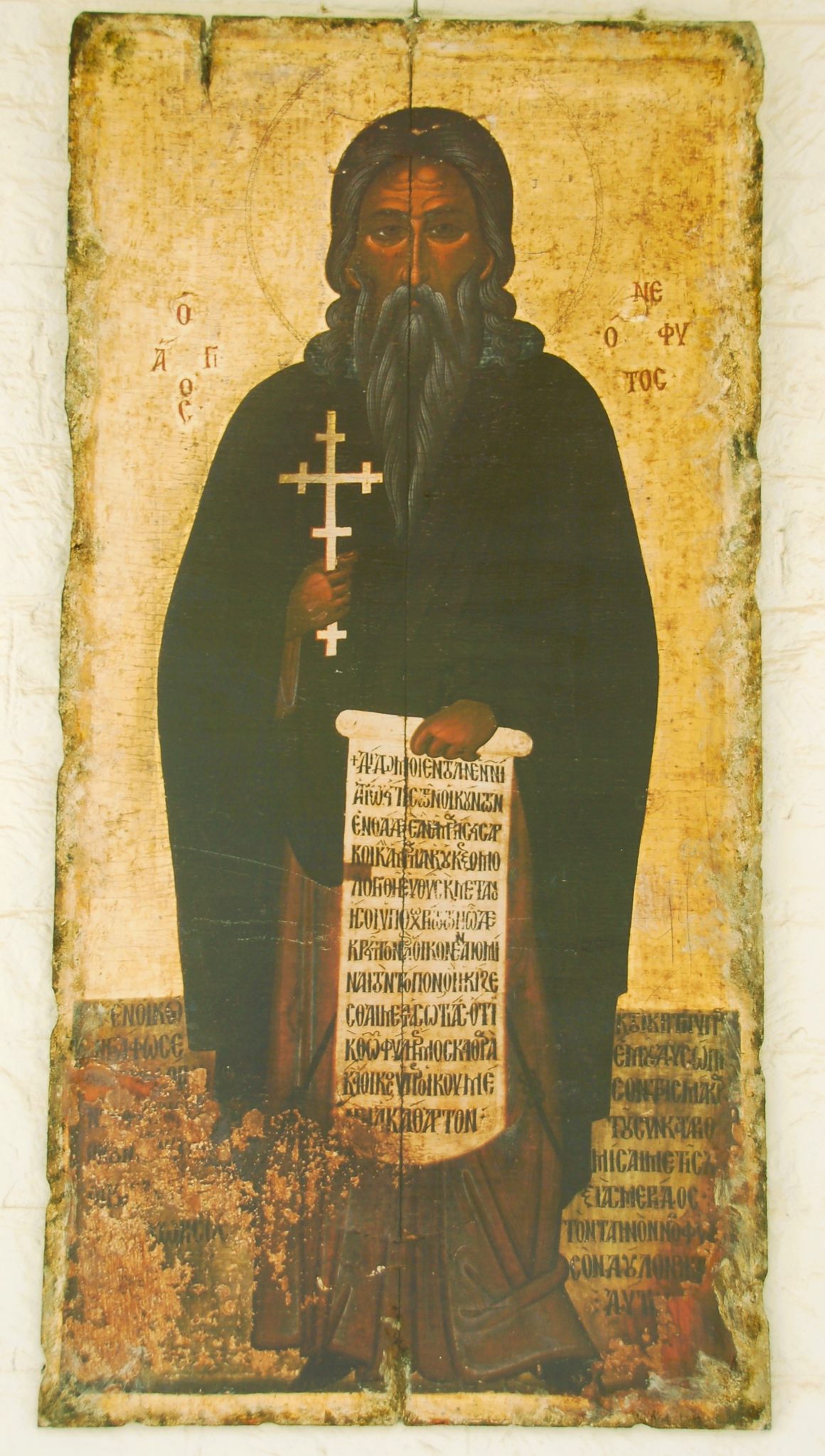
He didn't do it halfway. At 25, already a monk, he decided his monastery wasn't quiet enough, so he walked off toward the Holy Land looking for something more isolated. He didn't find it. He came back to Cyprus in 1159, found a suitable cliff above the village of Tala, and dug a cave into it with his bare hands: a cell, a chapel, a sleeping alcove. He called it the Enkleistra, "the enclosure," which is either the most honest or the most naive name a building has ever been given.
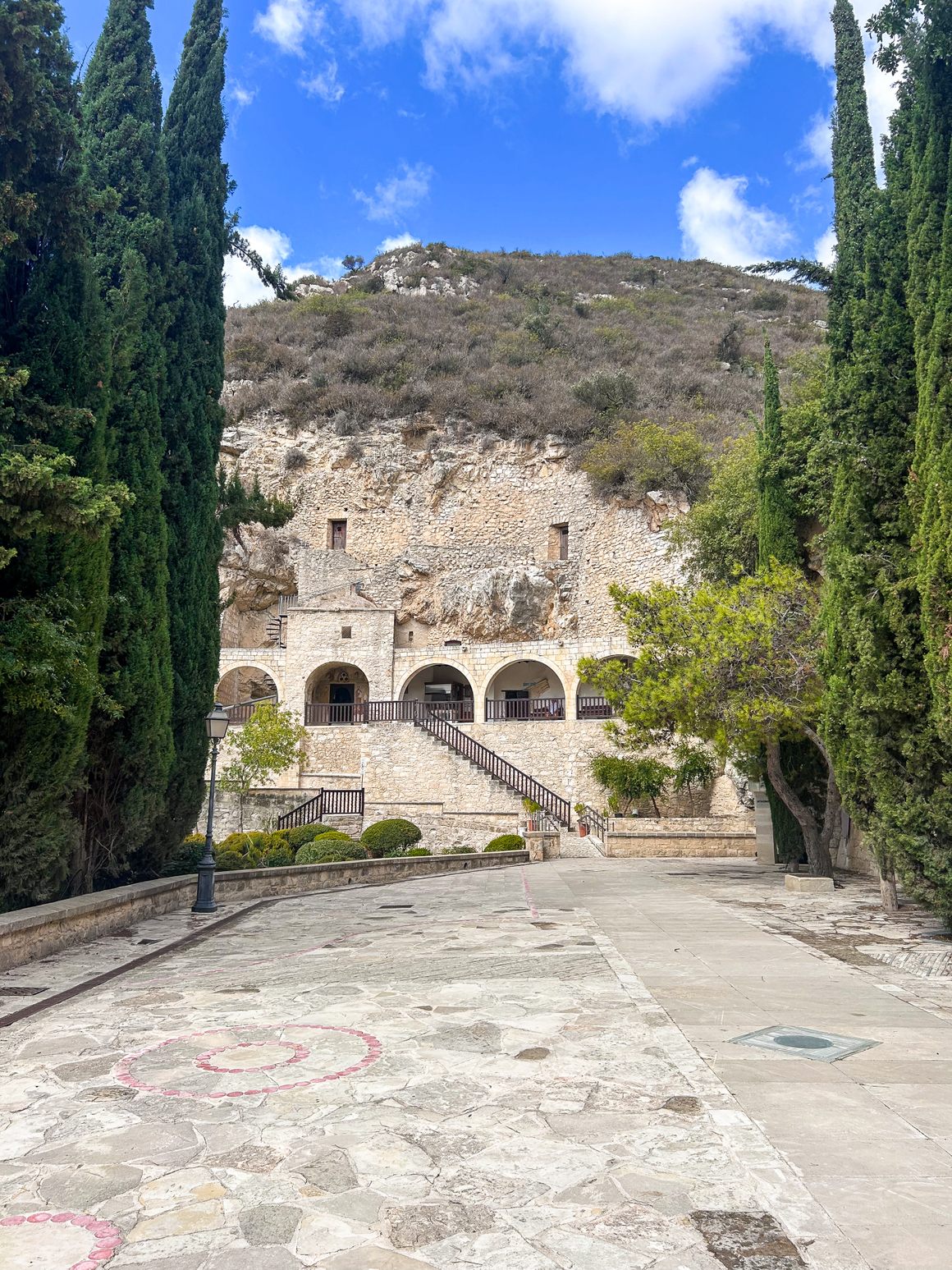
Here's the thing: Neophytos wasn't bad at being a hermit. He was actually extremely good at it. Good enough that people noticed, and once people notice you've found real, enviable, hard-won peace, they don't leave you alone with it. They want in. Disciples showed up first, then buildings, then an entire monastery grew at the foot of the one cave he'd carved specifically to escape monasteries. If that happened to me, I would be pissed. Neophytos, to his credit, did not throw a single documented tantrum. He just dug a second cave, higher up the cliff, harder to reach, and moved in. He stayed there until he died in 1219, at 85, having written hymns and books and a testament that still governs the community today. A man spends his whole life getting good at solitude, and the reward for mastering it is a permanent audience. I would not have taken that so gracefully.
The staircase up to the Enkleistra is cut straight into the cliff face, worn smooth by eight centuries of people coming to see the guy who didn't want to be seen. Inside, the walls are covered in frescoes from the 12th to the 15th century, most attributed to a painter named Theodoros Apsevdis. I stood in front of them longer than I meant to. Eight hundred years in a cave, and the faces on those walls still look straight back at you, colors intact, as if the rock had decided to preserve the one thing Neophytos spent his whole life avoiding: being looked at.
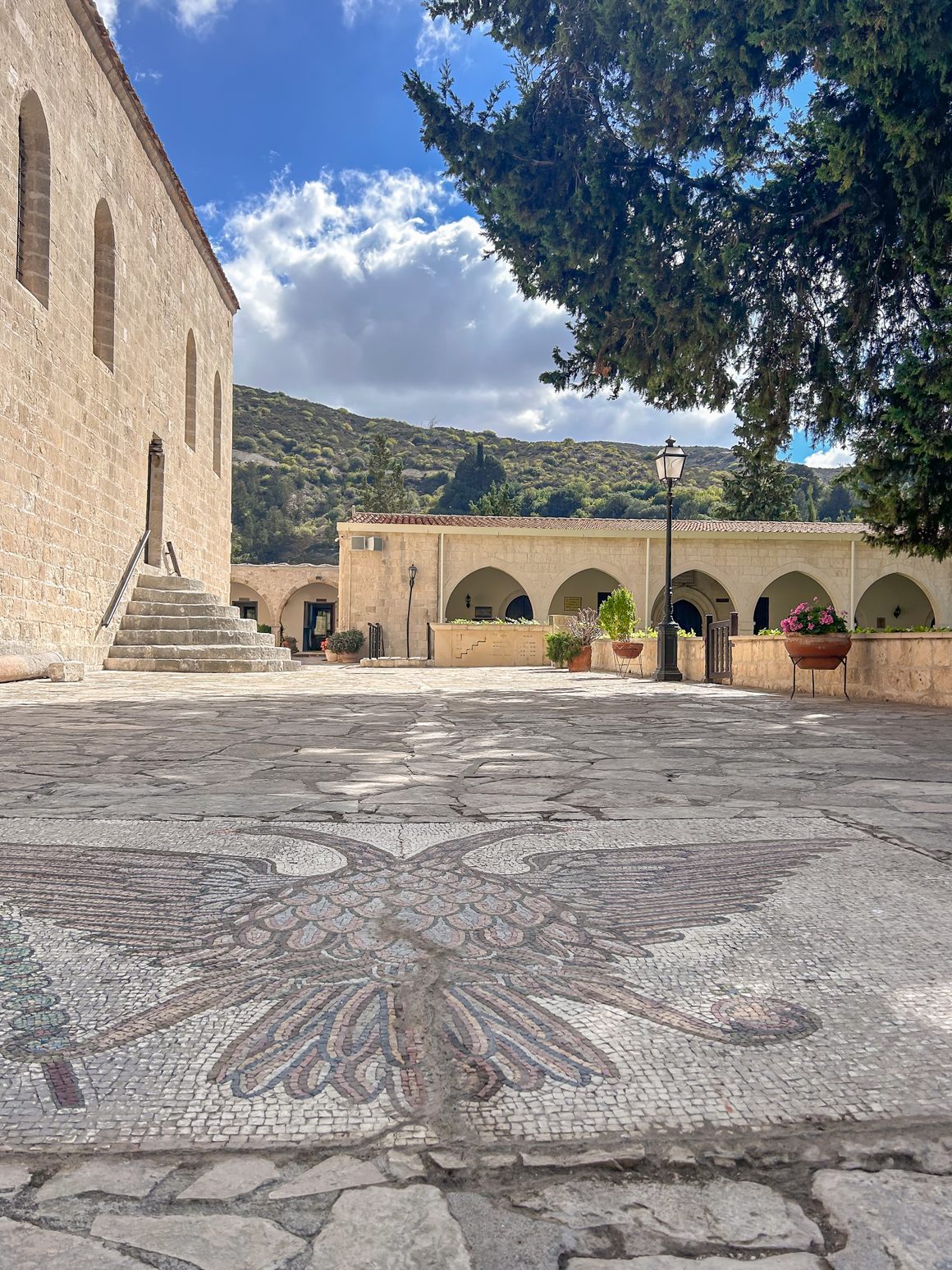
Down at ground level, the main church tells a completely different story. Built about two centuries after Neophytos died, it's got gold, a wooden sarcophagus holding his bones, a silver reliquary for his skull, a small museum with 16th-century icons that are some of the best on the island. Standing between the bare cave above and the gilded church below, you're basically looking at the entire arc of the man's life in one glance: he wanted peace and silence, he got a shrine and a gift shop.
And then, everywhere, there are cats.
They're the first thing that actually registers once you're through the gate: draped over low walls, sleeping under the olive trees, flattened across the middle of the path like visitors are the ones who need to adjust. There's a legend for this, and it's a good one. In the 9th century, Saint Helena, Emperor Constantine's mother, stopped in Cyprus on her way back from the Holy Land, during a decades-long drought that had left the island crawling with venomous snakes. Her solution was to ship in hundreds of cats from Egypt and Palestine, trained to hunt them down. The story is usually told at Saint Nicholas of the Cats near Limassol, but the habit spread to monasteries across the island, Agios Neophytos included. True or not, it explains something real: on Cyprus, a monastery with no cats is the one that would make you suspicious.
Here, the cats undo every bit of solemnity the word "monastery" is supposed to carry. You come up the hill for a 12th-century hermit and eight hundred-year-old frescoes, you leave with forty photos of a cat that didn't move the entire time you were there. Neophytos, I imagine, would have found this development mildly insulting. I found it completely correct.
Neophytos spent his entire life trying to be left alone, and he was so damn convincing at it that he ended up with a monastery, a museum, a gift shop, a cat sanctuary next door, and, nine hundred years later, tourists like me climbing his staircase specifically to talk about him. Getting that good at solitude and having it backfire this completely feels like the least fair outcome in the history of hermits. I still think about it. I'm still a little pissed off on his behalf.
