The Future of Techno Is Being Forged in Monterrey
How FuturFestival Mexico transformed a historic steel foundry into a stage for international electronic music.
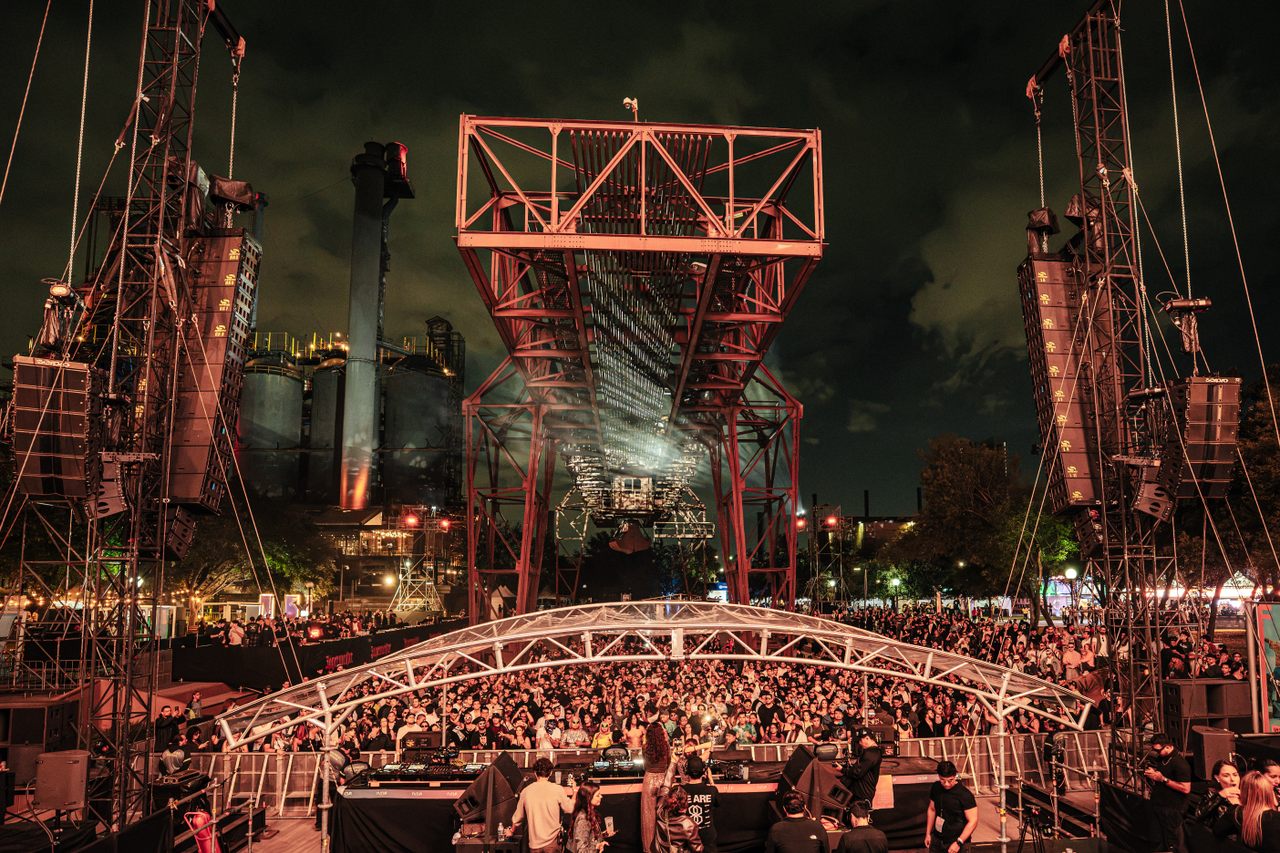

On a mild November evening in Monterrey, Mexico, the city’s largest urban park flashed from green to pink to blue, pulsating with the rhythmic beats resounding from a 360-degree sound system. Beneath a steel walkway, in a concrete depression once used for piling steel, thousands of people swayed, trancelike, to DJs’ ethereal mixes. As the sun set over a giant steel furnace, crowds continued to spill through the gates, leaving glitter in their wake as they flocked to the stages.
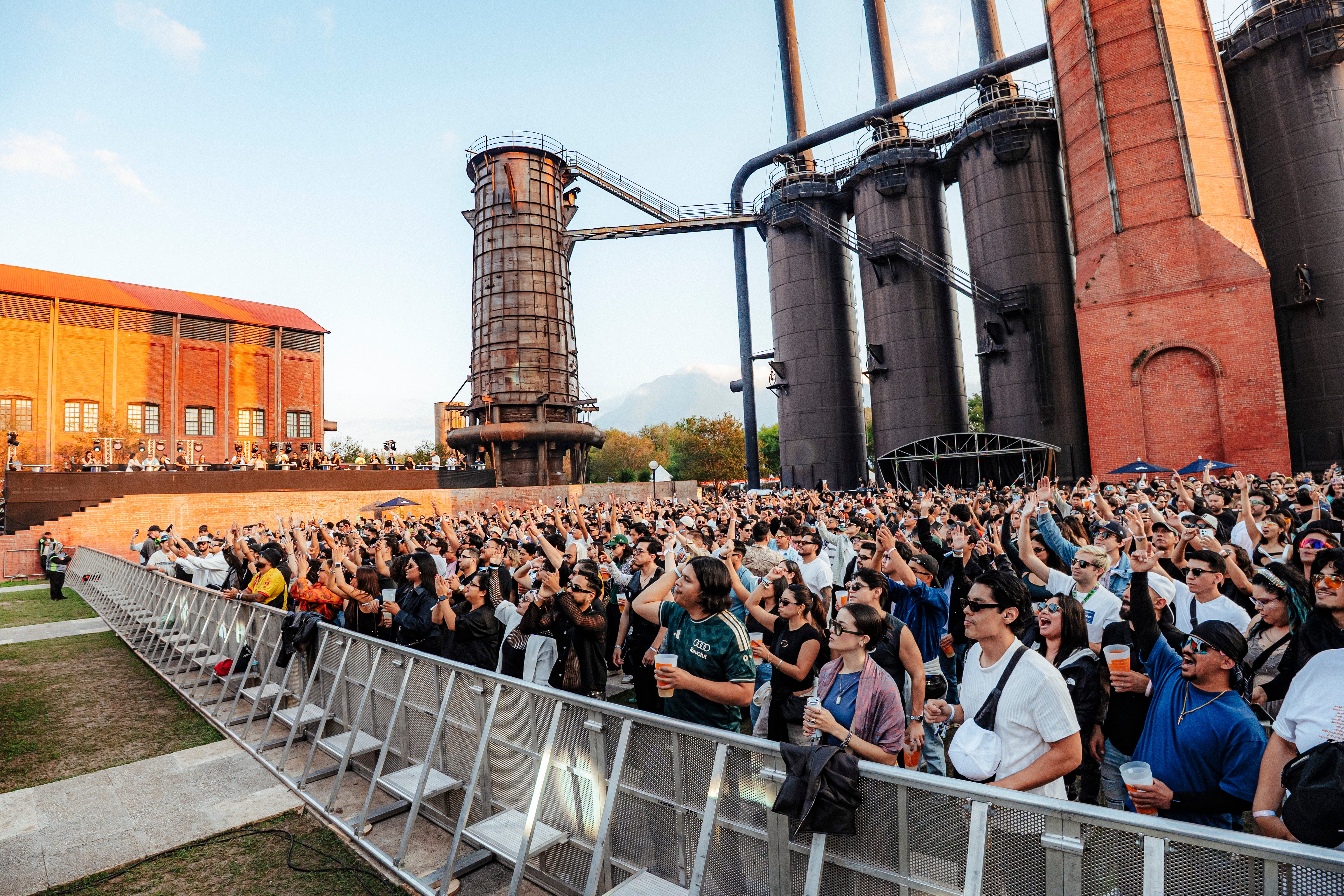
For one weekend in 2026, Monterrey, a city best known for its international corporations and industrial history, became a glowing metropolis of the future — more specifically, the new second home of FuturFestival. Established in Turin, Italy, in 2006, Futur began as an arts association honoring the tenets of Italian Futurism: namely, youth, urban industrialism, and modernization. By 2012, it had become a full-fledged house and techno music (EDM) festival and found its permanent home in Parco Dora, a former Fiat factory turned 110-acre urban park.
Within the park’s open-air steel and concrete structures, the Turin festival became a singular addition to Europe’s house and techno scene: a celebration not only of electronic music but also of the technological progress it represents. By 2025, Kappa FuturFestival (named for its sponsor, the Italian sportswear brand Kappa) was welcoming more than 120,000 attendees from more than 150 countries; the same year, it was ranked the sixth-best festival in the world by DJ Mag. As the event grew year by year, it put Turin on the global map, marking it as a hub for innovative, avant-garde art.
When Futur chief innovation officer and co-founder Gianluca Brignonen floated bringing the event to his adopted country, Mexico, Carlos López — CEO of the event company Lostnights — immediately knew the festival would thrive at Parque Fundidora. The massive Monterrey park was a site remarkably similar to Parco Dora, from its historical significance down to its very name.
Now Mexico’s eighth-largest city, Monterrey developed into a major business hub shortly after the Mexican War of Independence and, with the establishment of the Monterrey Foundry in 1900, emerged as the country’s primary industrial center. The first of its kind in Latin America, the foundry took advantage of the city’s easy access to iron and coal deposits to become the backbone of the entire region’s economy.
From structural steel to railways, wire rods, and train wheels, the foundry contributed to some of Mexico’s most important 20th-century engineering projects and counted the country’s wealthiest families among its investors. However, shortly after it was nationalized in 1977, its fortunes reversed, and it was forced to shut down in 1986.
The people of Monterrey refused to let the foundry’s towers and furnaces simply sit in obscurity, and only two years after it ceased operations, the government announced plans to repurpose the site into a public park and recreation space.
As construction began and stretched into the 1990s, Parque Fundidora evolved into much more than just green space. Additions included a convention center, children’s museum, steel museum (inside the former blast furnace), contemporary art center, and restaurant. A “Plaza of the Visionaries” was also added, paying tribute to those who helped establish the foundry over a century ago.
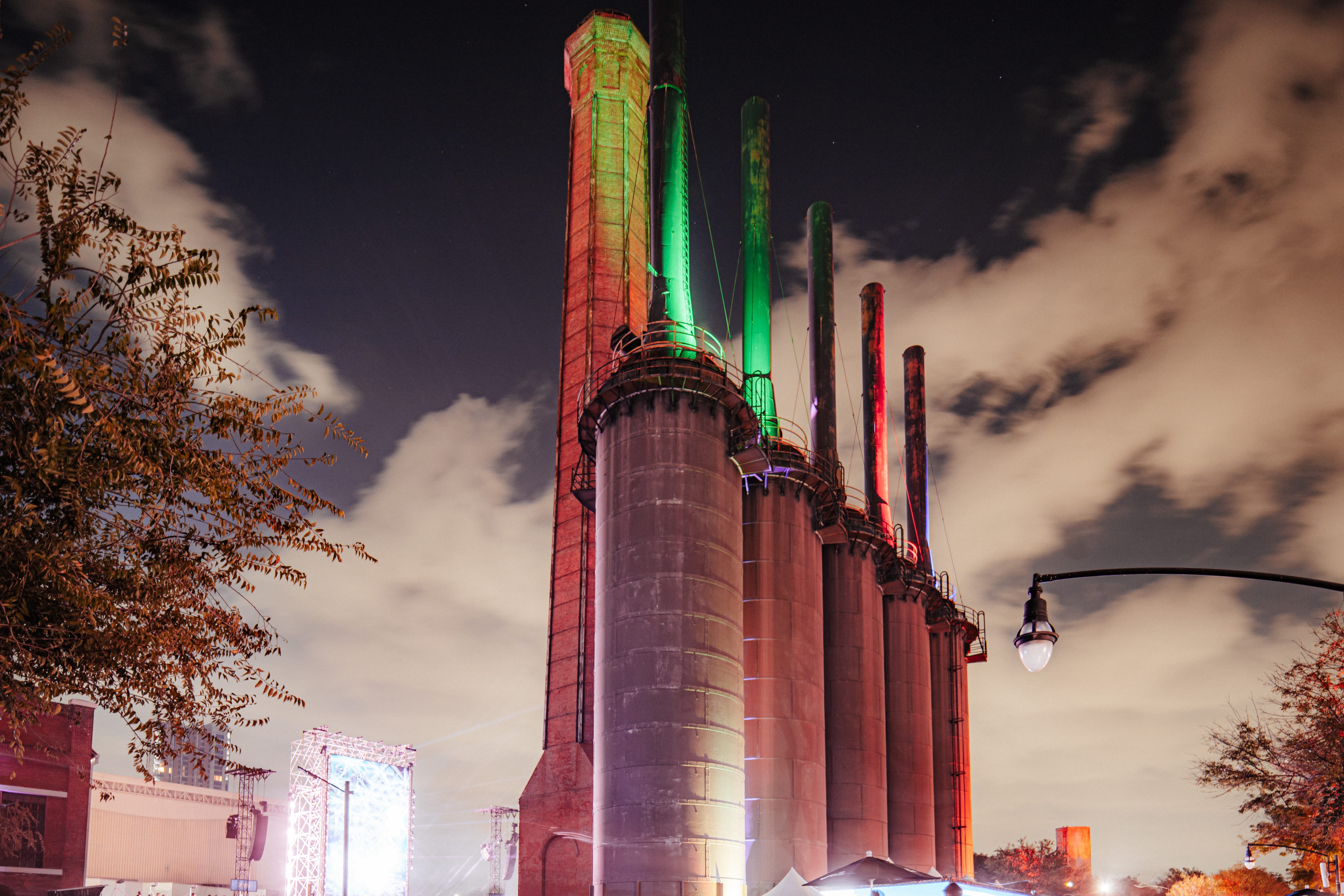
“All the premises, all the areas are unique. Just to feel and to dance in this place with a lot of heritage — there’s a feeling of greatness,” López says. Whether Parque Fundidora would feel right never concerned him because it so clearly had everything: the same industrial spectacle and local reverence as Parco Dora transposed into a new cultural setting.
Getting the 360-acre park festival-ready was a years-long process. (“You could spend days in there doing different things,” Lostnights COO Yalia Bailleres observes.) The team at Lostnights needed to determine not only which sections of the massive space to use but how to let it shine — with lighting, stages, and layouts that would make its mechanical remains as compelling as the artists headlining.
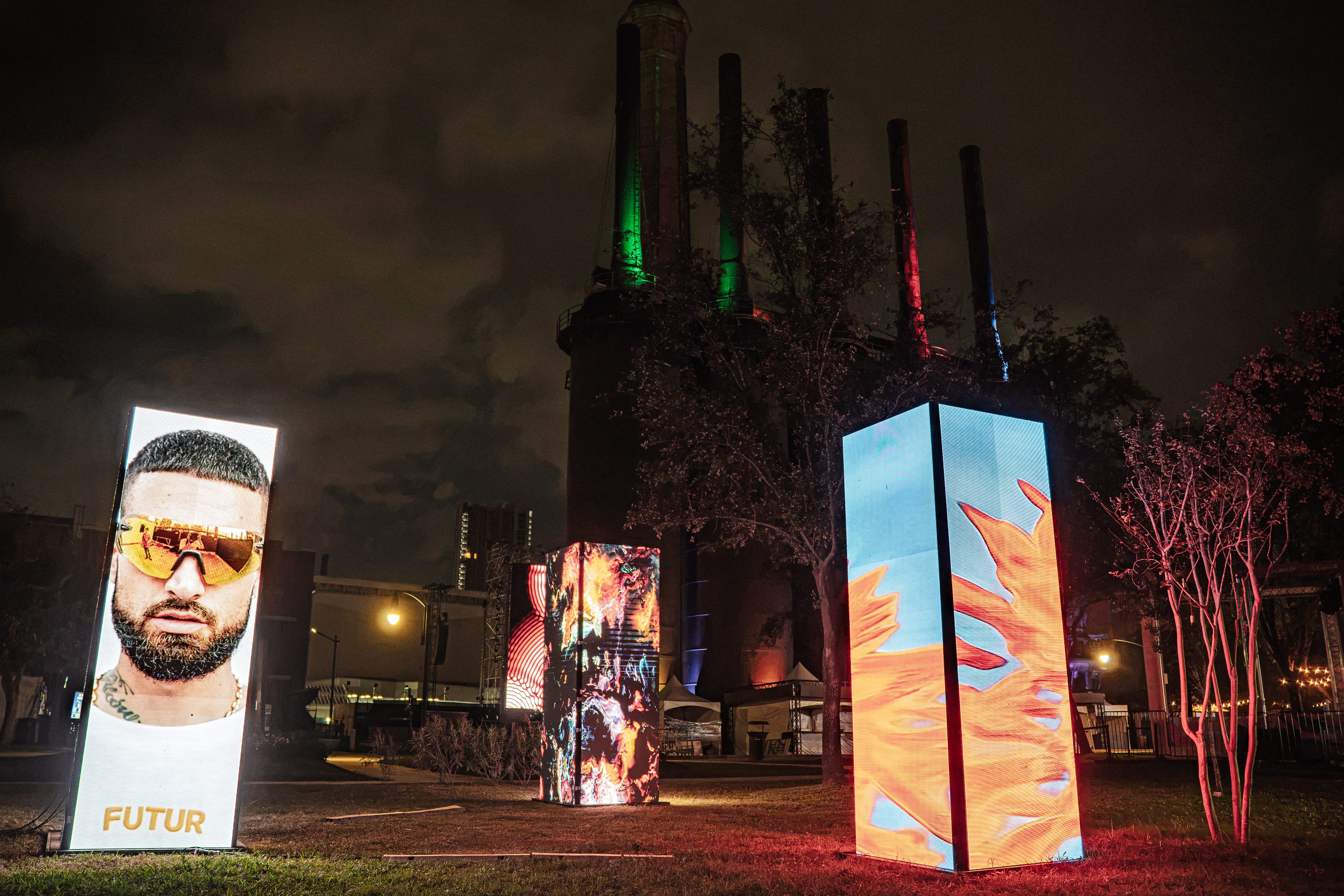
After putting out an open call to audiovisual artists around the world, the Lostnights team selected a handful of moving digital artworks to play on giant LED screens throughout the park and even on one of its stages, “Voyager.” The open call’s theme, “Envision the FUTUR,” encouraged exploration at the intersection of art, technology, and electronica, reflecting Futur’s message that any festival is only as memorable as its environment.
López, Bailleres, and their colleagues also took advantage of the park’s inconspicuous nooks and crannies, turning an area between old towers into a midsize stage for techno funk and a small brick building into a “secret” stage that nevertheless attracted a long line out the door. The festival’s premier stage, “Nova,” sat underneath a long steel bridge, the peaks of the Sierra Madre Oriental just visible behind its beatmakers and record-spinners.
“We wanted to find the perfect location that could give the same atmosphere as [Parco Dora], but at the same time, something a little different,” says Gabriella Botte, project manager of Kappa FuturFestival. “The park has such a strong identity. People know it from how the venue looks in pictures and in videos.”
The Turin festival’s steampunk setting had become inextricable from Futur itself, making it recognizable even to non-techno fans. Incorporating Parque Fundidora’s architecture into the event as much as possible meant keeping Futur’s brand alive while, at the same time, honoring Monterrey’s cultural and economic history.
“Monterrey is really like [Turin],” Futur CEO and co-founder Maurizio Vitale observed on opening night, Nov. 13, from inside one of the old furnace rooms. “The mountains around, the industry that we see here, and the smiles of people on the welcoming day. There’s a special energy. The people, the venue, the nation itself.”
When choosing the event’s lineup, Futur’s organizers sought to maintain its international variety while also spotlighting Mexican techno artists. As Botte explains, “The festival has to be connected with the territory in order to grow. It’s important to represent the locals.”
Among the Mexican artists who took the stage were betterxfly (Daniela de la Garza), LABIBE (Labibe Bujaidar), and Opuntia (Camila de Laborde), as well as Monterrey up-and-comer SADA, whose unique blend of EDM and cumbia (a dance genre that originated in Colombia) has made him a rising star of the city’s growing music scene.
It was thanks in part to this scene that more than 24,000 people showed up for FuturFestival Mexico — a turnout that Bailleres views as a huge achievement. Past festivals held in Parque Fundidora, while attracting larger crowds, have centered on traditional Mexican music or more general arts-and-culture fare; FuturFestival is the first to introduce techno music to the mix.
“For us, having electronic music this big — for locals, it’s like ‘What is that?’ because it’s something new,” Bailleres says. “But then we’ve started getting all this engagement, and people love this space.”
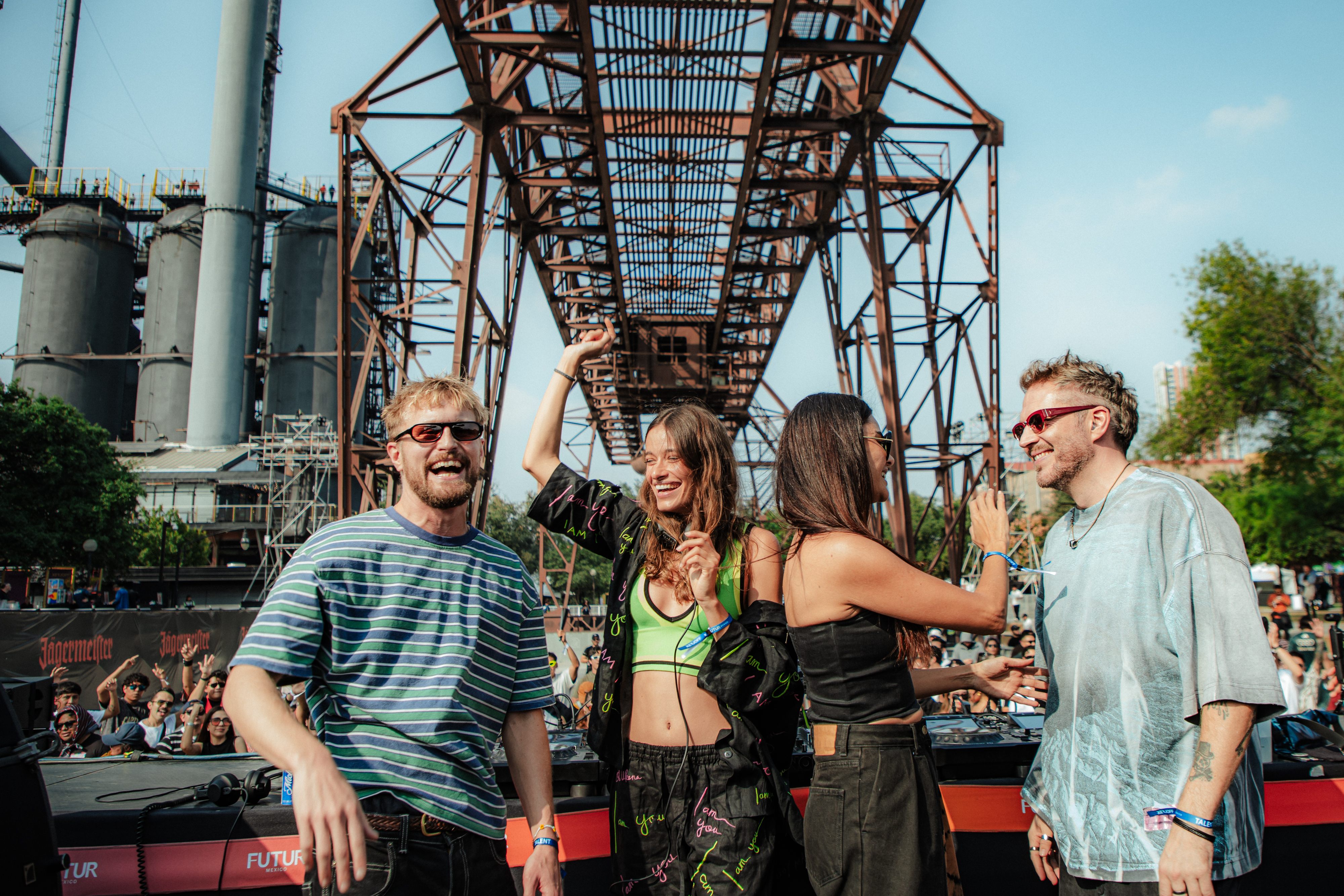
The team now looks ahead to the 2027 festival, with plans to increase the number of stages and take over even more areas of the park. Botte is already dreaming of a DJ atop the 230-foot-tall blast furnace, while Bailleres has her eyes set on the small river that runs through the park, imagining boats floating, lazy-river-style, past a colorful stage.
A place where thousands of workers once poured and molded molten steel is now a testing ground for what’s possible in electronic music exhibition and, just as importantly, a symbol of what’s next for Monterrey. “Everybody says a long-term plan, but this is more than long. This is a lifetime plan. We are here to stay,” Vitale says.
Once night set in, spotlights illuminated the foundry itself, bathing its pipes and winding staircases in neon against the dark sky. Artists mingled over drinks next to old machinery in the green room, while audience members swarmed past mill halls, cranes, and smokestacks to get to the front row for their favorite artists’ sets. Even far beyond Parque Fundidora’s gates, music echoed through the city. The future had come to Monterrey, and there was no going back.


Follow us on Twitter to get the latest on the world's hidden wonders.
Like us on Facebook to get the latest on the world's hidden wonders.
Follow us on Twitter Like us on Facebook