

One of my favorite things about volunteering on conservation projects around the world is seeing how differently each team approaches its work, and understanding why. My first penguin fieldwork was with the South African Penguin Project on Robben Island. African penguins are in serious trouble. The species is now listed as Critically Endangered, so the work there leans hard toward intervention: monitoring every bird you can and stepping in whenever it might help the population recover.
When I joined a penguin project in Patagonia one November, I noticed the difference almost immediately. Magellanic penguins number in the millions and aren't facing the same crisis, so this team's work was about observing rather than rescuing. The lead scientist described the penguins as bioindicators. Because their health and habits reflect what's happening in the ocean around them, a thriving colony suggests (within reason) a healthy ecosystem, and a struggling one is an early warning. It was a more hands-off, data-driven assignment than Robben Island, and fascinating in its own way.
Into Wild Patagonia
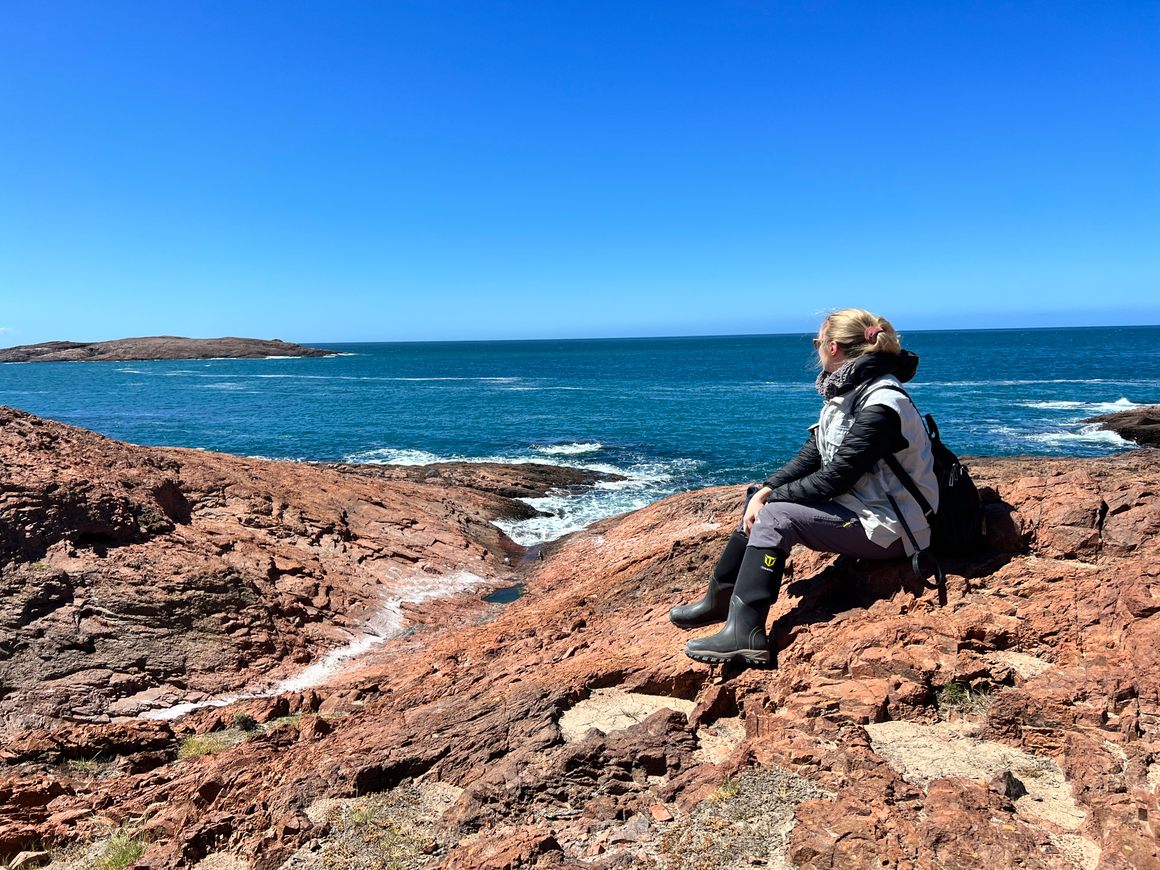
Our group of volunteers met up in Trelew, spent a night preparing, then piled into the project van for the drive south to Camarones, the small coastal town that would be our base. Every day we drove out to Cabo Dos Bahías, a protected reserve that holds a large penguin colony.
Patagonia is gloriously wild. The coastline is all dark volcanic rock, scrubby desert plants, and dirt roads stretching to the horizon. And it's full of extraordinary animals. Beyond the countless penguins, we saw guanacos (wild cousins of the llama and alpaca) everywhere, sometimes rolling around in dust baths. We saw peludos, the local name for the big hairy armadillo, often snuffling around for penguin eggs. There were European rabbits and Patagonian maras, which look like a bizarre cross between a rabbit and a small dog. We also saw foxes and plenty of birds of prey. Geoffroy's cats live there too, though they're nocturnal and you'd be very lucky to spot one.
One more surprise: in this remote corner of South America, you'll find plenty of Italian food and even spaetzle on local menus, a legacy of the Italian and German immigrants who settled in Argentina.
A Day on Nest Rounds
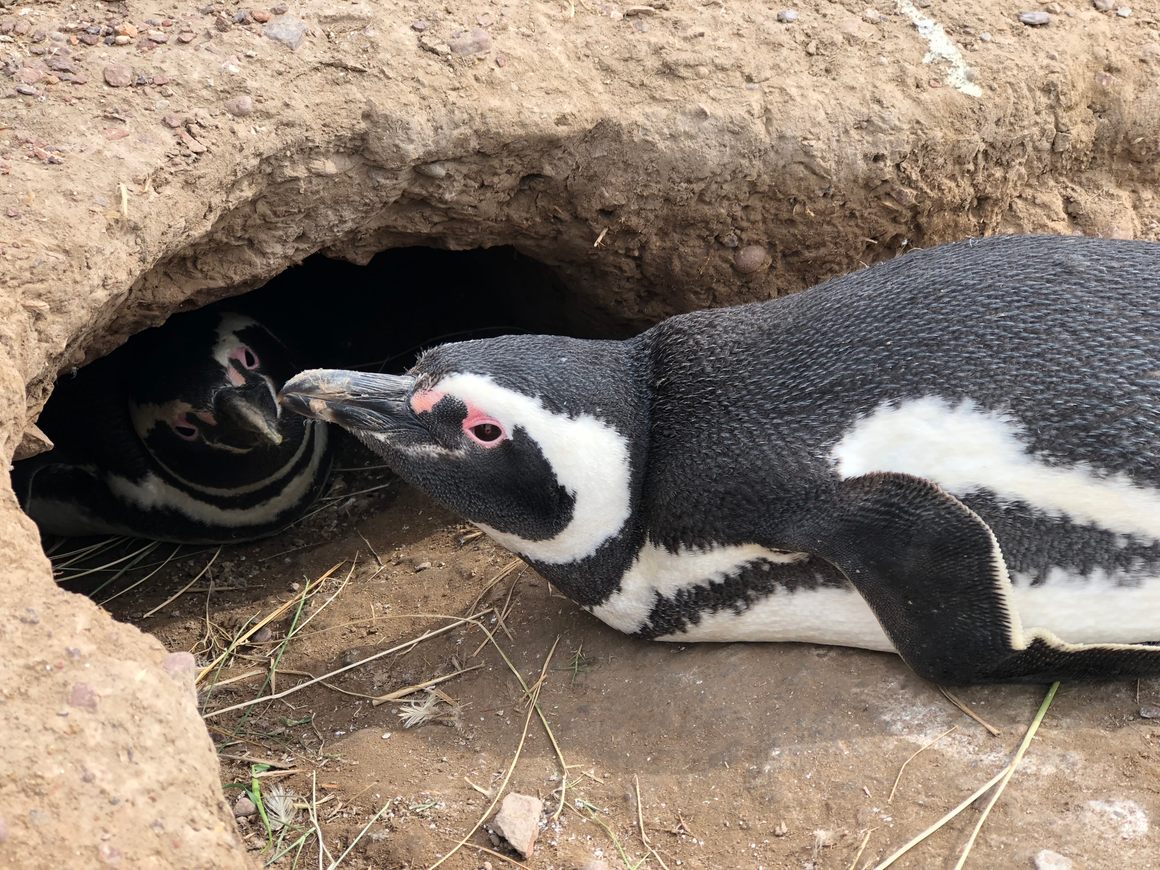
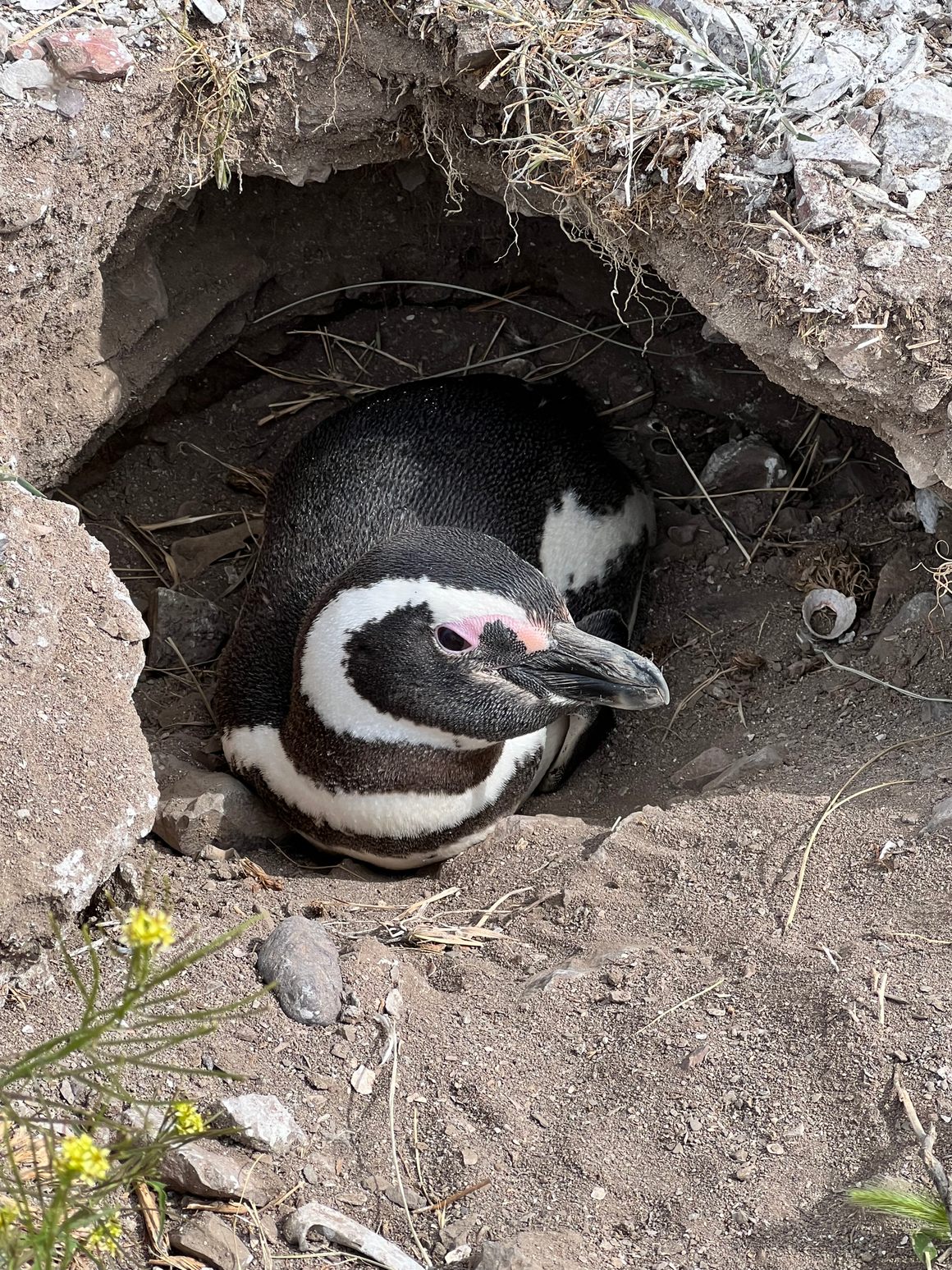
Each day we worked through a set of marked study nests spread across different zones of the colony. Some nests were tucked under bushes. Others were open burrows in the shade along the coast. In a few places, dozens of burrows were dug into the dirt side by side, and we nicknamed those areas the "penguin condos."
At each study nest, we gently lifted the adult to check for eggs and recorded how many there were. We also noted which birds were already tagged, with paint marks identifying females and males. Over many seasons, this kind of careful record keeping has shown the team that this colony runs on its own schedule, with timing and trends that differ from other Magellanic colonies.
The project also keeps control nests, which are tagged and then observed only from a distance. Interestingly, the control nests have shown slightly lower breeding success than the nests the researchers visit. The working theory is that regular human activity around the study nests may discourage predators.
Love, Fasting, and Shift Work
Midweek, lead scientist Dr. Gabriela S. Blanco gave us a briefing on what the team has learned. One big finding is that Magellanic penguins along the South American coast have generally been shifting their range northward. Colonies farther north feed heavily on anchovies, and anchovy-rich diets are linked to better breeding seasons, so the birds seem to be following the better food. At Cabo Dos Bahías, anchovies are plentiful in some years and scarce in others, and those swings show up in the colony's breeding success.
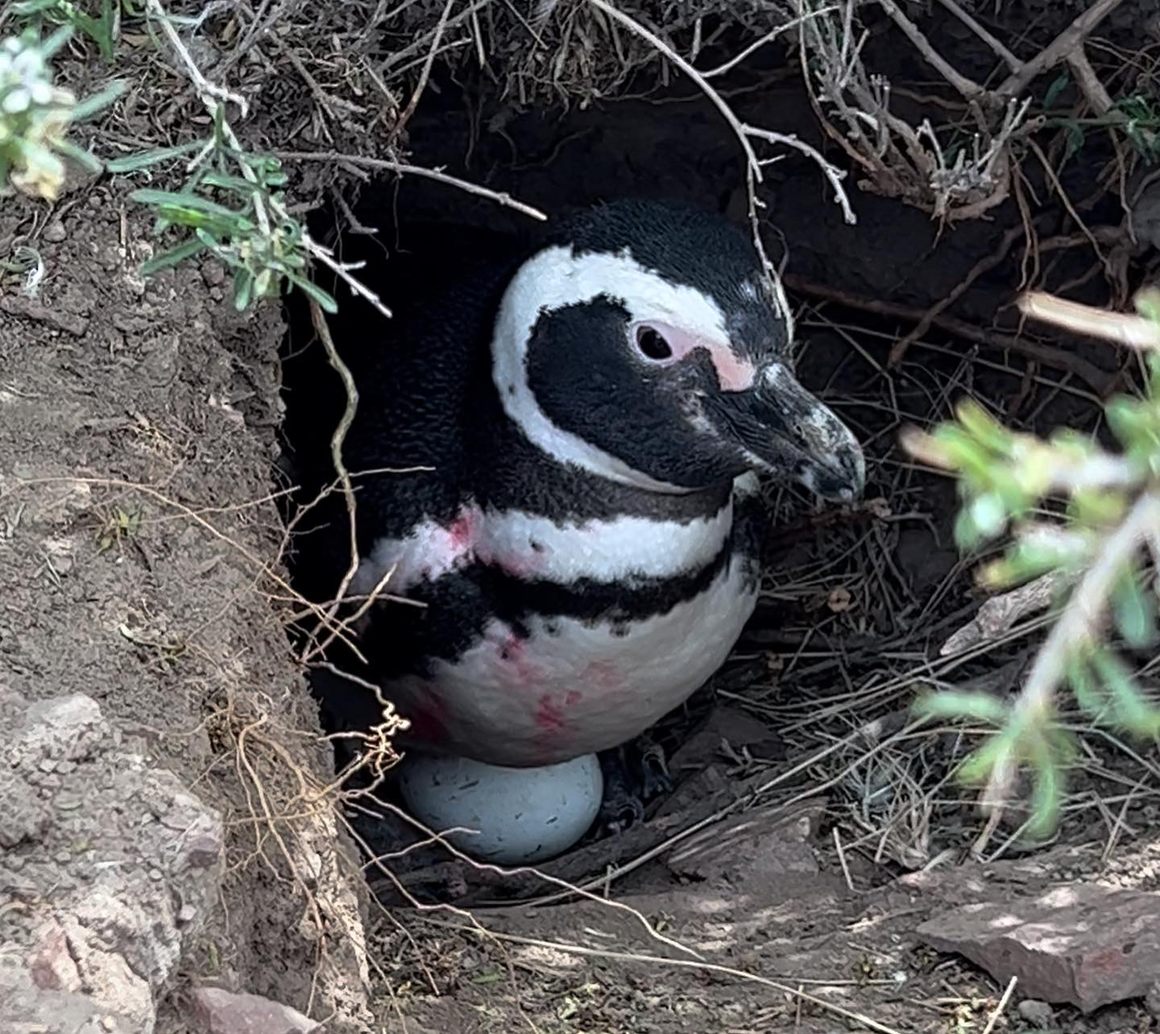
As the team explained this colony's calendar, the males arrive first, in September, find their old burrows, and fix them up. The females arrive in October to mate, and eggs are laid in mid-October. Incubation then becomes an endurance relay. One parent stays on the eggs, not eating or drinking for weeks, while the other heads out to sea to feed and build up reserves. Then they trade places. The bird left on the nest gets visibly thinner and dirtier the longer it waits.
The eggs take about 40 days to hatch, so the two long shifts have to add up. If one partner stays at sea longer than usual, the other has less time for its own trip so it can be back for hatching. A few pairs in this colony skip the marathon altogether and trade off in short shifts of about four days each.
After the chicks hatch, the parents take turns making short trips to sea and returning with food. By January the chicks grow their waterproof feathers, and by February they head out on their own. The adults moult in March, and in April the whole colony leaves to migrate until September. Here's a detail I loved: males and females from this colony winter in different places. Females travel farther north, roughly toward Uruguay, staying in shallower water, while males stay closer to home, around the Buenos Aires region, and dive deeper.
Weather With a Personality
Patagonian weather is as dramatic as the landscape. It was windy almost all the time, and conditions could swing from cold and blustery to sunny and hot in minutes. Layers are essential. Pack a warm, wind-resistant jacket that's still light enough to work in, and sturdy, flexible clothing you don't mind getting dirty, because you'll be kneeling at burrows and scrambling over uneven ground all day.
Life in Camarones and an Unexpected Museum
Our home for the week was a small beach house on the Camarones coast, and I'll never forget it. The meeting of sea and desert, along with Argentina's easygoing charm, made the fieldwork feel even more special.
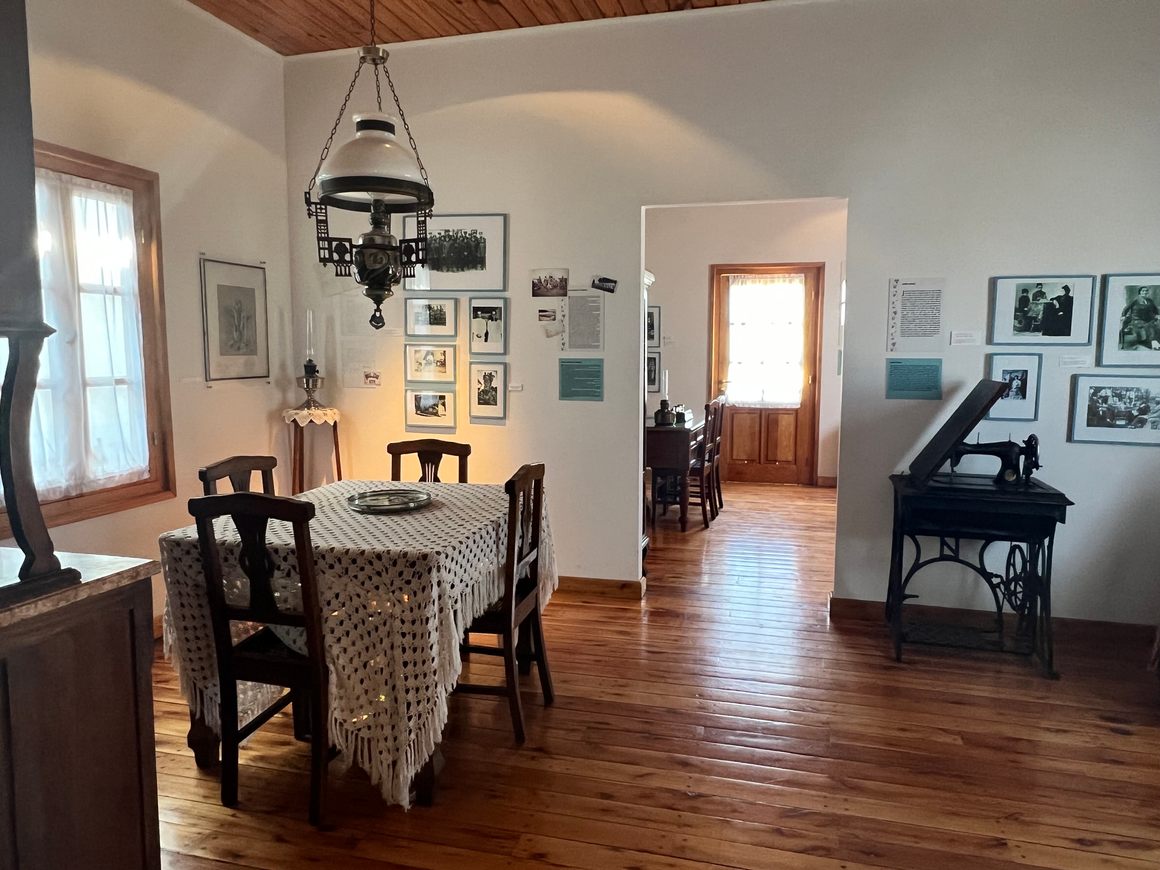
A few days in, we discovered that Camarones holds a surprising piece of history. Juan Perón spent part of his childhood here, where his family raised sheep, and the town has a small museum devoted to the Perón family. I've always had a soft spot for Argentina, so of course I went. Along with a glimpse of Perón's early life, it has a fascinating collection of memorabilia. If you ever find yourself in Camarones, don't skip it. It's a dose of Argentine history in the most unexpected place.
Why I Keep Going Back to the Penguins
I'll admit it: I can't get enough of penguins. Every species and every colony has its own habits and quirks, and I love seeing the full range of conservation work, from long-term data collection on healthy populations to urgent, hands-on efforts for species in decline.
I travel constantly for work, so when I plan trips for myself, I choose ones where I can give something back. I'd rather spend a vacation in a penguin burrow than at a resort. If you'd like to get involved in conservation but aren't sure where to start, organizations like Earthwatch pair volunteers with scientific projects around the world. Whether you give your time or your money, you can help make a difference, one project at a time.
Read more about my conservation fieldwork and adventures around the world at MaloriesAdventures.com.


