
Places Foods Stories Newsletters
Top Destinations
Latest Places
Most Popular Places Random Place Lists Itineraries
Add a Place
Download the App
Top Destinations
View All Destinations »
Countries
  • Australia
  • Canada
  • China
  • France
  • Germany
  • India
  • Italy
  • Japan
Cities
  • Amsterdam
  • Barcelona
  • Beijing
  • Berlin
  • Boston
  • Budapest
  • Chicago
  • London
  • Los Angeles
  • Mexico City
  • Montreal
  • Moscow
  • New Orleans
  • New York City
  • Paris
  • Philadelphia
  • Rome
  • San Francisco
  • Seattle
  • Stockholm
  • Tokyo
  • Toronto
  • Vienna
  • Washington, D.C.
Latest Places
View All Places »
Drunken Lampposts at night
Drunken Lampposts
Jurassic Jungle Boat Ride
Mastodon Ridge
Marvin the Mastodon
Giant mussel artwork
Mussel Village Bruinisse
Latest Places to Eat & Drink
View All Places to Eat »
Food window and entrance of center.
Indian Arts Center
Steaming Tender Restaurant
Tiptree Jam Museum entrance.
Tiptree Jam Museum
The Reading Room blends the intimacy of an inviting bar with the inviting solace of a good bookstore.
The Reading Room
Building
The Mountain House
Loading...

No search results found for
“”

Make sure words are spelled correctly.

Try searching for a travel destination.

Places near me Random place

Popular Destinations

  • Paris
  • London
  • New York
  • Berlin
  • Rome
  • Los Angeles
Places Foods Stories Newsletters
Sign In Join
Articles Posts HI-SEAS Moon & Mars Simulation Habitat

HI-SEAS Moon & Mars Simulation Habitat

Location: Slopes of Mauna Loa, Hawai'i Island , 19°36′09″N 155°29′14″W

DRBENJAMINPOTHIER profile photo
Benjamin Pothier
Community Contributor, The Explorers Club The Explorers Club
July 17, 2026
Share this Post
Copy Link Facebook Reddit Pinterest WhatsApp Messages
Email
Add Atlas Obscura as a Preferred source on Google

For fifteen days, I lived inside a 36-foot solar-powered dome on the barren, rust-colored flank of Mauna Loa, 8,200 feet above sea level, with five other crewmates and no way out.

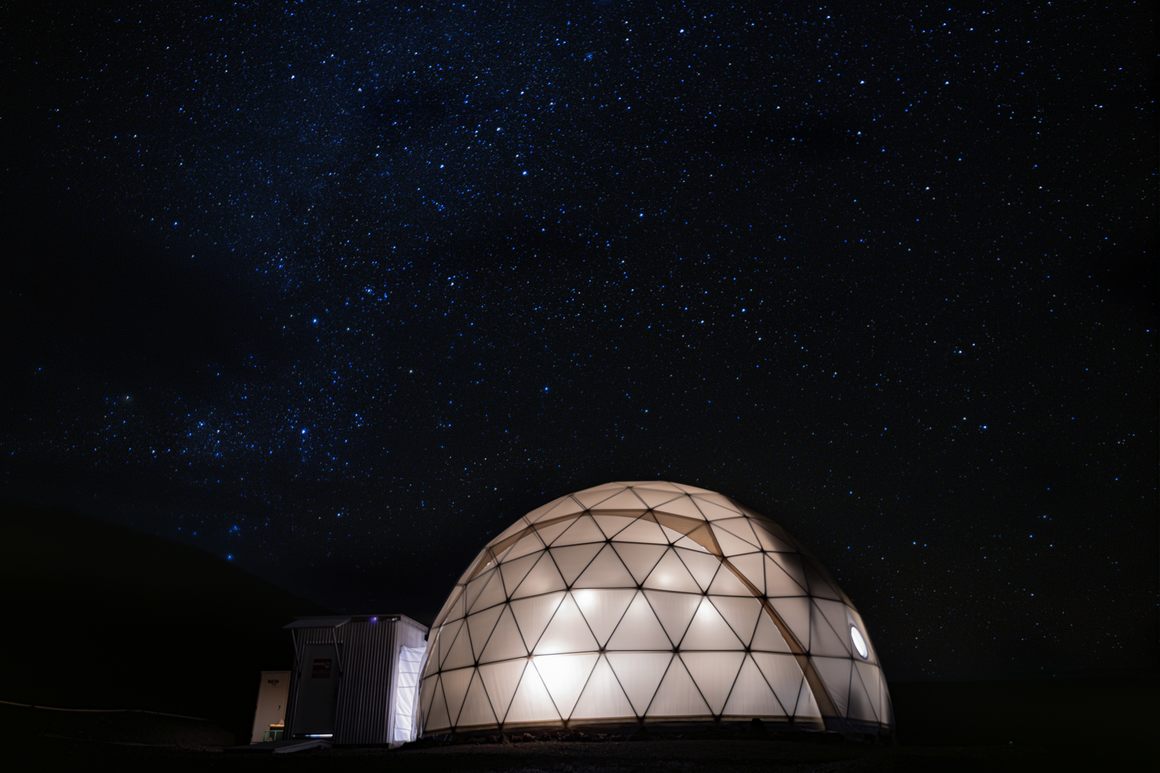
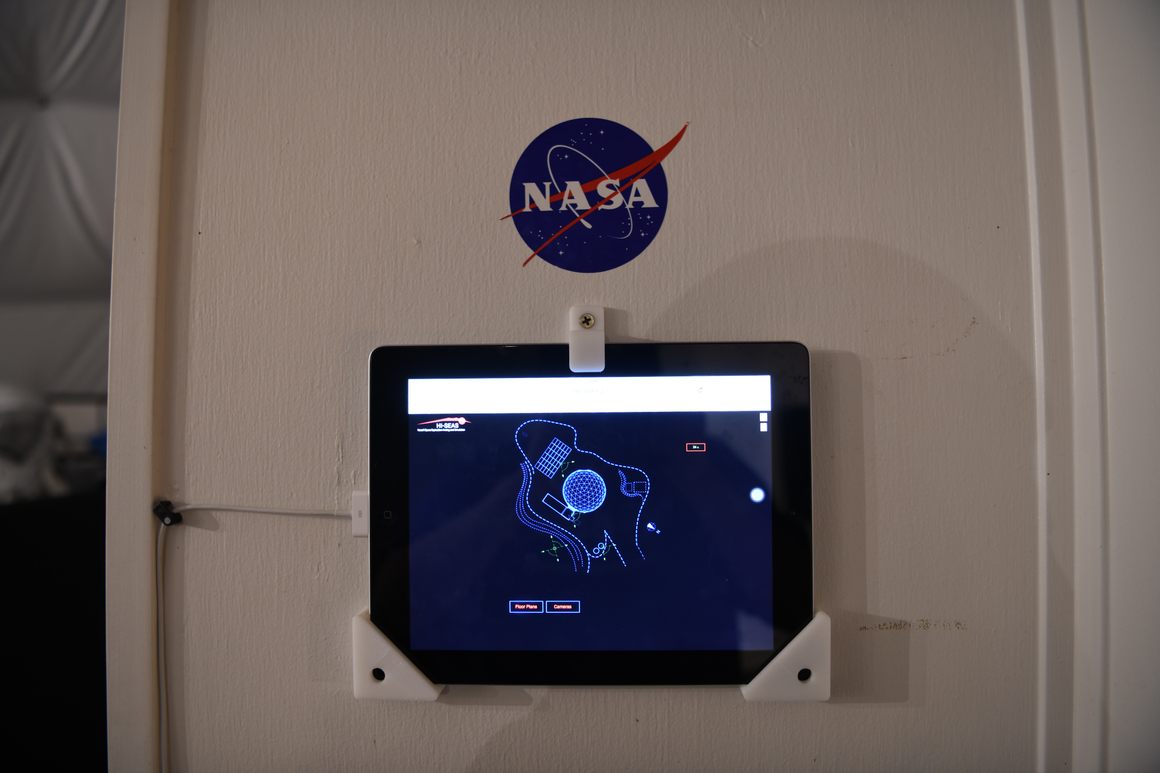
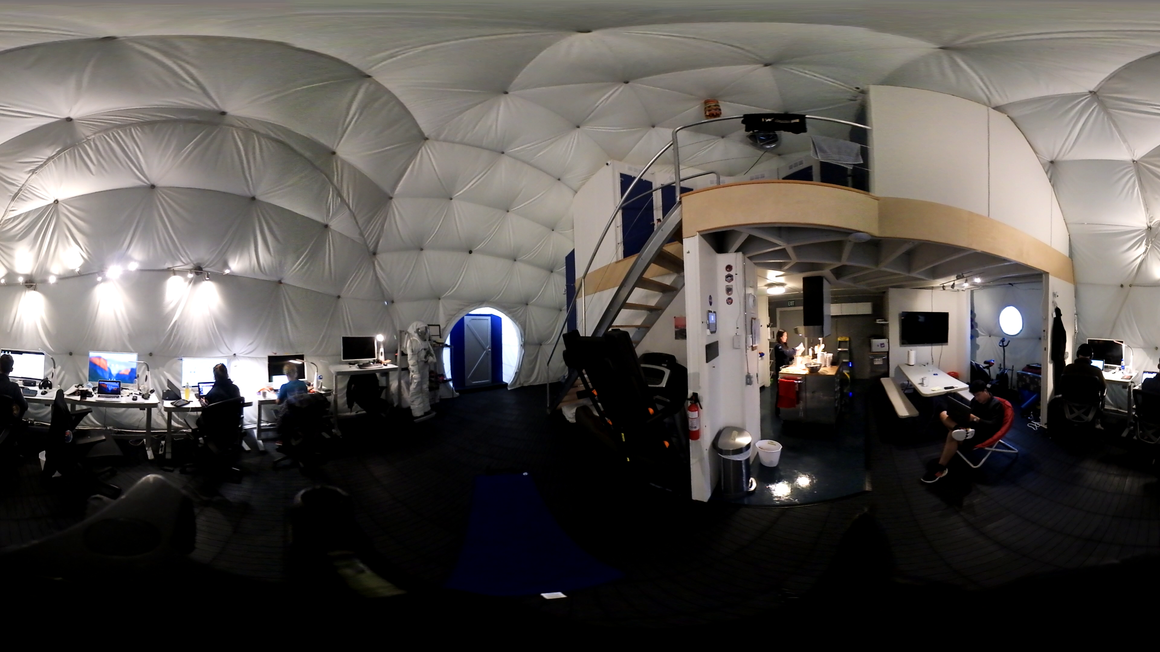
This was HI-SEAS — the Hawai'i Space Exploration Analog and Simulation habitat — a Mars- and Moon-like isolation station built by the University of Hawai'i at Mānoa with NASA's backing. From the outside, it looks almost toylike: a squat white geodesic dome dropped onto a landscape so barren and red it could pass for another planet, because that's precisely the point. Inside, a cramped loft holds six coffin-sized bedrooms; downstairs, a kitchen, lab, exercise corner, and a simulated airlock keep a crew alive and sane while cut off from the outside world.
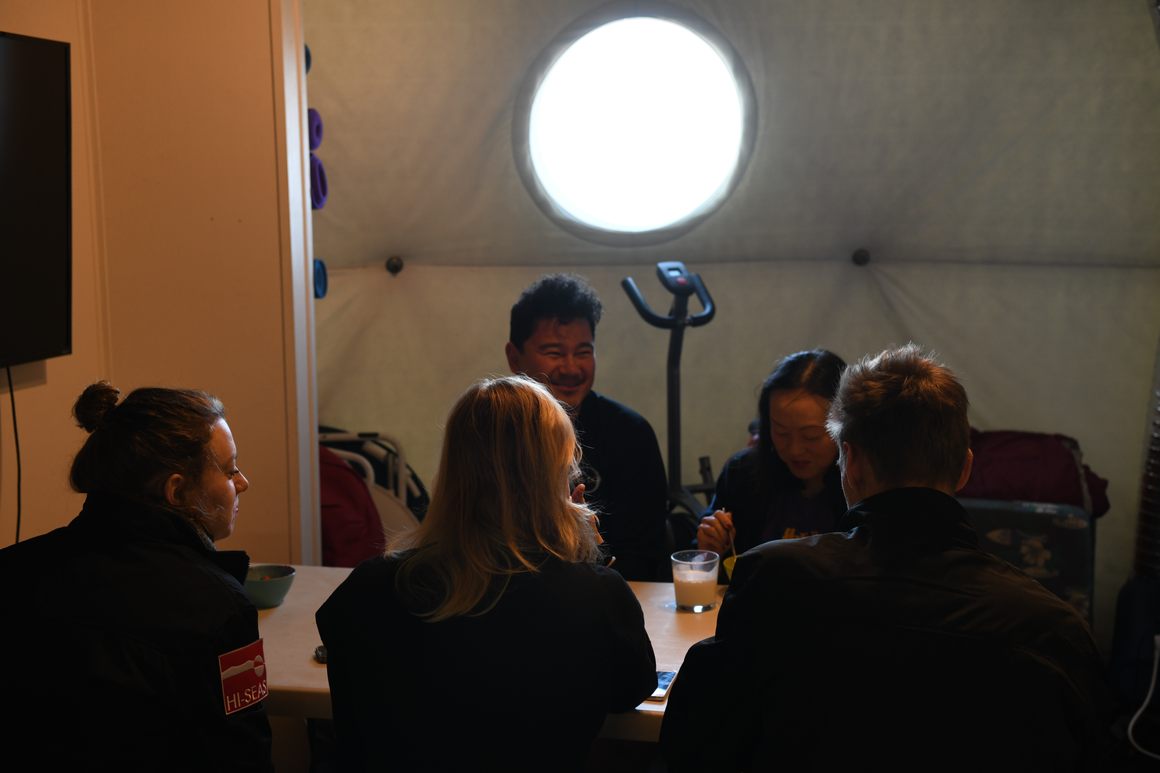
I was there as a Fellow International (FI'18) of the Explorers Club and crew anthropology researcher for the EuroMoonMars campaign, a joint mission of the European Space Agency and the International Lunar Exploration Working Group (ILEWG). We ran geological surveys, tested equipment meant for the Moon and Mars, and — since isolation does strange things to the mind — I spent much of the mission studying exactly that: how confinement, delayed communication, and total dependence on five strangers reshape human behavior in ways no simulation briefing can fully prepare you for.
HI-SEAS has hosted missions lasting anywhere from a few days to a full year since 2013, standing in for what a real Moon or Mars mission might feel like — right down to the communication delay engineered into every message sent home. But the volcano the habitat sits on had its own plans.
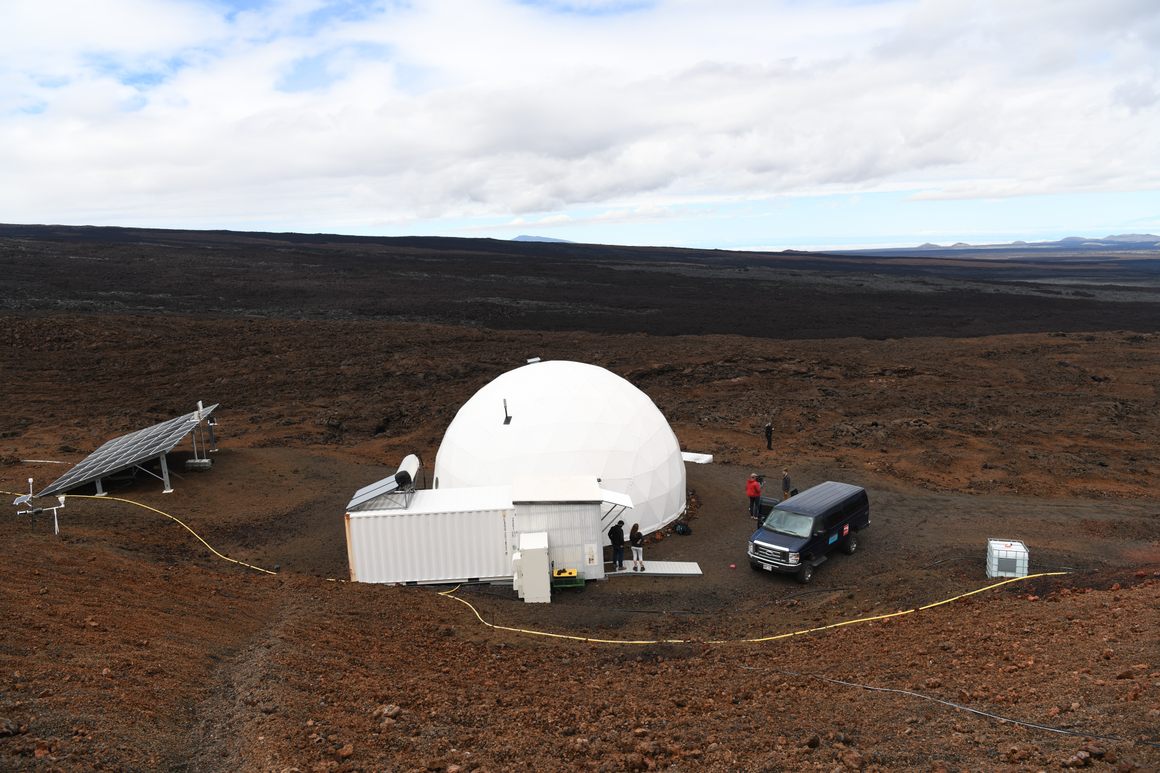
In November 2022, Mauna Loa erupted for the first time in 38 years, sending lava down its Northeast Rift Zone and passing just alongside the dome — close enough to threaten it, though the habitat itself came through unscathed. No crew was inside at the time. The access road wasn't as lucky: it was cut by the flow, leaving the site reachable only by helicopter while reconstruction has slowly continued in the years since. It's a strange footnote fitting for a place built to simulate life on another world — even here, the ground itself had other ideas.

The University of Hawai'i and NASA are now working to bring the habitat back into service, with a new environmental permit in the works to reopen the site for a fresh phase of Moon and Mars research.
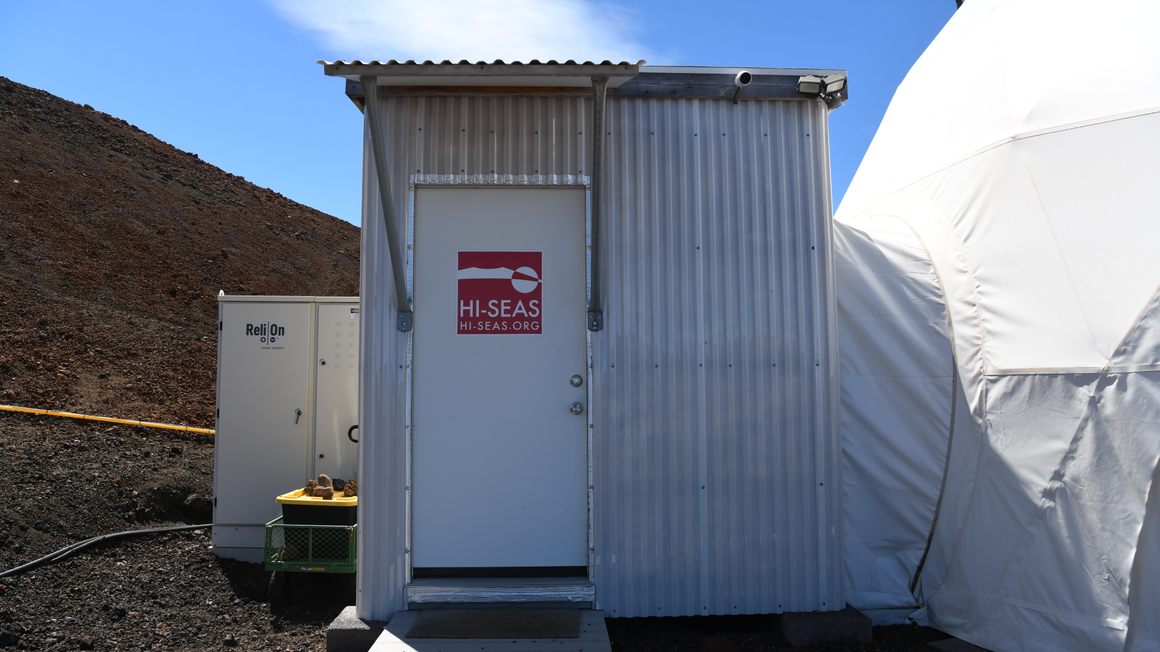
Know Before You Go: The habitat is not open to casual visitors — access is strictly limited to selected research crews and mission partners (NASA, University of Hawai'i, European Space Agency, International MoonBase Alliance). The surrounding slopes of Mauna Loa, however, are visible from nearby hiking trails, offering a glimpse of the otherworldly terrain that makes this one of the most convincing Mars analogs on Earth.

Your turn.

Add your own recommendations, travel stories, and discoveries to the Atlas Obscura community.

Write a Post

Most Read Stories

1
8 Gargoyles and Grotesques Hiding in Plain Sight Holyn Thigpen
2
AO’s Favorite Unusual Sites to Spend a Night Holyn Thigpen
3
Where to See the World’s Most Famous Preserved Body Parts Holyn Thigpen
4
Anchorage: A City Within the Wild Holyn Thigpen
5
Vakona Lemur Island, Madagascar Eric Saltmarsh

Get Our Email Newsletter

Follow Us

Facebook YouTube TikTok Instagram Pinterest RSS Feed

Get the app

Download the App
Download on the Apple App Store Get it on Google Play
  • All Places
  • Latest Places
  • Most Popular
  • Places to Eat
  • Random
  • Nearby
  • Add a Place
  • Stories
  • Food & Drink
  • Itineraries
  • Lists
  • Video
  • Podcast
  • Newsletters
  • All Trips
  • Membership
  • Feedback & Ideas
  • Community Guidelines
  • Product Blog
  • Unique Gifts
  • Work With Us
  • About
  • FAQ
  • Advertise With Us
  • Advertising Guidelines
  • Privacy Policy
  • Cookie Policy
  • Terms of Use
Atlas Obscura

© 2026 Atlas Obscura. All Rights Reserved.