

People often say Yorktown is where America won its independence. I'd put it differently: Yorktown is where the Revolution ended. The war had been decided in a thousand smaller moments before October 1781, and skirmishes went on for nearly two more years afterward. But when the British army laid down its arms here on October 19, 1781, both sides knew how the story would end. Independence had stopped being a wager and become a fact.
My partner Michael and I recently spent a full day in Yorktown. As someone who studies how places collect stories, I came away thinking this town carries more than military history. It holds the founding of a nation and the contradictions that founding was built on. Here's how we spent the day, and what stayed with me.
Coffee in a Colonial House
Before battlefields, caffeine. Our first stop was Mobjack Bay Coffee Roasters at 411 Main Street, which Celeste and Jo Gucanac have run since 2007. They buy from small, certified coffee farms and roast every week, building a separate roast profile for each bean. You can taste the care in the cup.
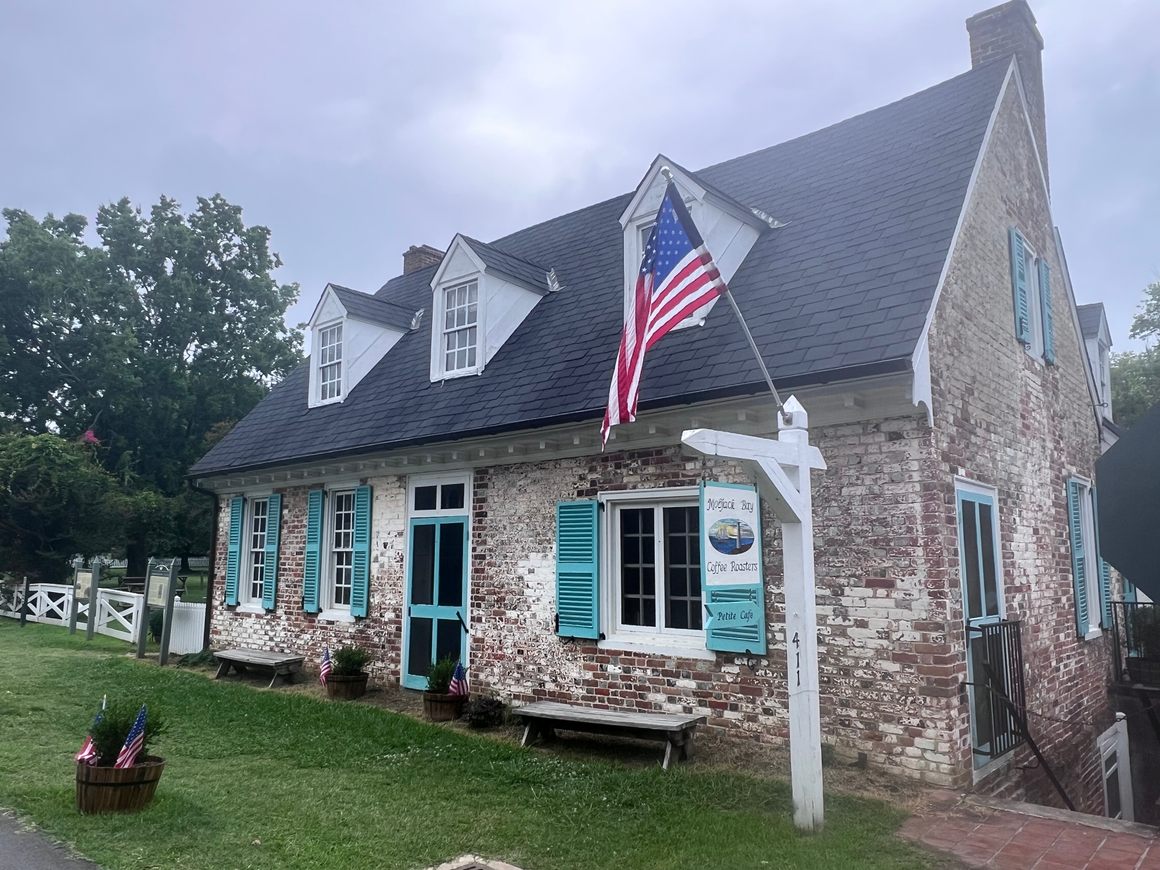
The building matters as much as the coffee. Their small Petite Cafe is inside the restored Cole Digges House, a colonial-era home that now has a second life as a coffee and tea house. Celeste met us at the door and talked us through how they source their beans and why they wanted their cafe inside a piece of Yorktown's past. Her answer summed up modern Yorktown for me: the people here look after the town's history by doing their own work well.
The space is small and personal. Don't expect a chain-store bustle. Expect a conversation.
A Battlefield at Steam-Powered Speed
The same family runs the Steamer Wagon tour, the most memorable way I can imagine to see the battlefield in Colonial National Historical Park. You ride in a replica Stanley Steamer, the kind of vehicle you'd expect in a sepia photograph from around 1910. Your guide drives it slowly across the siege lines and narrates at each stop. The tour is permitted by the National Park Service, and I haven't found anything like it anywhere else.
The slow pace is the point. At wagon speed you can read the land: why the armies dug in where they did, how close the lines really were, how the river shaped everything. Along the route we saw:
• Redoubts 9 and 10. On the night of October 14, 1781, French and American troops stormed these two British earthworks at the same time, fighting hand-to-hand in the dark. Alexander Hamilton led the assault on Redoubt 10. He had pushed hard for a field command, and this charge became one of the defining moments of his military career. Standing there, it's easy to picture the chaos.
• The Moore House. Officers from both sides negotiated the terms of surrender in this modest farmhouse. Neither Cornwallis nor Washington came to the table themselves. Their commissioners settled what would happen to the soldiers, the townspeople, and the garrison.
• Surrender Field. This is where the British army marched out and stacked its weapons in front of the American and French forces. A global superpower was formally beaten by an exhausted coalition of colonists and their French allies. It's quiet there now, and the quiet carries a lot of weight.
• The field hospital site and French Cemetery. These are a sobering reminder of what the victory cost. American, British, and French soldiers all died here, and these spots won't let you forget it.
The tour lasts about an hour and leaves at 10:30 a.m. sharp from Little York Confectionery, 401 Main Street. Buy tickets ahead of time and arrive a few minutes early. When you're back, the confectionery is right there if you want a treat.
Cornwallis's Cave: A Legend Worth Questioning
With some free time after the tour, I walked down to the waterfront near Riverwalk Landing to see Cornwallis's Cave, which is exactly my kind of stop.
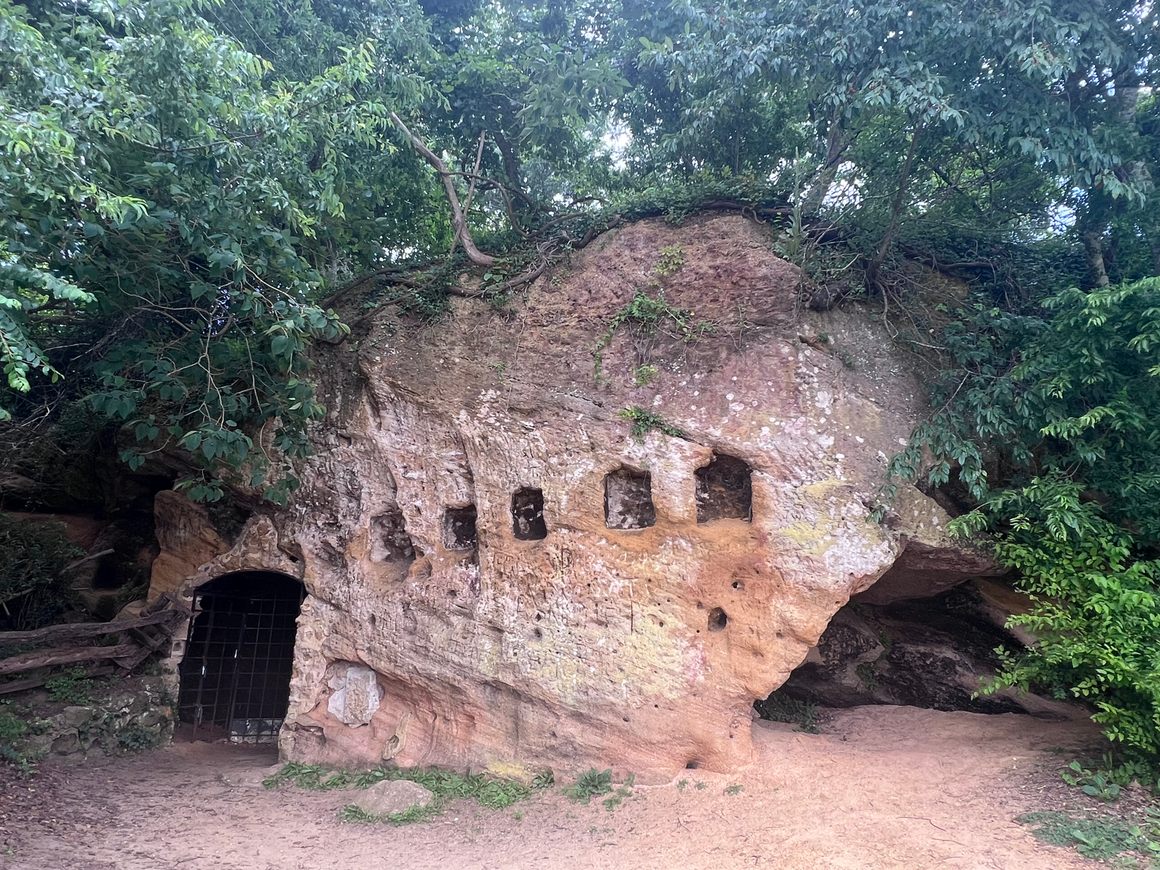
The local story says General Cornwallis hid in this small cave carved into the bluff and planned his last defense of Yorktown from it. The cave is real. The location is real. The evidence that Cornwallis ever used it is very thin.
To me that gap is the interesting part. Look out at the river from the cave mouth and you can see why the story caught on: it's dramatic, it's strategic, and it fits the way people like to remember a defeated general. Told often enough over the generations, the story turned into "fact" in the town's memory. Folklorists study exactly this process, and it's the reason I'm drawn to places like this.
The cave also has a better-documented history. Photographs and records show it was used to store ammunition during the Civil War. Sometimes the true story is quieter than the legend, and it's still worth knowing.
The cave is free, and 15 to 20 minutes is plenty. Bring a camera, because the light off the water is lovely.
"Give Me Liberty" and the Contradiction at the Center
We finished the day at the American Revolution Museum at Yorktown, which recently opened a new signature exhibit, Give Me Liberty: Virginia & The Forging of a Nation. Set aside two to three hours.
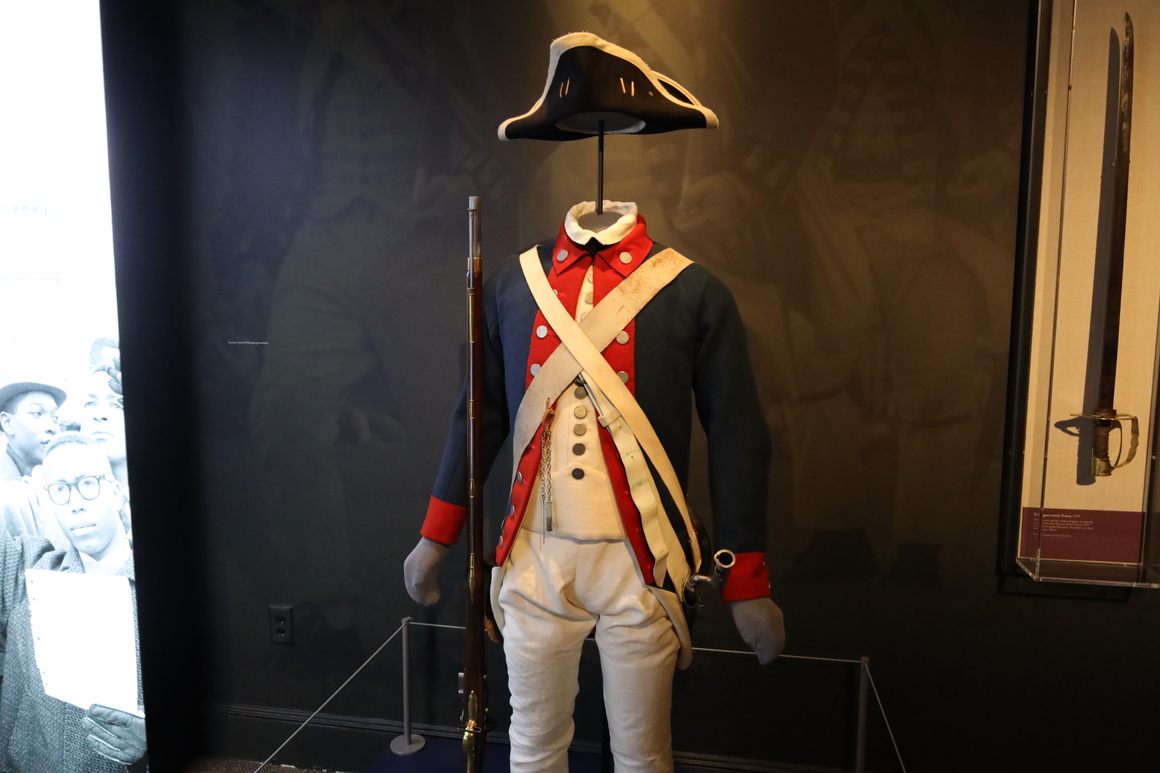
Inside are period artifacts, immersive gallery spaces, and The Siege of Yorktown, a 180-degree surround-screen film with effects strong enough that you feel the cannon fire in your chest. Outside, costumed interpreters staff a recreated Continental Army encampment. They demonstrate cooking, camp routines, and 18th-century medicine, which is as grim as you'd guess. They also fire muskets, and the smoke and noise are startling. Nearby is a Revolution-era farm modeled on real Virginia family farms, with a house, kitchen, tobacco barn, and working gardens. Visitors are invited to pitch in with chores. Some people find that hokey and others find it eye-opening, but you'll remember it either way.
What makes the museum worth the time is that it doesn't flinch. Virginia shaped the Revolution far beyond its share. Washington, Jefferson, Madison, Monroe, and Patrick Henry set the direction of the war and the ideas behind it. But Virginia's wealth came from slavery, and the men who argued most eloquently for liberty held other people in bondage. The exhibit tells both stories together, which is the only honest way to tell either one.
Planning Your Visit
• Getting there: Yorktown sits on the Virginia Peninsula, a short drive from Williamsburg and about an hour from Richmond. Williamsburg makes a good base for a few days of colonial history.
• A full day: coffee at Mobjack (30 minutes), the Steamer Wagon tour (1 hour), Cornwallis's Cave (15–20 minutes), lunch at Coastal Thirst (1 hour), and the museum (2–3 hours). That's about 5 to 6 hours in all.
• What to bring: comfortable shoes, sun protection, and layers. Weather on the waterfront can change quickly.
• When to go: Spring and fall are ideal. Summer is hot and humid. Winter is quiet and chilly.
• Accessibility: The museum and most sites are ADA accessible. If you have specific needs, call ahead about the Steamer Wagon.
• Tip: Look into combination tickets if you plan to visit other historic sites in the area.
Why It Stays With You
Standing in Surrender Field, I kept thinking about how none of this was guaranteed. Cornwallis commanded professional, well-supplied troops. The Americans were worn out, underfed, and stretched thin. Geography, timing, the French fleet, and plain stubbornness came together here, and if any one of them had failed, the world we live in would look very different.
Yorktown also asks you to remember what happened next. The people who won freedom from an empire built that freedom on slavery. Resolving that contradiction took nearly another century and a civil war, and the work still isn't finished.
So I don't think you come to Yorktown to celebrate. You come to understand. Hold the brilliance and the failure together, and you'll leave with a truer picture of where the country began.
I write more about Virginia's colonial history, including Jamestown and Colonial Williamsburg, and about the folklore behind historic places at MaloriesAdventures.com.
