
The title of this post is lifted from “My City Was Gone” written by Chrissie Hynde, founder of the British rock band The Pretenders and a native of Akron, Ohio. In her 1984 song, Hynde laments, “my city was gone/There was no train station/There was no downtown”. I would visit Akron on a summer 2026 trip but it would be my final stop and brief. As fair warning (no judgement) to those with a “tl/dr” inclination, my digressive account of a four-day visit to Ohio — family business, sites on the Atlas Obscura, destinations of personal interest — clocks in at over 3,000 words (25 minute read).
My first stop, after driving across New Jersey and Pennsylvania, was Kent State University. This is not the place for a dissertation on the Vietnam War, national immigration policy, or political protest in America. However, for some people of a certain age and some students of American history, the fatal shootings this year by federal immigration officers were reminiscent of the 1970 massacre on the Kent State campus.
Following several days of local protests in response to the announced expansion of the Vietnam War into Cambodia, several hundred unarmed students gathered on the university’s Commons on May 4. Students, trailed by guardsmen, moved from the communal open space through the campus and not quite a half-hour after the scheduled start of the protest, National Guard troops opened fire, killing four students and wounding nine.
The three permanent galleries in the May 4 Visitors Center present a broad cultural context, the events leading up to the shooting, and the local and national reactions and the consequences that followed. A temporary exhibit while I was there matched oral histories and recollections to locations on an aerial photo of the university and town. “Mapping May 4” is available online, as are additional digital presentations. I became conscious of the contrast between the calm of the campus during summer recess and the reconstructed mayhem in my head.
These exhibits informed my walk around the campus, where there are now several memorials as well as interpretative displays. The content in the visitors center and the didactic panels on the grounds coalesced to make it possible for me to geographically visualize how the tragic events unfolded.
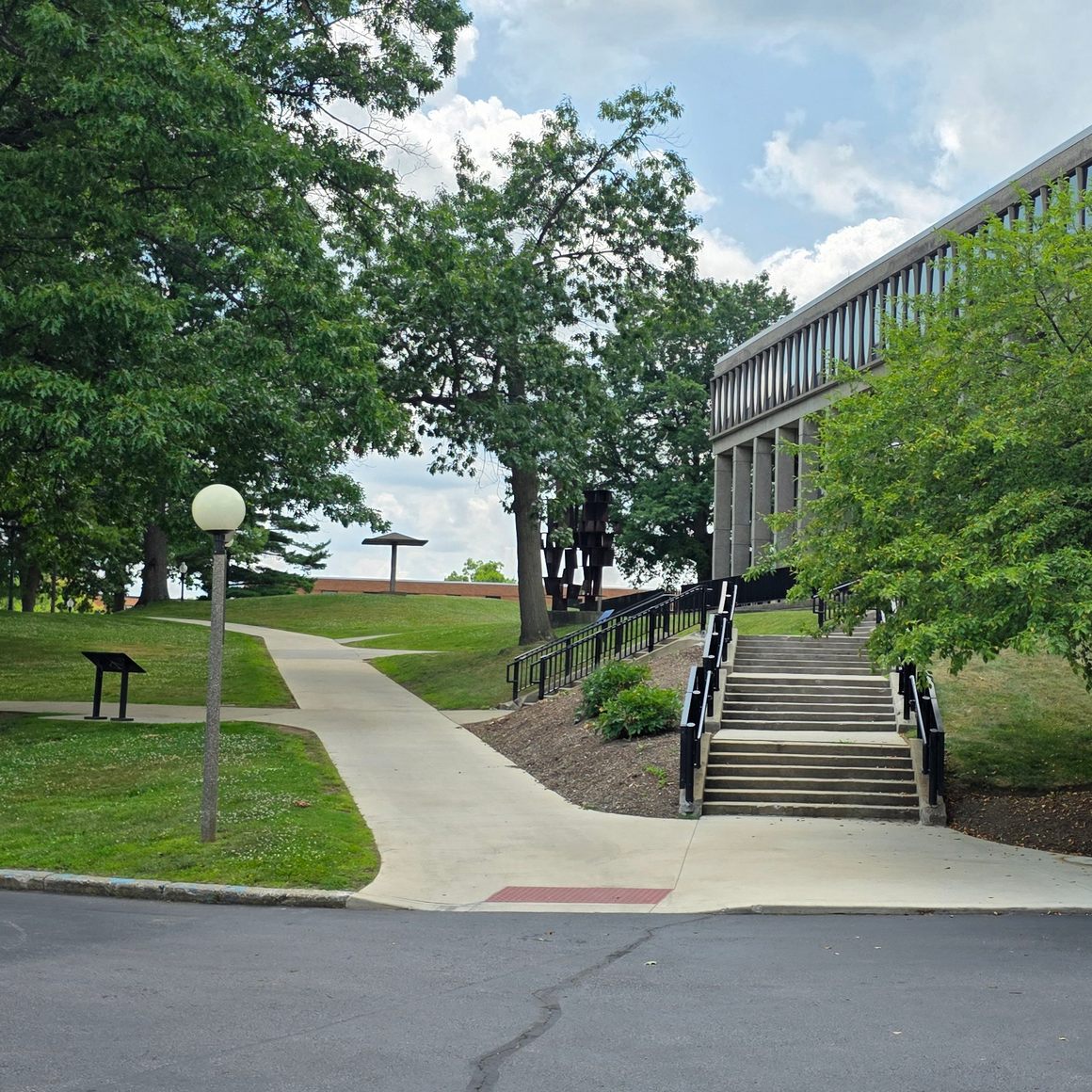
Although robust now, the interpretation and memorialization of the May 4 massacre was slow to develop. The visitors center opened on the 43rd anniversary of the shooting. An Ohio Historical Society marker was dedicated only in 2007. The individual memorials to the four martyred students at the locations where they fell in the Prentice Hall parking lot date from 1999. I visit numerous and varied memorials and mention these select milestones only to introduce the question of when, if ever, and where, the slain immigrants and protestors of 2026 might be publicly remembered.
Having driven almost 500 miles and made an unhurried visit to Kent State, I didn’t set an ambitious agenda for the rest of my first day. The Cleveland Guardians were to begin a four-game series against the Texas Rangers, with the teams at that moment atop the American League Central and AL West, respectively. In route to Progressive Field, I popped into the former Cleveland Trust building, now a grocery and food court, to admire the stained glass dome in the rotunda.
Texas batters spanked sharp grounders the Cleveland infield couldn’t reel in, and the visitors dropped soft fly balls in front of the Guardians’ outfielders. The Rangers plated six, doubling-up their host, and won again the following night. The Guards took the final two games, splitting the series, leaving both teams tied for first place in their respective divisions.
Despite a long and exhausting first day, I was up early the next morning, early enough to walk through downtown, between Playhouse Square and Lake Erie. I saw the world’s largest rubber stamp, a statue of Olympian Jesse Owens, and Cleveland’s Soldiers' and Sailors’ Monument, in Public Square.
These were all enjoyable destinations — especially the last, an exceptionally unique Civil War memorial — but as can occur when tracking down sites in the Atlas, I encountered unanticipated delights. The intake structures providing light and air to underground spaces in the Huntington Convention Center are mirrored, kaleidoscopically reflecting the garden in which they are situated, as well as the neighboring architecture.
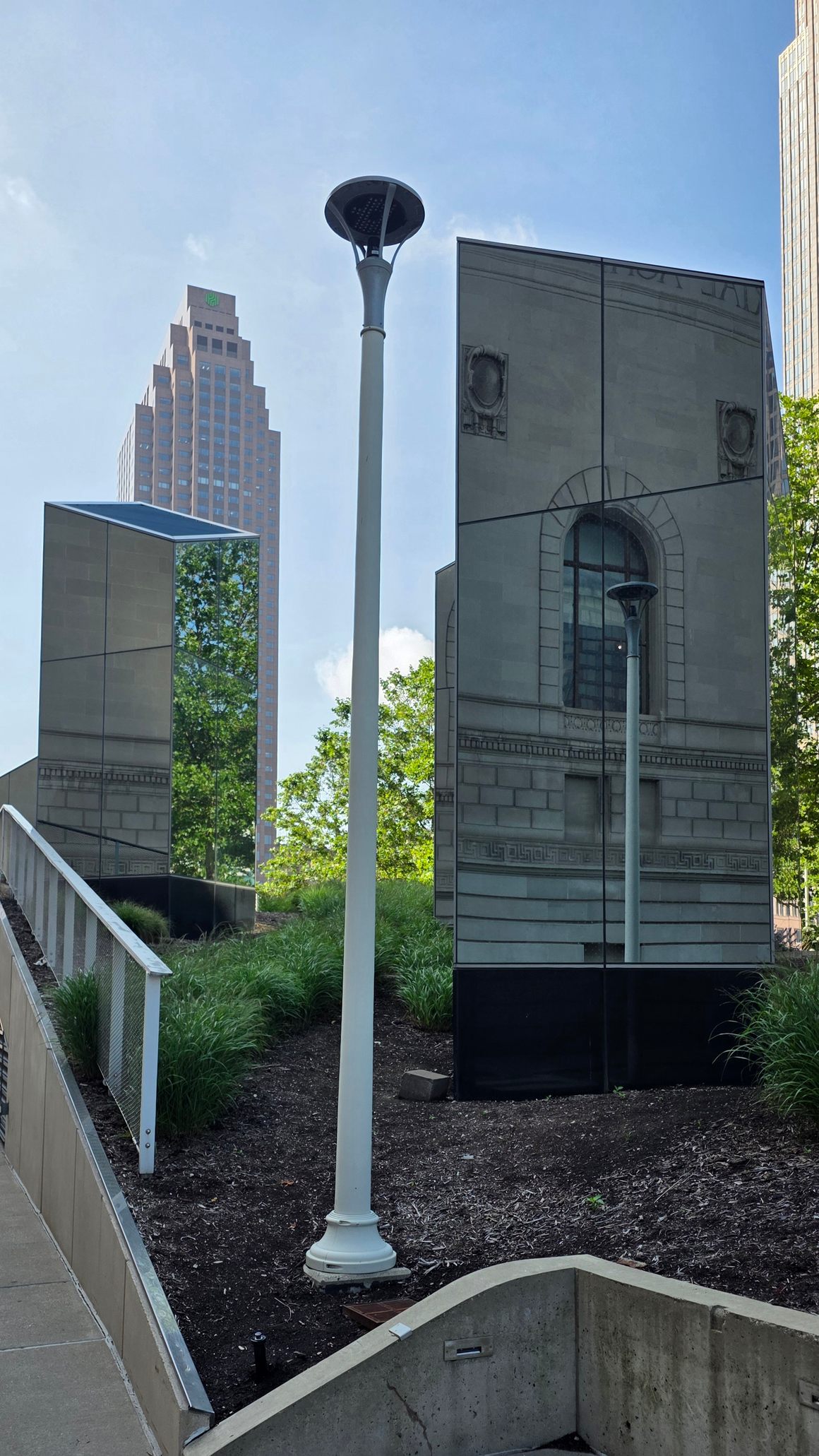
The global headquarters for Sherwin-Williams, manufacturer and distributer of paints and coatings, is across the street from Public Square. The company, founded in Cleveland in 1866, boasts of 1,700 paint colors but its corporate offices consist of an off-white pavilion and a glass-clad tower. Wherefore art thou SW 0074, Radiant Lilac, the 2026 color of the year?
The second stanza of “My City Was Gone” begins, “I went back to Ohio/But my family was gone”. Gone can mean moved, and gone can mean dead. There was time for baseball and “The World’s Hidden Wonders” but deceased relatives on each side of my family were the driving (pni) reason I went back to Ohio.
The story of my father’s father’s father’s life has been summarily reduced to seven words: He changed his surname and renounced Judaism. These two quite significant life changes are expressed together as if related but that is an assumption and neither statement has been passed down with any detailed explanation. Through the tenacious effort of archivists at the Cuyahoga County courts, I was able to obtain the court filing for the early-20th century name change.
According to the petition, the surname by which my great-grandfather was known in America “was adopted in order to escape the conscription laws of Russia.” The universal conscription imposed by Russia in 1827 was harsh, especially for Jews. (Perhaps needless to say, “universal” did not include the wealthy and professionals.) Whereas young men of other ethnicities could be drafted at age 18, Jews could be legally conscripted at 12 and were sometimes taken as young as eight.
Minors were sent to military schools distant from home and at age 18, commissioned to 25 years of service, the latter also true for other draftees. There are tales of self-mutilation (i.e.: fingers chopped off, chemicals poured into eyes) by young men hoping to make themselves unacceptable for military service. It was reportedly not unusual for men to adopt aliases to disguise their Jewish heritage. My great-grandfather’s sworn statement regarding his name is therefore plausible but impossible to confirm.
I was able on my own, once I figured out that the Anshe Emeth Cemetery was part of what is now known collectively as the Fir Street Cemetery, to locate my great-grandparent’s graves. The stone does not appear to date from the death of my great-grandfather or even his wife, almost four decades later. The words “Father” and “Mother” appear above their given names, perhaps indicating that one of their seven children had the marker placed. Unlike most of the gravestones from the early-20th century, there are no inscriptions in Hebrew, only a Star of David centered at top.
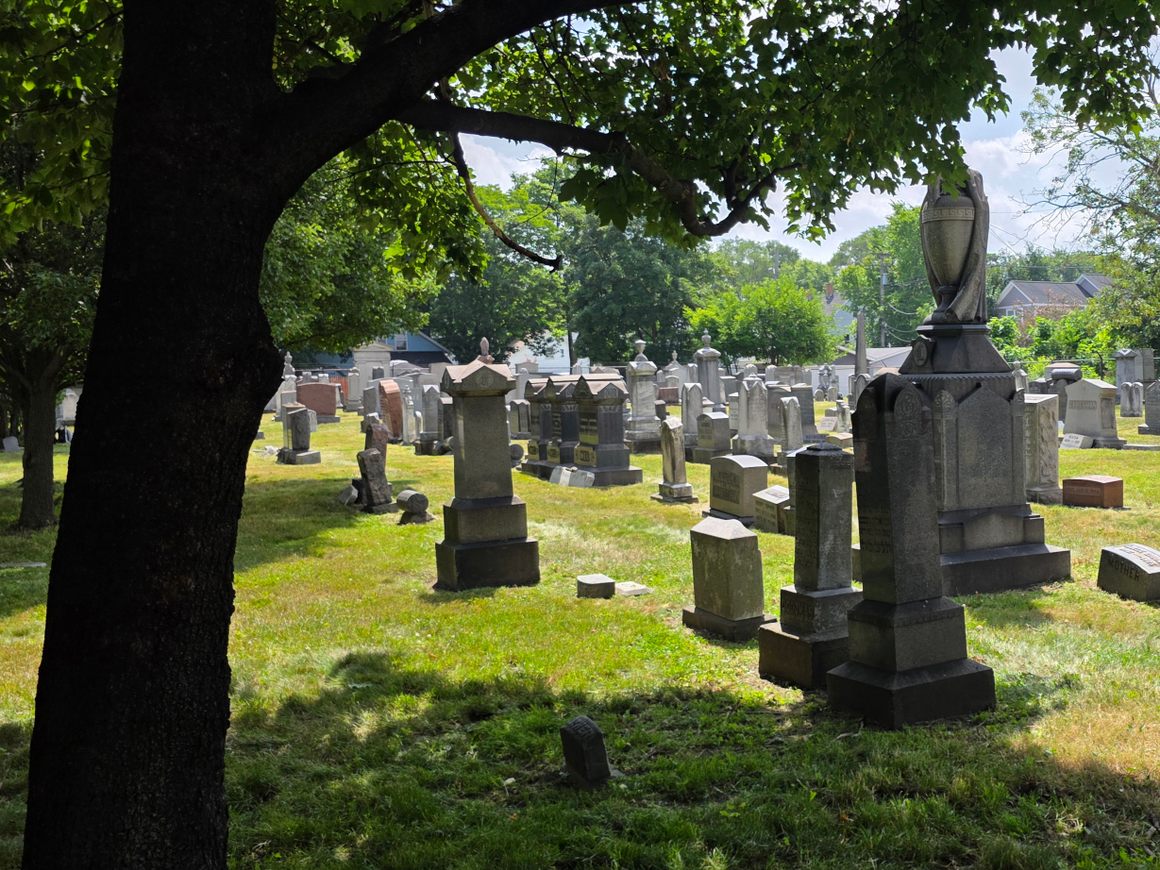
What else might be suggested from this limited evidence? As mentioned, family lore states that my father’s father’s father renounced Judaism, but here is his grave in the second oldest Jewish cemetery in Cleveland, with a Star of David on the marker. When it is said that he changed his name and renounced his faith, are these statements expressed together because in fact both occurred but in 19th-century Russia? Did he die a Jew in America, or is the symbol on his gravestone “performative,” to use a 21st-century term?
If my great-grandfather didn’t renounce Judaism, then who did? His children, who include my grandfather? I knew my paternal grandfather; I was 25 when he died. He was married in a Christian church. I don’t remember him ever attending any house of worship during our shared lives. I recall people joking that the golf course was his church but that may be merely a metaphor; on many Saturdays, my grandfather would play 36 holes. He had a low handicap.
Questions perhaps for another time. Or, questions that are lost to time. It was however now time to turn my attention to my mother’s side of the family, actually, to my mother herself. Late in life, she stated her wish to be buried next to her parents. This request was surprising when expressed but didn't contradict anything my mother had said in the past. Following her death, I accepted the responsibility of returning her to her birthplace, Dayton, Ohio.
It was another couple of hundred miles of driving from “The Forest City” to “The Gem City” and I broke up the drive with a stop in Columbus, the state capital. On the Ohio State University campus, I visited the Bloch Cancer Survivors’ Plaza and the Garden of Constants. I also stopped at the so-called Gates of Hell but there were people living rough in the underbrush near the graffitied drainage channel. Their right to privacy, it seemed to me, outweighed my curiosity about an urbex destination.
My lodging in Dayton was part of what was branded as the “Water Street District,” a quarter-billion dollar mixed-use redevelopment project southeast of the confluence of the Great Miami and Mad rivers. Much of the area east of the project boundaries has remained industrial but there is a smattering of restaurants and retail that, if it were more extensive, would be called gentrification. I was excited to find a photogenic eatery with a fun menu concept within walking distance of my hotel. Already thinking ahead to this narrative, I imagined a photograph and pithy description but alas, dinner was simply not good. Perhaps I ordered poorly.
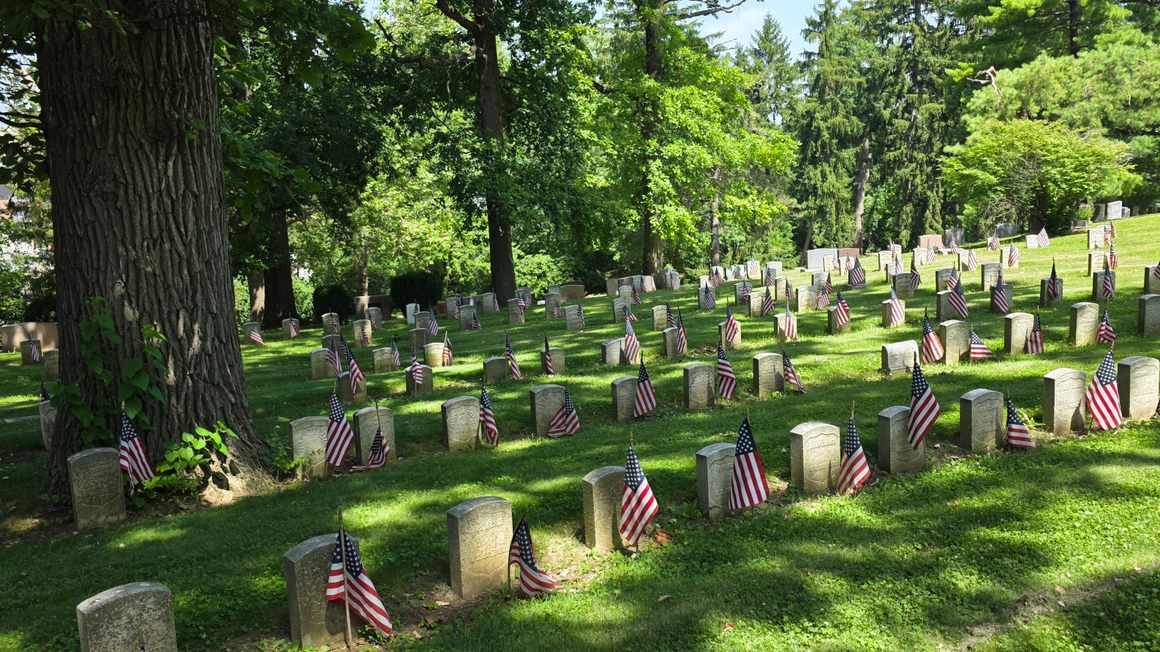
On the morning of Day 3, I brought what remains of my mother to Woodland Cemetery. Woodland is one of the earliest rural cemeteries in the United States, incorporated 11 years after the first; Mt. Auburn in Cambridge, Massachusetts. The Romanesque gateway, chapel, and office are on the National Register of Historic Places, as is the original 105-acre “Victorian” section of the cemetery.
Orville and Wilbur Wright, credited as the inventors of the airplane and secular saints in Dayton, are buried in Woodland. Also interred there are author Paul Lawrence Dunbar, humorist Erma Bombeck, young Johnny Morehouse, and now my mother. Oma shares a lot with her parents, her maternal grandparents, and her uncles Jack (Jacob) and Albert. (Her two aunts are also buried in Woodland but elsewhere, with their husbands.)
I returned to my hotel and crashed. The hundreds of miles of driving had finally caught up with me. The oppressive heat and humidity of the early-July heat dome were also enervating but let’s keep it real: I went back to Ohio and now my family truly was gone.
When I woke, I walked downtown. The Dayton Arcade — nine buildings connected by interior corridors to a central, glass-domed rotunda — was already a shadow of its former self when my grandparents brought me there in the 1960s and -70s. It nevertheless remained for them a source of civic pride and probably sentimentality as well— it was constructed from 1902 to 1904, when they were around 10-years old. With the benefit of hindsight, it was one of the places that contributed to my lifelong love of architecture.
I had read that restoration of the buildings and interior arcade had received an award last year from the Urban Land Institute, which made me happy and excited to see the complex again. As a real estate development project, the 500,000 square-foot restoration is an unquestionable success. The historic preservation component alone is a major accomplishment.
Two days earlier I visited the former Cleveland Trust to admire its domed rotunda; the rotunda in the Dayton Arcade is perhaps even more stunning. Seventy feet high and 90 feet across, the architecture is enlivened by polychrome cornucopias of local fruits and vegetables, festoons of oak leaves with acorns, garlands of grain, and a veritable flock of masonry turkeys. (A group of turkeys is a “rafter.” A rafter in the rafters?)
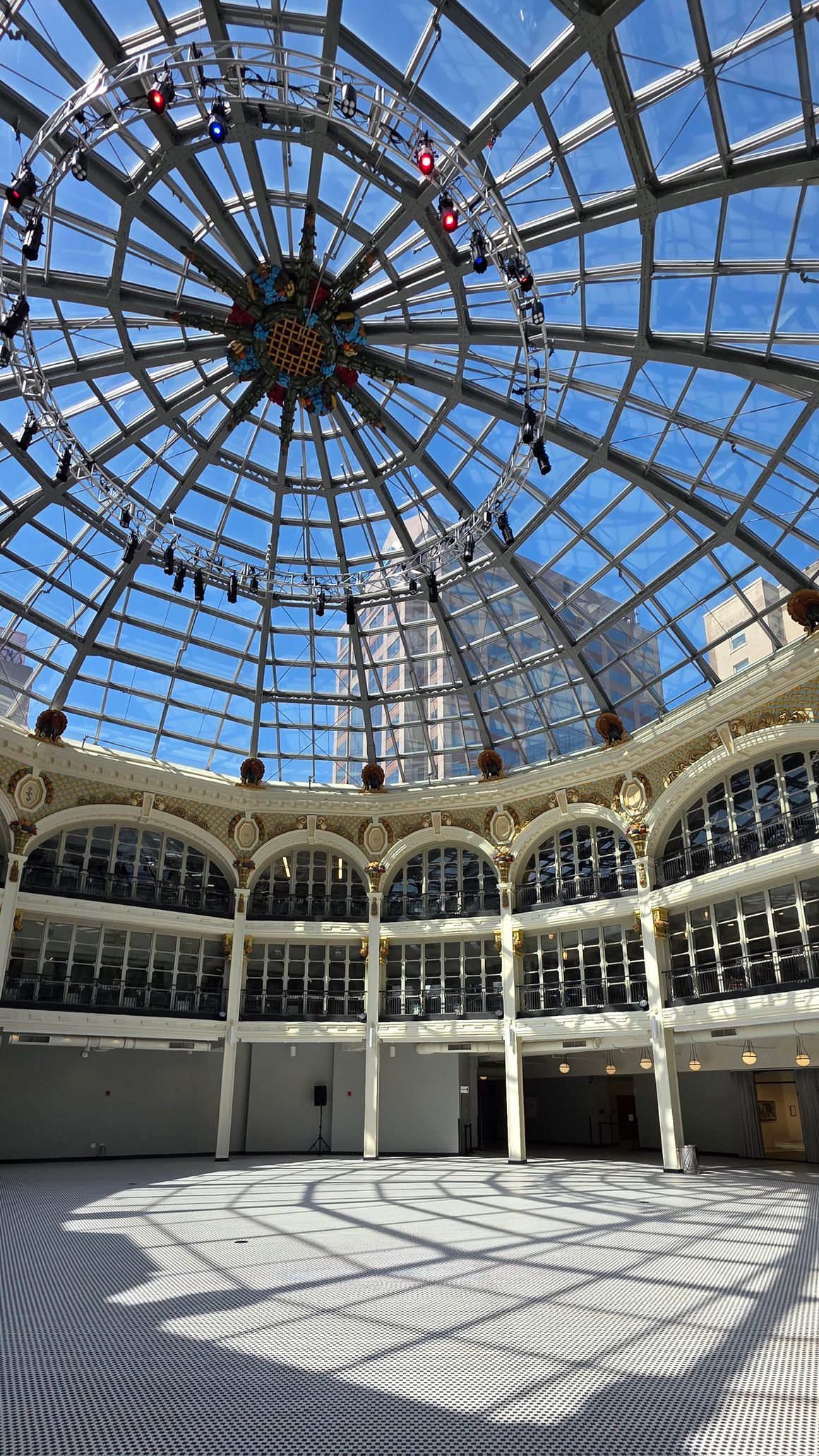
I am so emotionally invested in the Dayton Arcade that early drafts of this post omitted what is evident: Other than a 93-key hotel in an elaborate Flemish-Revival building on Third Street, almost all of the commercial tenants are not-for-profits. It is not unusual for NFPs to serve as placeholders for anticipated future retail tenants, but the current commercial tenancy exposes downtown Dayton’s limited success to date at reinvention.
Across Ludlow Street from the arcade, the former Dayton Daily News building, a 23,000 square-foot Beaux-Arts beauty from the same era, awaits its savior. If I had walked two blocks south, I would have arrived at the former location of Dayton Union Station, an Italian-Renaissance structure (1900) known colloquially as the “Tower Depot” for its seven-story clock tower. The last passenger train left the station in 1979 and what was left of the depot was demolished ten years later.
Instead, I walked north, past where my Great-Uncle Al had a dry-cleaning and tailoring shop. More than 30 merchants were displaced when the entire block (except for the 1847 court itself) was razed in the 1970s to create Courthouse Square. The Project for Public Spaces, which prizes programming over physical design, claims the open space a success. There were only two other people in Courthouse Square when I visited on a midweek afternoon, one of whom might have been the owner of the sundry possessions in an unattended, purloined shopping cart.
I walked past the former site of Rike’s department store, dramatically imploded in 1999, where my mother worked summers and my grandfather for decades. The Schuster Performing Arts Center is probably patronized by the same people who made a downtown department store obsolete. Hynde was surely being hyperbolic when she sang, “There was no train station/There was no downtown”, but yeah, I get it.
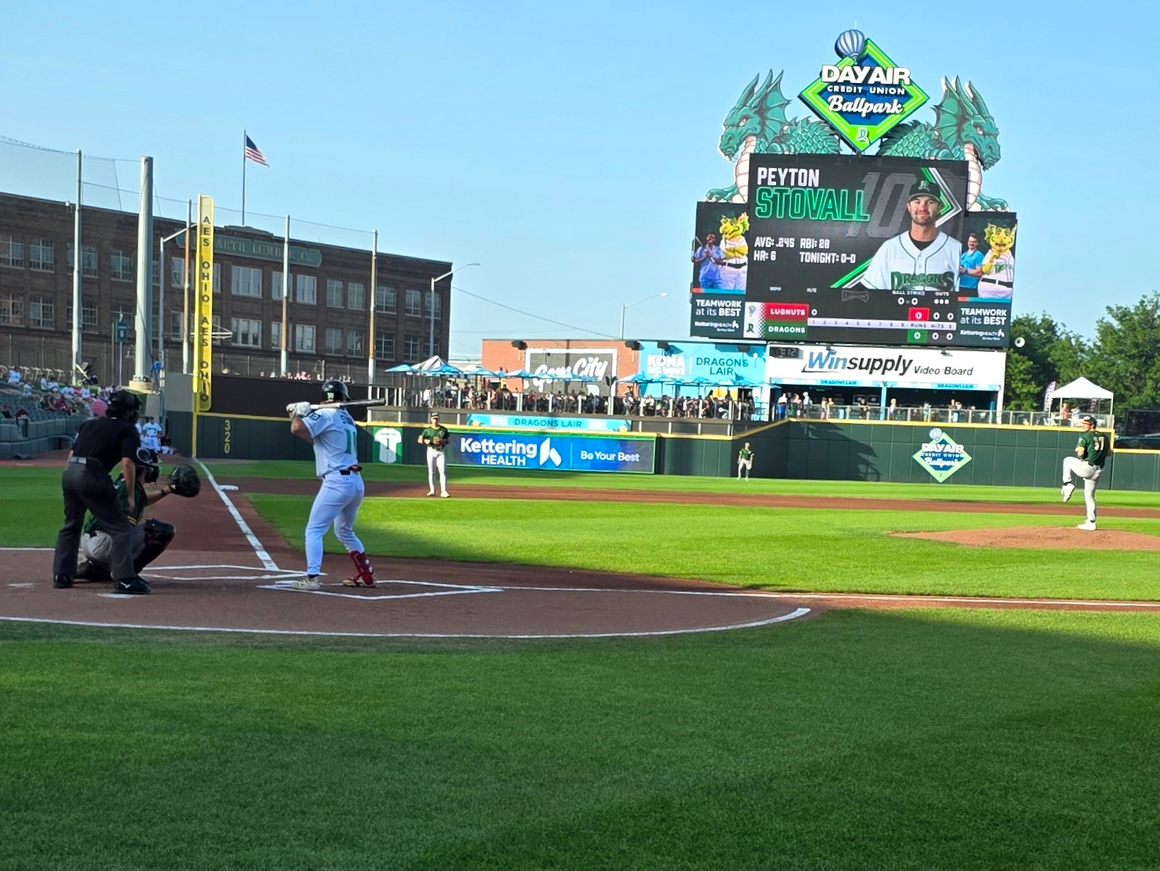
That evening, I watched the Dayton Dragons, the High-A affiliate of the Cincinnati Reds, host the Lansing Lugnuts, the (West Sacramento?) Athletics’ franchise. I had seen four professional baseball contests prior to this trip and the home team had lost each of them. The joke among my friends was that the Guardians should pay me to not attend a game and as noted above, Cleveland lost. But Dayton won! It took them 11 innings, but they won, 9-8, when a double brought the “zombie runner” home.
There is nothing to prevent me from returning to Dayton in the future but something about burying my mother made me feel like this was the last time I would be there. Before I left, there were places I still wanted to see.
The 1910 Wright Company aircraft factory, later used by the automobile industry, was literally uncovered in 2013 and 2014 when a complex of buildings surrounding it was demolished. Plans to add the factory to the Dayton Aviation Heritage National Historic Park were put on hold after a devastating fire in 2023. The site of the Wright brothers’ childhood home is managed by the National Park Service but the structure itself was moved to Henry Ford’s Greenfield Village in 1936. The first floor plan is demarcated with concrete borders, weak tea.
I returned to the National Museum of the U.S. Air Force, which I toured in 2013. This time, I searched fo three specific exhibits featured on Atlas Obscura; the Avrocar, a retired Air Force One, and a (taxidermied) World War I homing pigeon. The Air Force museum is enormous and like certain encyclopedic art museums, it is possible to return several times and still not see everything. Have a plan in advance, or let serendipity and curiosity guide you.
There had been plenty of Interstate driving on the first two days of this trip and there was more to come so I detoured, setting my coordinates for Bellefontaine. I saw small, sparsely populated, rural communities. I saw corn that conformed with the rhyme, “knee high by the Fourth of July,” but most of it would have been up around my collarbone if I had gotten out of the car to make a more precise comparison.
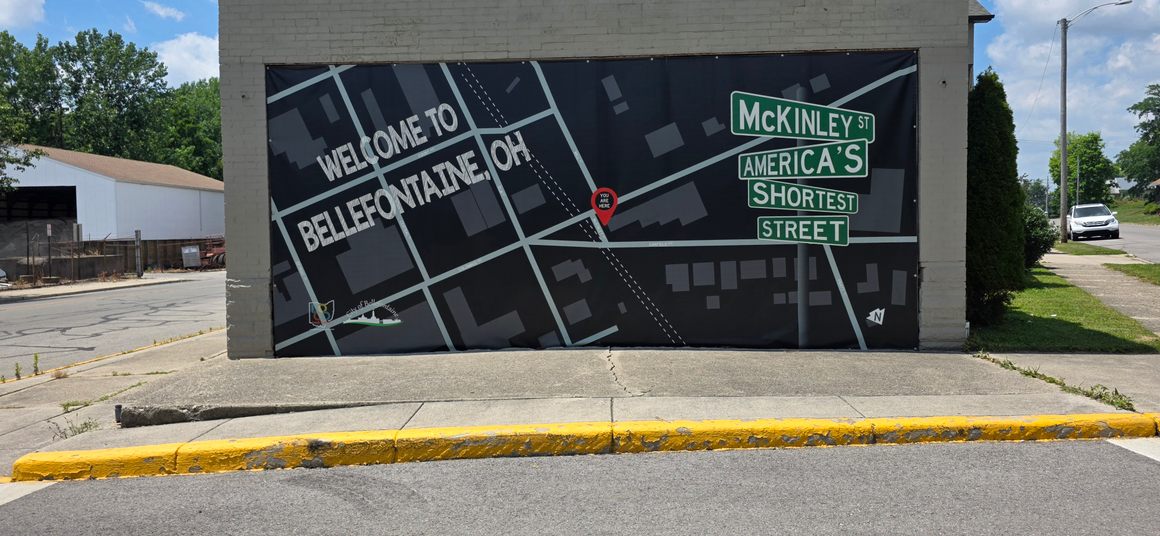
Downtown Bellefontaine, which locals pronounce “bell-FOWN-tin,” is home to the oldest concrete street in America and the shortest street in the country. I saw them both, as well as the highest point in Ohio (elevation 1,549), but the figurative high point of my midday stop was 2G's Barbecue.
One of the two G’s is George, the proprietor and chef, and by chance I struck up a conversation with his son, who I asked for a recommendation before ordering. His advice was, “Get the catfish,” and it was excellent advice: perfectly cooked filets in an almost ethereal batter. Fried okra, in my opinion, is for people who don’t like okra but if you are going to get it fried, then it should be as lightly coated as George accomplishes.
The potato salad contained sweet relish, a new variation for me, and folks at another table spoke in whispered tones with a server about the “secret ingredient” in the slaw. Oh, and the servers? The two nicest people I met on the entire trip, and I met quite a few nice people during my four days in Ohio. I was beyond full but couldn’t pass on peach cobbler before leaving for Akron.
So much is packed into three lines in the first stanza of “My City Was Gone”. “All my favorite places/My city had been pulled down/Reduced to parking spaces”. Chrissie Hynde was suffering from nostalgia — a neoclassical compound of Greek derivation; nóstos (homecoming) álgos (pain) — for her favorite places. I don’t mean to imply she should have just gotten over her distress but it is worth noting that South Howard Street was sacrificed to urban renewal in the late-60s, early-70s, long before “My City Was Gone” was the B-side to “Back on the Chain Gang,” The Pretenders’ biggest hit in the United States.
(Although “My City Was Gone” suited the narrative here, when it comes to music of that general era from northeast Ohio, my personal taste decidedly leans more to the first two albums by Pere Ubu, The Modern Dance and Dub Housing. Full disclosure and fangirl shoutout.)
Ironically, given all of the thought that went into the inauspicious urban renewal plan, the most successful public open space in downtown Akron is Lock 3. The municipal park resulted only when a developer first cleared the site but then was unable to finance new construction. “Make no little plans,” Chicago architect and urban designer Daniel Burnham proclaimed at the end of the 19th-century but in Akron, it is the little plans that have succeeded.
A second example, immediately south of Lock 3, is 7 17 Credit Union Park, (not actually a park but) home to the Akron RubberDucks, the Double-A affiliate of the Cleveland Guardians. A couple of decades after urban renewal, but now a quarter-century ago, a minor league baseball team was convinced to move to Akron. On the evening I attended, the visiting Erie SeaWolves (Pittsburgh Pirates) scored half of their runs in the sixth inning, winning 12-10. We need a term for whatever is the antithesis of “pitchers duel.”
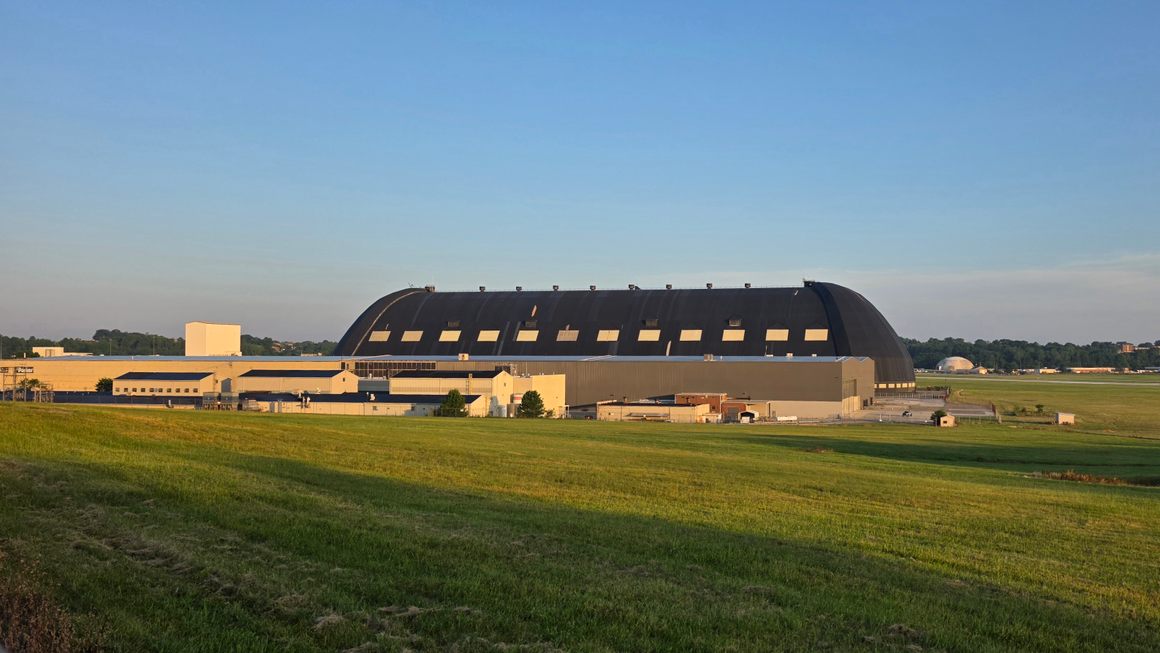
I enjoyed a hot breakfast everywhere I stayed in Ohio. I never had to settle for a cellophane wrapped blueberry muffin, an unripe banana, and the equivalent of diner coffee. I was first in line when I awoke in Akron and after checking out, took a quick look at the Goodyear Airlock, the scale of which is hard to comprehend. (Speaking of scale, if you read all or even some of this, thank you for your vicarious companionship.) I climbed back into my car, resigned to the tedium that is I-80 across Pennsylvania.
