

In a village in central Tanzania, the opening of a tap changed thousands of lives and set my own life as an explorer in motion. The people of Iyoyo gathered around the new water system and began to chant a single word: “Maji.” The Swahili word for water.
The word passed through the crowd as the taps were opened for the first time. Children filled cups. Families gathered near the flowing water. After years of relying on distant and unsafe sources, the 3,229 residents of this village in Tanzania’s Dodoma Region now had access to a permanent supply of clean water
For the community, this moment represented improved health, greater security, and hours reclaimed from the daily search for water. It also promised a quality of life that people like me too often take for granted. For me, the moment marked the beginning of something I did not yet fully understand. I had traveled to Tanzania as a scientist and supporter of Water 4 Mercy. I returned realizing that fieldwork, exploration, and humanitarian service could form part of the same life. In many ways, Iyoyo was where my life as an explorer began to take shape.
A Journey That Began With the Evening News
The path to being a part of this project began two years earlier and thousands of miles away. In 2021, I was a graduate student at the University of Florida studying soil and water science. One evening, I saw a local news segment about Water 4 Mercy, a nonprofit organization based in Clearwater, Florida, that works with communities in Africa, religious organizations, NGOs, and governments to establish sustainable water and agricultural systems.
I had already devoted much of my academic life to understanding water. I studied its movement through soils, its importance to ecosystems, its role in agriculture and food security, and the consequences of contamination or scarcity. Until that moment, however, most of my experiences had been confined to classrooms, laboratories, or familiar landscapes in Florida. Although I had completed a study-abroad program with Reykjavik University, that experience had still been structured around coursework and wasn't anything like this.
As I watched the segment, I saw water science operating in a radically different context. Access to safe water was not merely an environmental issue or technical challenge. It shaped health, education, food production, personal safety, and the basic structure of daily life. Occasionally, I encounter something that creates an immediate conviction that I need to become involved. This was one of those moments. I reached out to Water 4 Mercy founder and CEO Nermine Khouzam Rubin, a fellow University of Florida alumna. That conversation began my relationship with the organization and eventually led to an invitation to join its expedition to Tanzania.
Approximately two years after seeing that television segment, I found myself traveling across northern and central Tanzania, from the Serengeti toward Dodoma and Iyoyo.
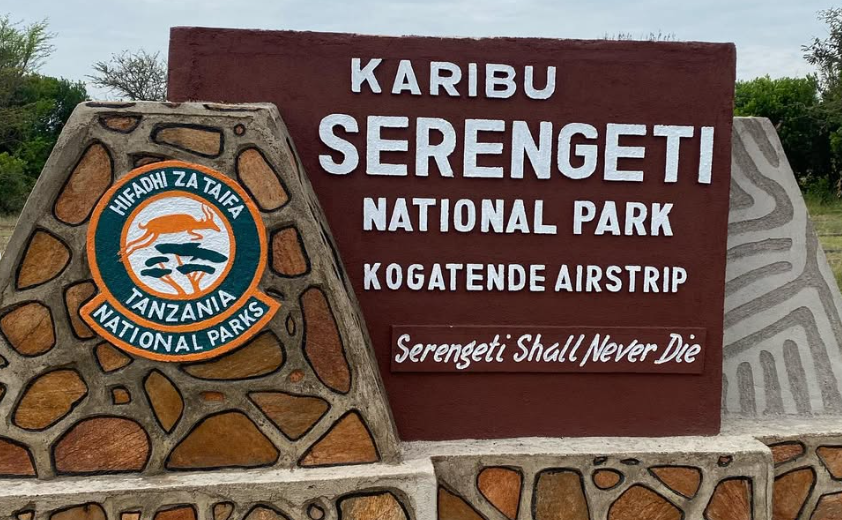
Experiencing Wild Tanzania on the Road to Dodoma
Before reaching Iyoyo, we first landed in Arusha, a city in northern Tanzania that serves as a gateway to some of East Africa’s most celebrated landscapes. The most magnificent of these landscapes, at least to me, was nearby Mount Kilimanjaro. I distinctly remember standing in the city and noticing the mountain rising in the distance. My eyes followed its slopes upward, then higher still, until they disappeared behind a bank of clouds. For a moment, I assumed the clouds had concealed the summit. Then I realized the mountain continued above them. Its upper reaches were hidden somewhere beyond the clouds, suspended at a height my mind had not yet accounted for. Kilimanjaro was not simply part of the horizon. It seemed to rise through it, towering above the landscape with a scale that photographs had never prepared me to understand.
From there, our route carried us through the Serengeti, across the vast crater country, and eventually south toward Tanzania’s central Dodoma Region. For someone beginning to imagine a life in exploration, it was an extraordinary introduction.
The Serengeti seemed to operate on a scale entirely different from the landscapes I knew in Florida. The horizon stretched across open grasslands broken by rocky outcrops, scattered trees, and herds of wildebeest and zebra moving through a landscape shaped by rainfall, migration, predation, and survival. The name Serengeti is commonly associated with a Maasai expression meaning ‘endless plains.’ Standing there, the description felt entirely fitting.
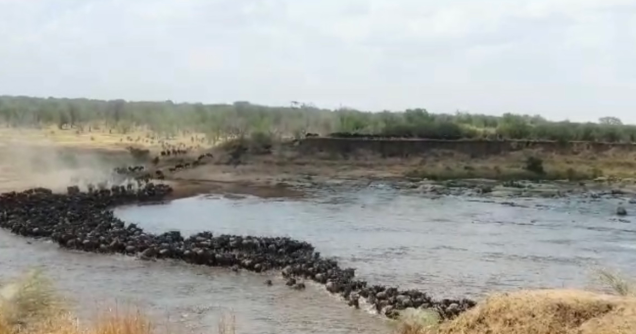
We arrived during the Great Migration, when immense numbers of wildebeest, zebras, and other grazing animals move across the ecosystem in search of water and fresh vegetation. From a distance, the animals seemed to merge into a single dark current, crowding the bank before committing themselves to the water. Then, one after another, they plunged forward until the river appeared to be moving in two directions at once: the water flowing across the landscape and the herd forcing its way through it. Dust rose behind those still approaching, while the animals already in the river fought against the current and the weight of thousands following close behind. I had seen scenes like this in documentaries but witnessing it in person stripped away the safety and neatness of the television frame. The migration was not an orderly procession. It was urgent, loud, dangerous, and driven by an instinct older than any road or national boundary. Watching in awe, I felt honored to witness one of the planet’s great rituals unfold.
During this part of the journey, we were fortunate enough to encounter all five animals traditionally grouped as Africa’s “Big Five”: the lion, leopard, elephant, rhinoceros, and African buffalo. The term originally came from hunters who considered these animals among the most difficult and dangerous to pursue on foot. Seeing all five during a single journey felt like an extraordinary stroke of luck. Seeing these animals was only part of what made the journey meaningful. Much of what I learned came from a remarkable man I befriended during the expedition
Our guide, Richard Maige, transformed the route into an educational adventure. Richard possesses what I can only describe as an encyclopedic knowledge of Tanzania. He could identify animals at a distance, explain their behavior, describe the ecological relationships unfolding around us, and connect the landscape to the country’s history, cultures, and political development. A passing animal was never merely named if we inquired about it. Richard explained how it lived, what pressures it faced, and how it fit within the broader ecosystem. A hill, settlement, tree, road, or distant feature could lead to a discussion of geology, migration, colonial history, traditional livelihoods, or modern conservation.
He taught me that a knowledgeable guide does more than help travelers find remarkable places. A great guide teaches people how to read a landscape. Without that knowledge, the Serengeti might have appeared only as a beautiful expanse filled with animals. Through Richard’s explanations, it became a network of histories and relationships.
We also passed through the Ngorongoro Conservation Area and descended into the Ngorongoro Crater, a vast volcanic caldera enclosed by steep walls rising above the plains below. From the rim, the crater floor looked almost like an alien world sealed off from everything around it. Within that natural enclosure, zebras, wildebeest, buffalo, elephants, and hyenas moved across grasslands, wetlands, and patches of forest shaped by ancient geological processes. Standing above the crater, then descending into it, felt like entering an immense natural amphitheater.
At one point, an elephant brought our progress to a complete stop by planting itself across a narrow, one-way road. For several minutes, it appeared to be operating its own toll booth, with the ever-coveted currency of food as the expected tender. We respectfully declined to pay. Feeding wildlife can alter natural behavior, encourage animals to approach vehicles, and create risks for both animals and visitors. We were already guests in its habitat, so adding another layer of human interference would have been irresponsible and unethical. Fortunately, our would-be toll collector showed us mercy and stepped aside after seeing we weren't going to pay, allowing us to continue on our path without charge.
Let’s pause for a quick recap. See one of the tallest mountains on Earth? Check. Spot the Big Five by day, then make camp beneath the Serengeti sky at night? Check. Descend into an ancient volcanic crater and get held up by what we will generously call an entrepreneurial elephant? Check.
Keep in mind that we had not even reached the village where the water project was located, and several hours of travel remained before we reached Dodoma.
What could possibly come next, you ask? There is no other way to say it: a sandstorm, apparently.
The wind rose quickly, carrying enough dust across the road that we had little choice but to pull over and wait for conditions to improve. But as I have come to learn, unexpected detours often produce some of the best moments and stories. Nearby, we came across a Maasai village whose residents were kind enough to welcome us and offer refuge from the storm.
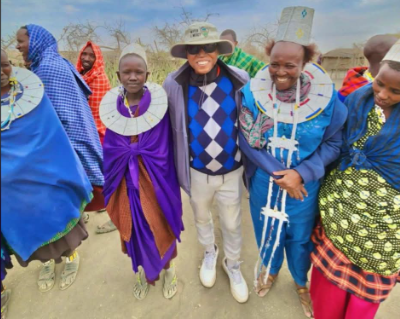
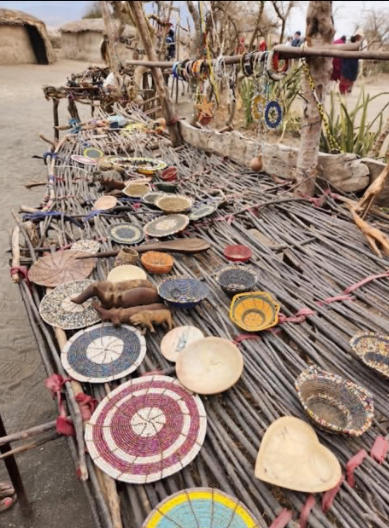
What struck me most about the Maasai village was its ingenuity. Everywhere I looked, people had found ways to turn the materials available to them into objects that were useful, beautiful, and often both. Artisans displayed detailed carvings of African wildlife made from acacia and dark ebony wood, transforming pieces of the surrounding landscape into elephants, giraffes, and other animals with remarkable precision.
The village also seemed to contain several eras at once, though I say this not in the simplistic sense of being “stuck in the past.” Traditional clothing, beadwork, and pastoral customs existed alongside creative adaptations to modern materials. One man wore intricate ceremonial beads and carried a spear whose metal had reportedly been fashioned from part of a derelict automobile. Several residents wore durable sandals made from repurposed tire rubber. A machine abandoned as waste elsewhere had been broken down and given many new lives; be that hunting equipment or footwear.
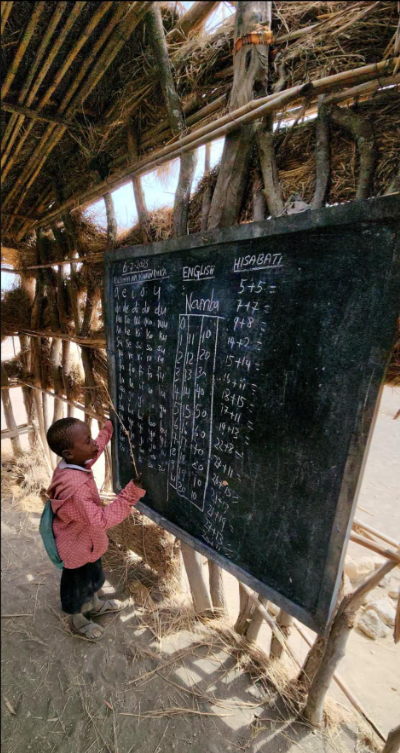
Even the classroom reflected this practical resourcefulness. Its walls and roof were built from timber, branches, and thatch, while a large blackboard served students learning English, arithmetic, and other subjects. The structure was humble, but the I could see that the ambition inside the minds of the children was not. I watched a young child recite letters and solve math problems for us with visible pride, and I found myself experiencing several emotions at once.
A part of me felt admiration for the seriousness with which the child approached the lesson and for the community’s determination to create an educational space with the materials that were available to them. Another part of me felt deeply uncomfortable with how easily I had taken education, infrastructure, and basic material security for granted throughout my own life. I try not to do that, but the truth is that I still do it now and again despite my best efforts. In the United States, I had grown accustomed to classrooms with electricity, climate control, computers, stocked libraries, and countless other resources so commonplace that they seemed as immutable as the laws of physics. Here, a blackboard and chalk beneath a thatched roof was being used with equal purpose.
I reflected on that contrast throughout the rest of the expedition, and I continue to think about it now. The lesson was not that hardship is somehow noble or that limited resources should be romanticized. Children-- make that people in general-- everywhere deserve safe places of education with qualified teachers equipped with the tools necessary to develop their abilities. What stayed with me was the reminder that opportunity is never something to treat casually. The child in front of that blackboard clearly valued the chance to learn. Watching him made me question whether I had shown sufficient gratitude for opportunities made possible partly by circumstances of birth that I had done nothing to earn.
By the time we reached the Dodoma Region, I had already learned one of the central lessons of exploration. Entering a new land is not simply about witnessing what is visually impressive. Learning from people who understand it more deeply than you do, that is where the magic of travel rings true for me.
Into the Dodoma Region
After Kilimanjaro, the Great Migration, the Ngorongoro Crater, a sandstorm, and an unexpected afternoon with a Maasai community, we finally continued toward the original purpose of our journey. As we entered Tanzania’s central Dodoma Region, the landscape began to change. The greener expanses and concentrations of wildlife in the north gradually gave way to drier terrain, scattered settlements, and the visible realities of life in a region where rainfall can be limited and access to reliable water can shape nearly every part of the day.
Somewhere ahead of us was Iyoyo, a village of 3,229 people in Chamwino District. For the months of logistics leading up to the expedition, I had known it primarily through Water 4 Mercy’s plans, conversations, and descriptions. Now it was becoming a tangible place on the other end of the road. The extraordinary experiences of northern Tanzania had introduced me to the scale and biological richness of the country, but Dodoma would reveal another side of its relationship with water. Here, water was not merely part of the scenery or the force driving migrating wildlife. It determined health, agriculture, education, safety, and how families spent their limited time.
As we drew closer to Iyoyo, the expedition changed character. We were no longer traveling primarily as observers through extraordinary landscapes. We were approaching a community where the work of engineers, technicians, educators, donors, local political leaders, and residents were about to produce something tangible: a permanent clean-water system. After everything we had witnessed along the way, we were finally nearing the moment that had brought us to Tanzania in the first place.
However, as we entered the area, we also visited sites that were in varying phases of completion. Some villages already had access to water and were seeking to expand agricultural science programs so that the resource could support food production, technical training, and new sources of income. Others were still in the engineering and exploration stages, where crews were boring test wells and studying whether the ground beneath them could provide a dependable supply.
Moving among these sites did more than give me experience in the different stages of water and agricultural development. It also introduced me to the local people and organizations whose specialized work made each stage possible. During the journey, I began forming relationships with members of Innovation: Africa, an NGO that works with rural communities to install solar-powered water systems and other essential infrastructure. Their role helped me better understand how renewable energy, groundwater engineering, and community organization could be brought together to deliver water to remote communities beyond the practical reach of conventional electrical grids.
I also connected with the people involved in AITeC, which is Water 4 Mercy’s Agricultural Innovation and Technology Center in Dodoma. Developed with Don Bosco Tanzania, the center functions as both a working farm and a living classroom, where students, farmers, and educators can gain practical experience with irrigation, crop production, agricultural technology, and water stewardship.
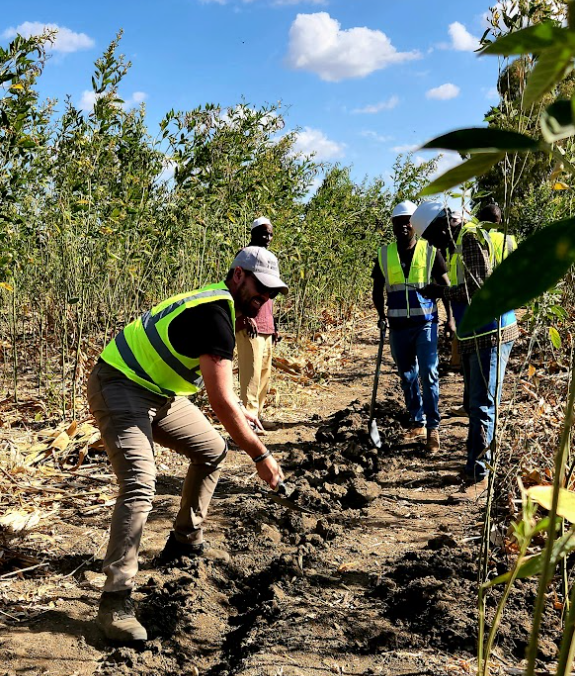
During this time, I had the privilege of contributing in a small but physical way. I joined others in digging part of a trench for a new water line at one of the project sites. My contribution was modest compared with the labor of the engineers, technicians, residents, and workers responsible for the project. Still, placing a shovel into the ground connected me to the effort in a way that observation alone never could.
As I met people throughout the region, I spoke with villagers about typhoid and other dangers associated with unsafe water. Those concerns were familiar to me in a scientific sense, and I understood waterborne disease through coursework, laboratory methods, and public-health literature. What I had not fully understood were the dangers and burdens surrounding the act of collecting water before it ever reached a household.
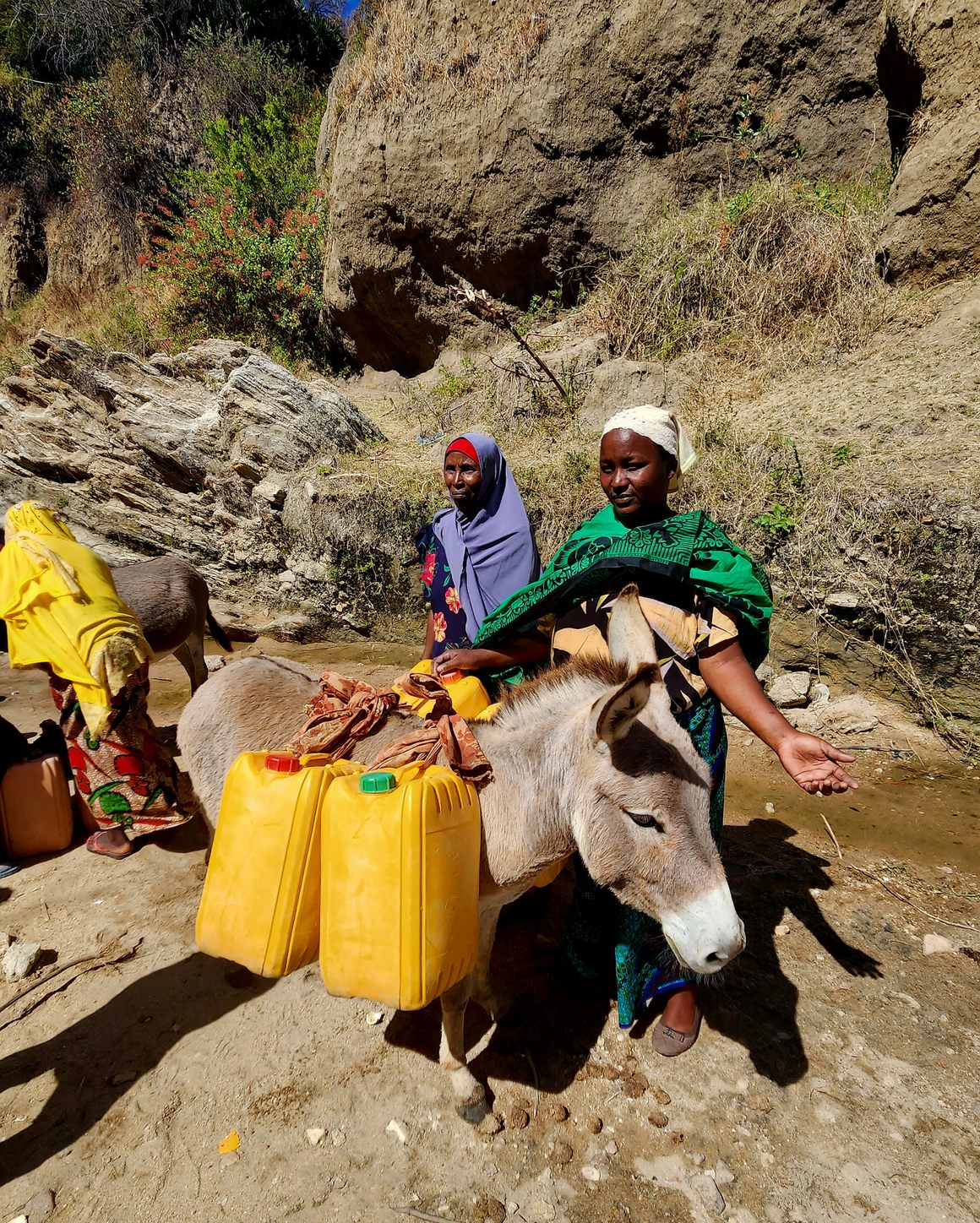
Villagers described challenges that, from the comfort and convenience of my own life, I would likely never have imagined on my own. One woman told me about being attacked by a hyena that had come to the same water source; a violent encounter stemming from unfortunate timing. Another older woman described falling into a large hole during a nighttime water run and being unable to escape until someone found her the following morning. In other communities, people spent much of the day digging into the earth, waiting for water to collect, sifting it, and then carrying it home.
These were not dramatic stories told for the benefit of a visitor. They were accounts of ordinary risks built into daily life. The search for a day's drinking water could mean exposure to wild animals, injury in darkness, exhaustion, lost working hours, and missed time in school. Even after making the journey, families could still return with water capable of causing serious illness. Keep in mind this is not aquifer water they were drinking; this is far higher in the soil column than what would generally be considered groundwater. Thus, it was exposed excavations rather than protected wells, leaving the supply especially vulnerable to contamination.
The conversations changed the way I understood water security. Distance, safety, quality, reliability, and the time required to obtain water all matter. It also made me realize that a water source could technically provide water while still placing an enormous health and safety burden on the very people who depended upon it.
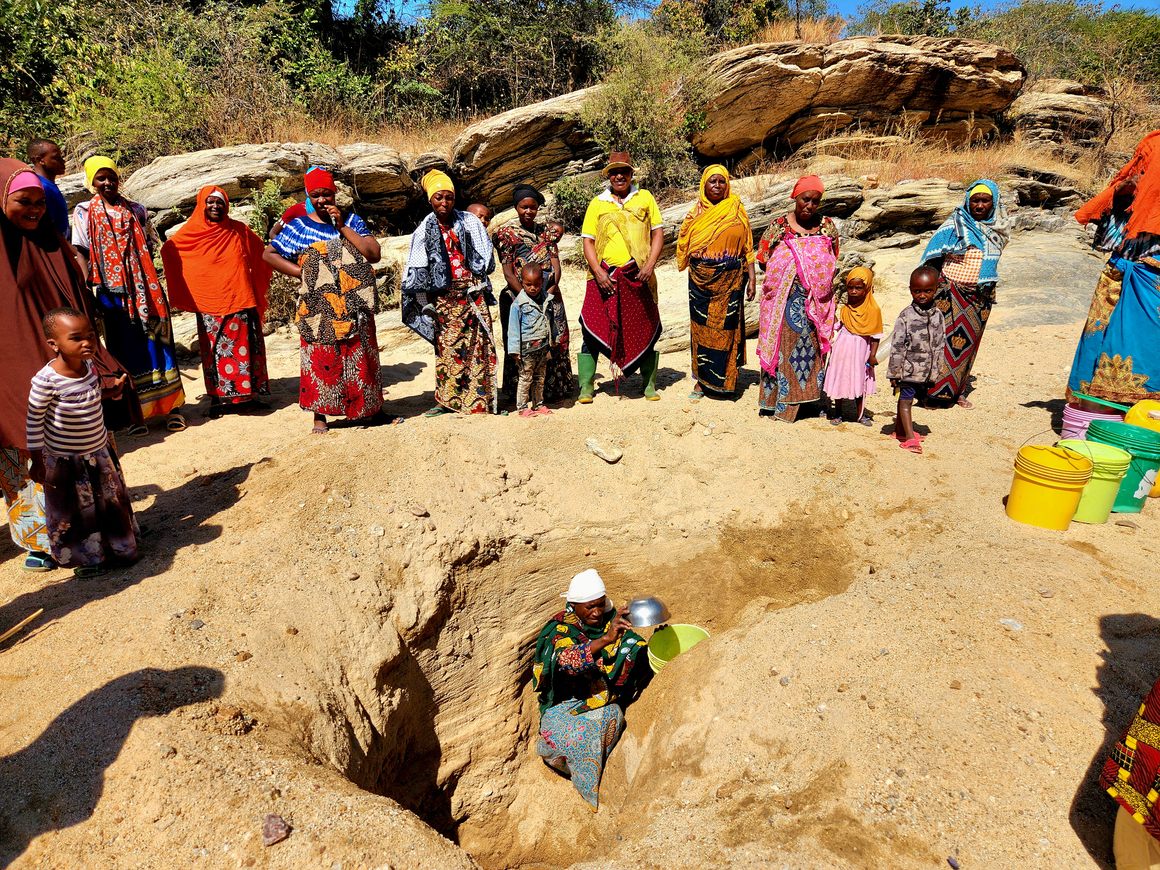
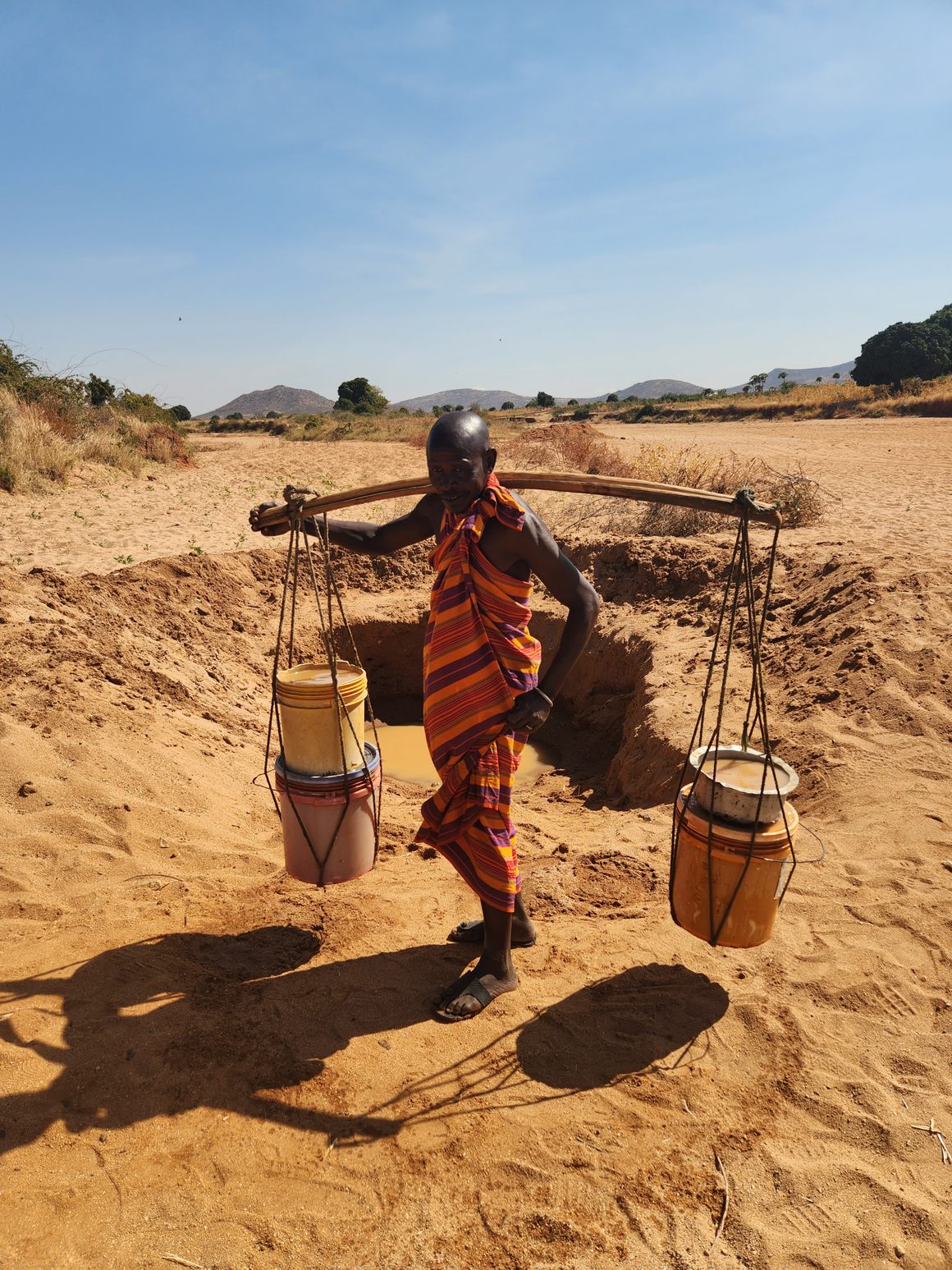
Once again, I found myself becoming increasingly aware of how much I had taken for granted. At home, clean water appeared with the turn of a handle. I did not have to calculate the physical danger of obtaining it or surrender an entire day to collecting enough of it for basic household needs. I understood that convenience intellectually before Tanzania, but hearing these stories made it real.
Where It All Became Real
Of all the communities we visited, Iyoyo holds a special place in my heart because it was there that I witnessed the final stage of the process unfold in real time. At other sites, I had seen the drilling, engineering work, agricultural plots, and plans for future expansion. Each offered a different view of the long path toward water as well as food security. In Iyoyo, however, those separate stages had converged while I was physically there. The studies had been completed, the financing of the project was secured, the well was drilled, the infrastructure for the solar powered well and pump was installed, and local residents were educated and trained to care for the system.
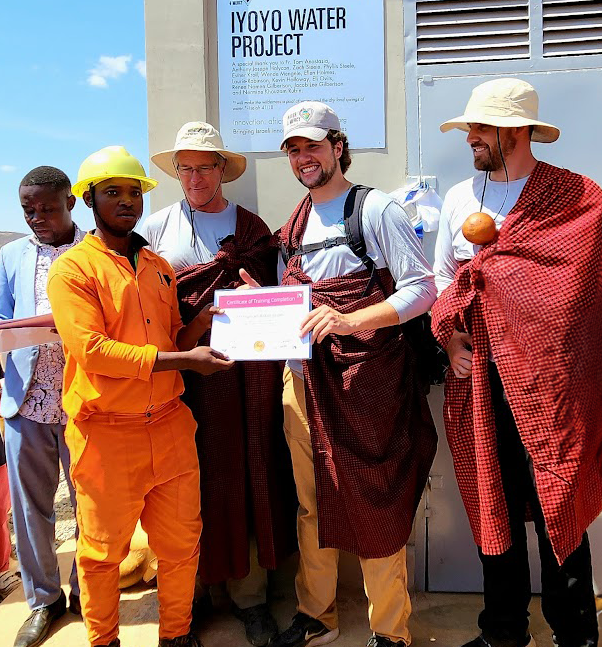
During the "turning on the tap" ceremony, members of the community presented us with the red patterned robes shown in the photograph above. The garment was more than something placed over my shoulders for a photograph. It was a gift of welcome and fellowship from people who had allowed me to share in one of the most important moments in their village’s history. I understood that I was only a visitor and that the true accomplishment belonged to the residents, technicians, educators, and workers who had built the system and would operate and sustain it. That made their decision to include me in the celebration especially meaningful. I brought the robe home from Tanzania, and it remains one of my most cherished possessions.
Water infrastructure often disappears from sight once construction ends. Pipes are buried underneath soil, pumps will often operate away from public view, and months or years of technical labor can appear to collapse into the simple act of turning a handle. Throughout the expedition, I had seen what had to happen before that handle could ever be turned.
Then, the fateful moment occurred: the turning on of the taps.
Water traveled through the new pipes and reached the village center, which now had a communal watering station downhill from the water tower. People gathered around with dried out gourds shaped into disks and cups, as well as other containers, as the first clean water began to flow. Soon, hundreds of voices were chanting that magical word that began this story: ‘maji.’
Water.
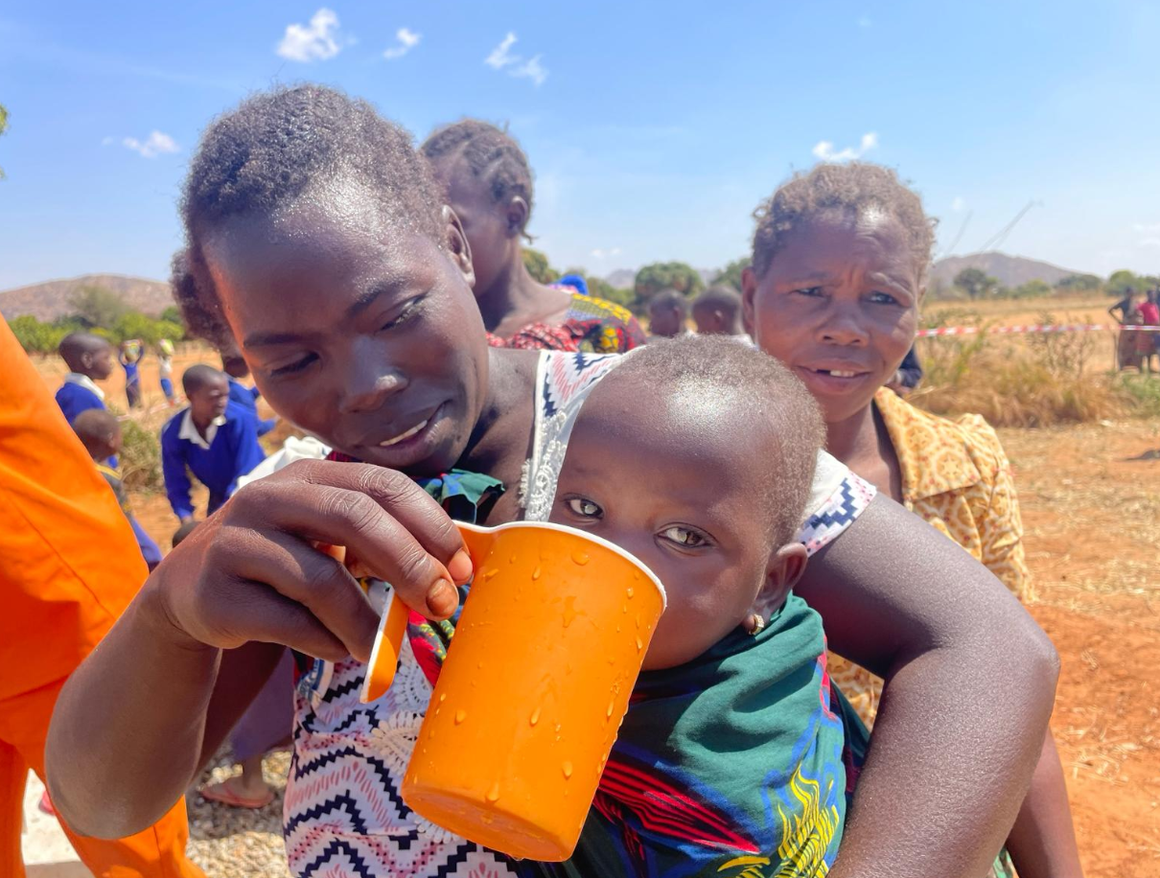
I watched village elders and children drink from a clean source designed to reduce the community’s exposure to typhoid and other waterborne diseases. The system meant fewer hours spent searching, digging, sifting, and carrying. It meant that future journeys for water would no longer expose people to darkness, injury, or encounters with wildlife. It also created a foundation for agriculture, education, and greater control over the community’s future.
The importance of the moment was not that visitors had arrived and delivered water to passive recipients. The system had been built through the combined work of local residents, African engineers and educators, partner organizations, and donors. Community members had received training and would remain responsible for sustaining the project after we left. The ceremony belonged first and foremost to them. I was fortunate enough to bear witness to it.
That distinction has remained critical to me. Humanitarian work should never be framed as outsiders appearing briefly to rescue a community. The strongest projects follow this model. They respect local knowledge, transfer technical capacity, and leave people with greater authority over the systems affecting their lives. “The opening of the taps was meaningful because it marked the beginning of the village’s ownership and stewardship of a permanent resource.
As the people around me continued chanting “maji,” I realized that I was witnessing far more than the completion of a water project. I was seeing the scarcest resource of all; time, being returned to families, danger removed from ordinary routines, and new possibilities opened by something I had taken for granted nearly every day of my life.
The taps opened for the people of Iyoyo, and the direction of my own life became clearer because of it. I would not claim that one expedition made me wise, but it permanently changed what I notice and what I value.
Years later, Iyoyo remains the village I return to most often in memory. It was where science ceased to be only my academic field and became a vehicle for service, exploration, and human dignity. Iyoyo marked the completion of my first expedition as well as the beginning of my life as an explorer.
