

Tyrannosaurus rex lived closer in time to us than to the animals buried in the hills behind Portugal’s Algarve coast.
Most visitors never see those hills. They drive past them on the way to the beaches and the golden sea cliffs. A short drive inland, near the market town of Loulé, the soil turns the color of brick, and that red rock is about 230 million years old.
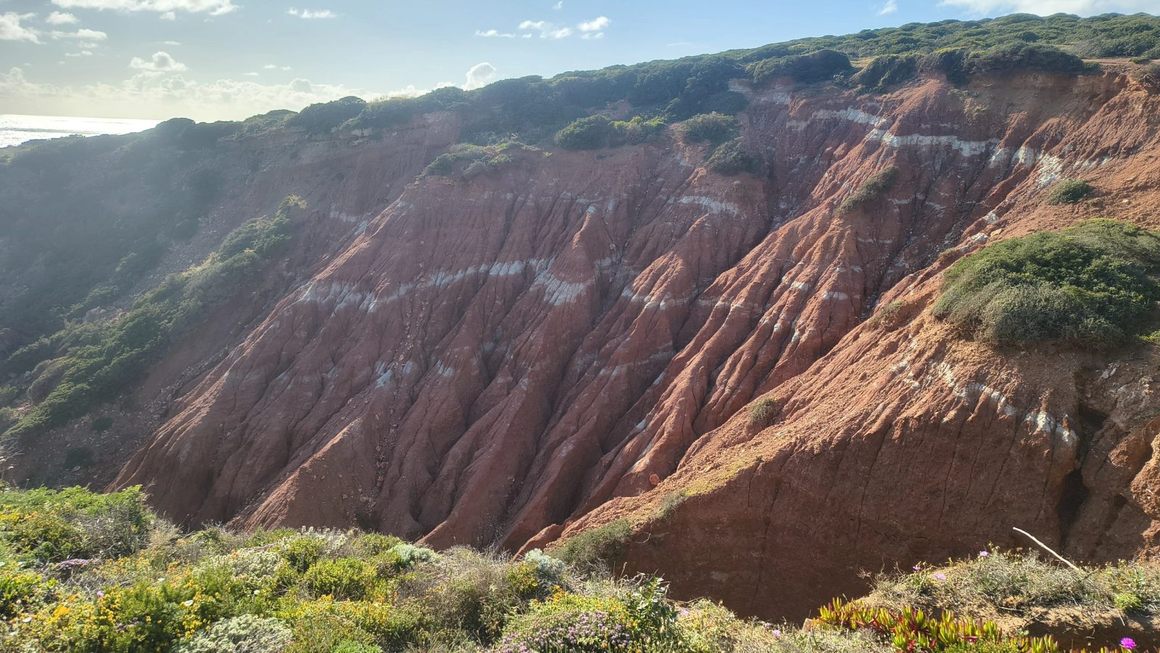
In the Late Triassic, this corner of Portugal sat inside a single supercontinent, and the Atlantic Ocean did not exist yet. Rivers wandered across a lowland and fed shallow lakes. Those lakes belonged to Metoposaurus algarvensis, a flat-headed amphibian up to 2 meters long that looked like an oversized salamander and lived on fish. Scientists named it in 2015 from an Algarve bonebed where the bones of many individuals lie jumbled together. Crocodile-like phytosaurs patrolled the same shores. Dinosaurs were rare newcomers.
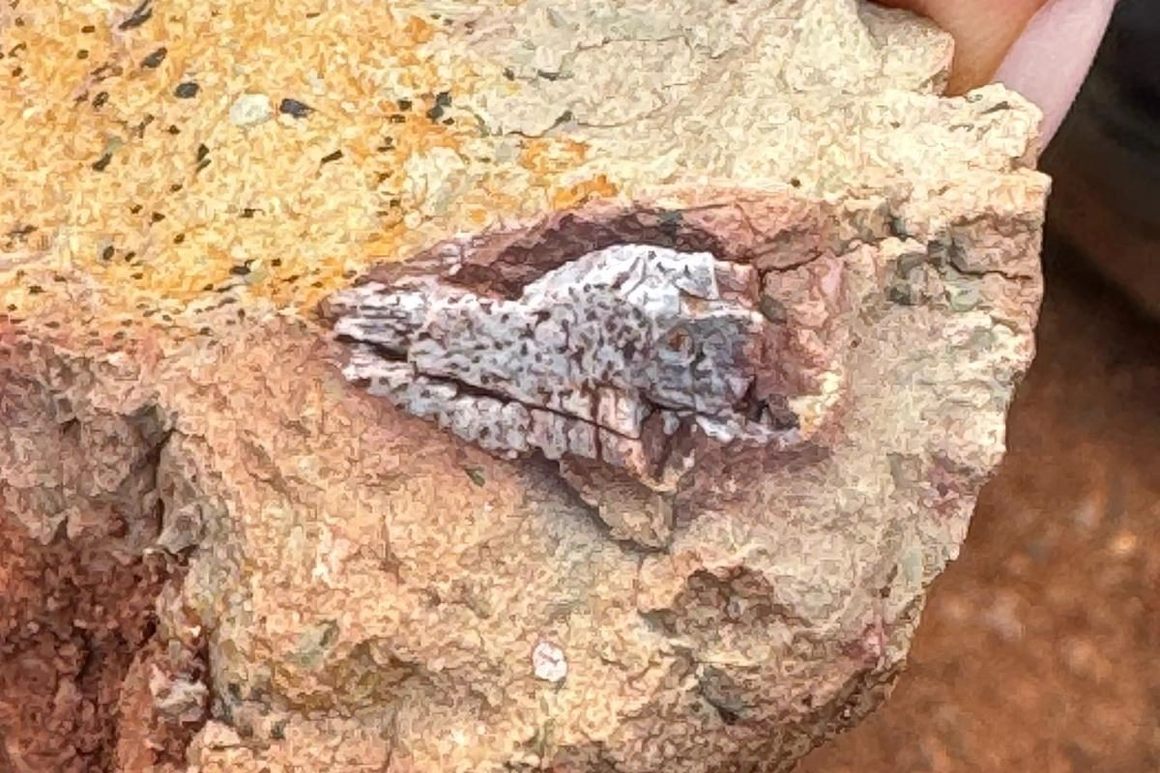
Then something much smaller turned up. When the team sieved sediment from these hills in 2025, it found the first clues that the earliest relatives of mammals lived here too. These animals belonged to the cynodonts, the group that eventually gave rise to every mammal on Earth, including us. They were small, and the evidence they left behind may be smaller than a grain of rice.
The timing is what makes these hills special. Between about 234 and 232 million years ago, volcanic eruptions loaded the air with carbon and made the climate unstable. Rain fell on land that had been mostly desert, a period geologists call the Carnian Pluvial Episode, and dinosaurs spread in its aftermath. In 2022, a study in Nature co-led by Romain David and our expedition lead paleontologist, Ricardo Araújo, used the inner ears of fossil skulls to show that the forerunners of mammals became warm-blooded around the same time. The change took less than a million years. If cynodonts lived in the Algarve 230 million years ago, these hills sit close to a turning point in our own family history.
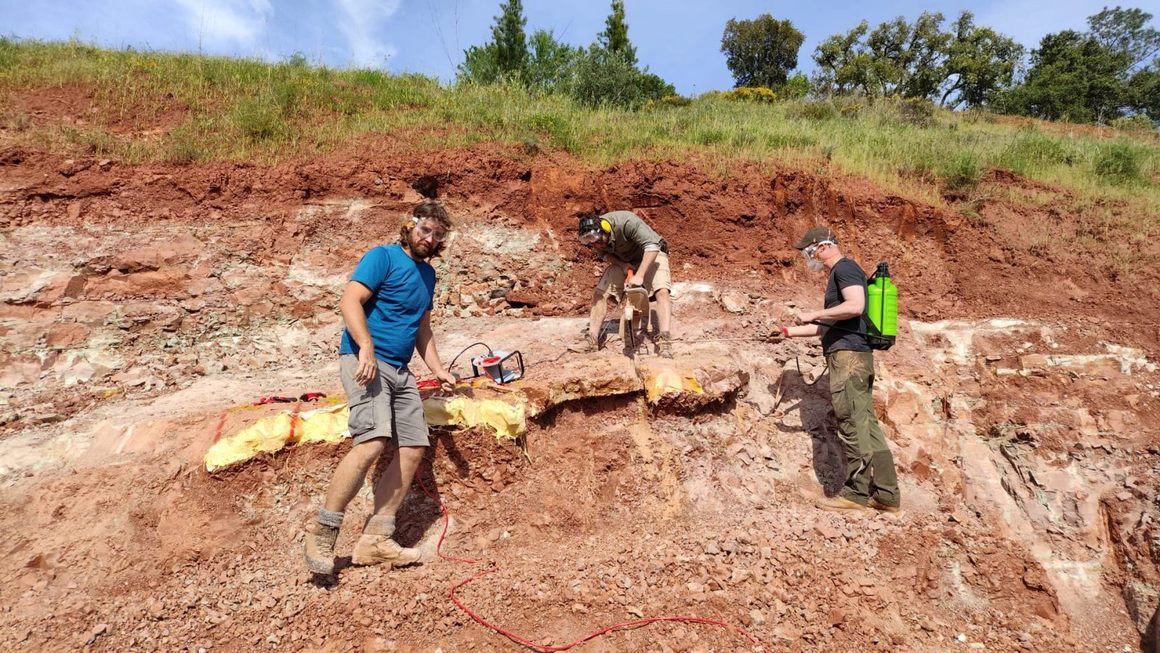
The work is slow and physical. Large fossils leave the ground inside plaster jackets, the way a doctor sets a broken arm, and travel to the laboratory, where they are freed from the rock.
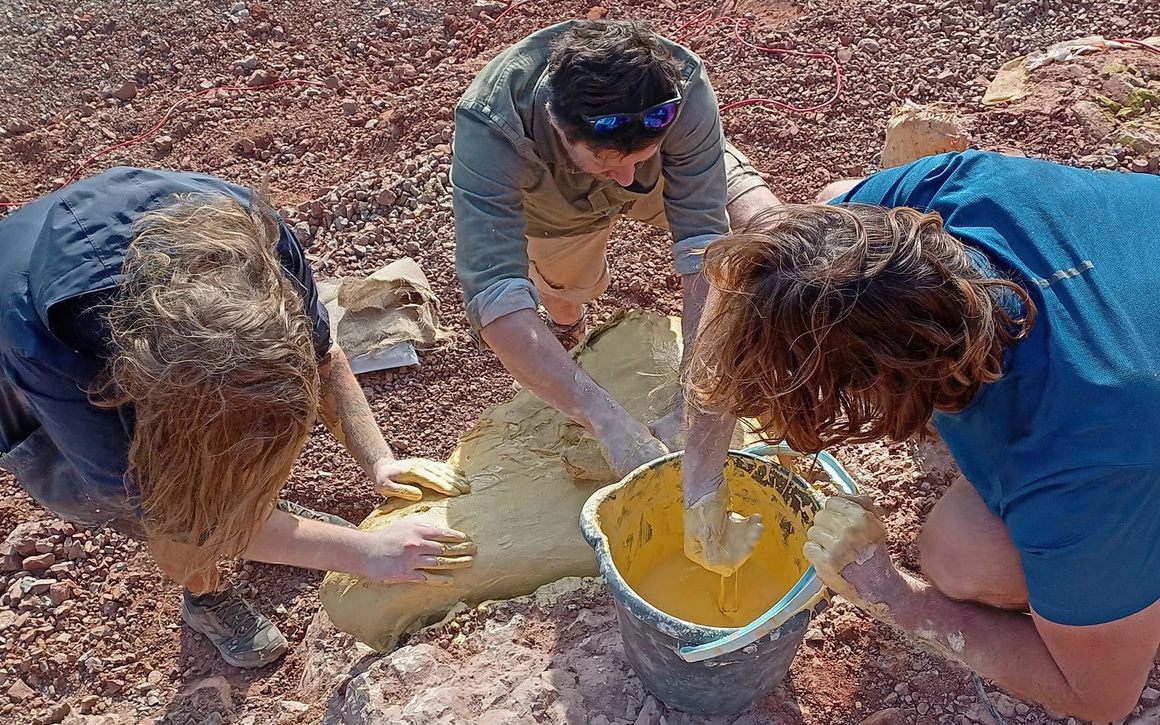
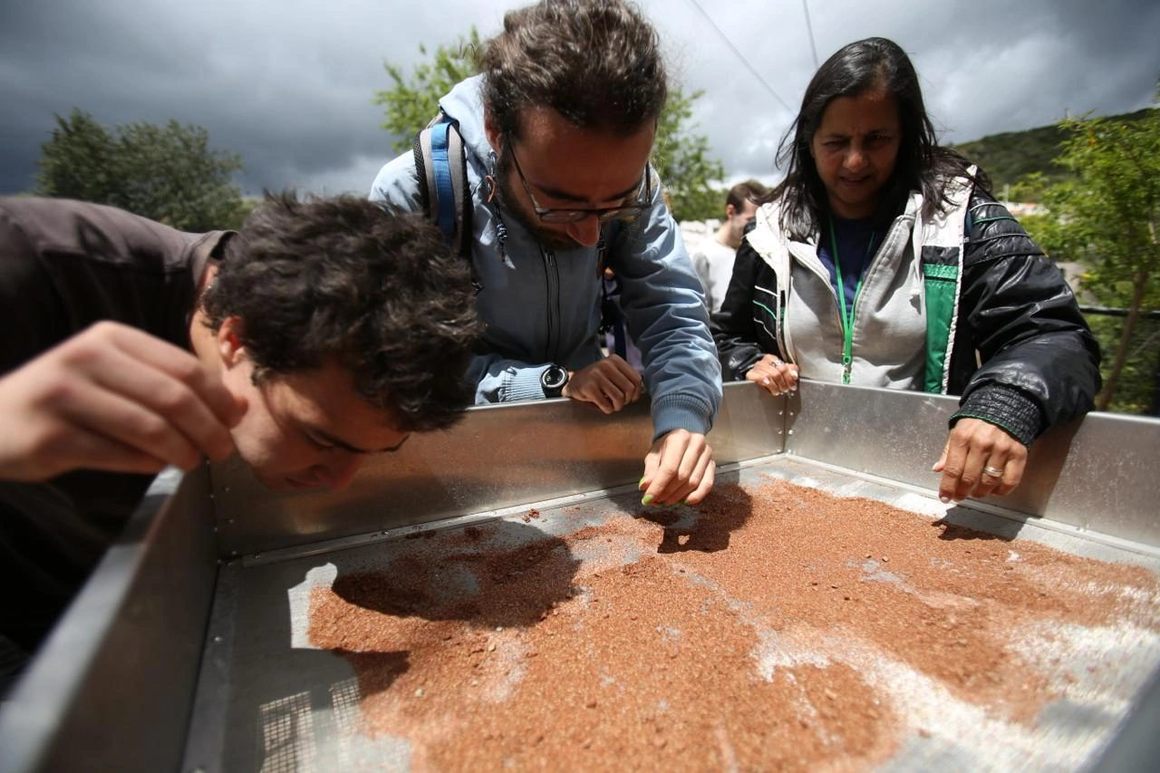
So far the team has carried more than 20 of these jacketed blocks out of the bonebed. The small fossils ask for a different kind of patience. Bags of sediment go through sieves, and people sort what stays behind by eye. Those sieves have already produced well over 100 fossils.
When people think of dinosaurs in Portugal, they usually think of the Jurassic giants of Lourinhã, north of Lisbon. Far fewer have looked for the world that came before them in the south, and DinoDawn started because so few had.
We go back on October 17, 2026, with scientists from universities in Portugal and Germany working alongside volunteers. If more fossils confirm what the 2025 sieves suggested, the Algarve will add a new chapter to the story of how mammals began, and it may give us species no one has named yet.
You can follow the season, see the field photographs and support the expedition at dinodawn.org.


