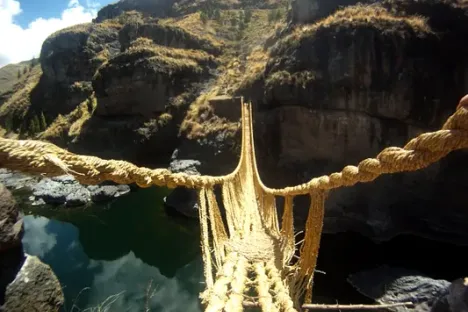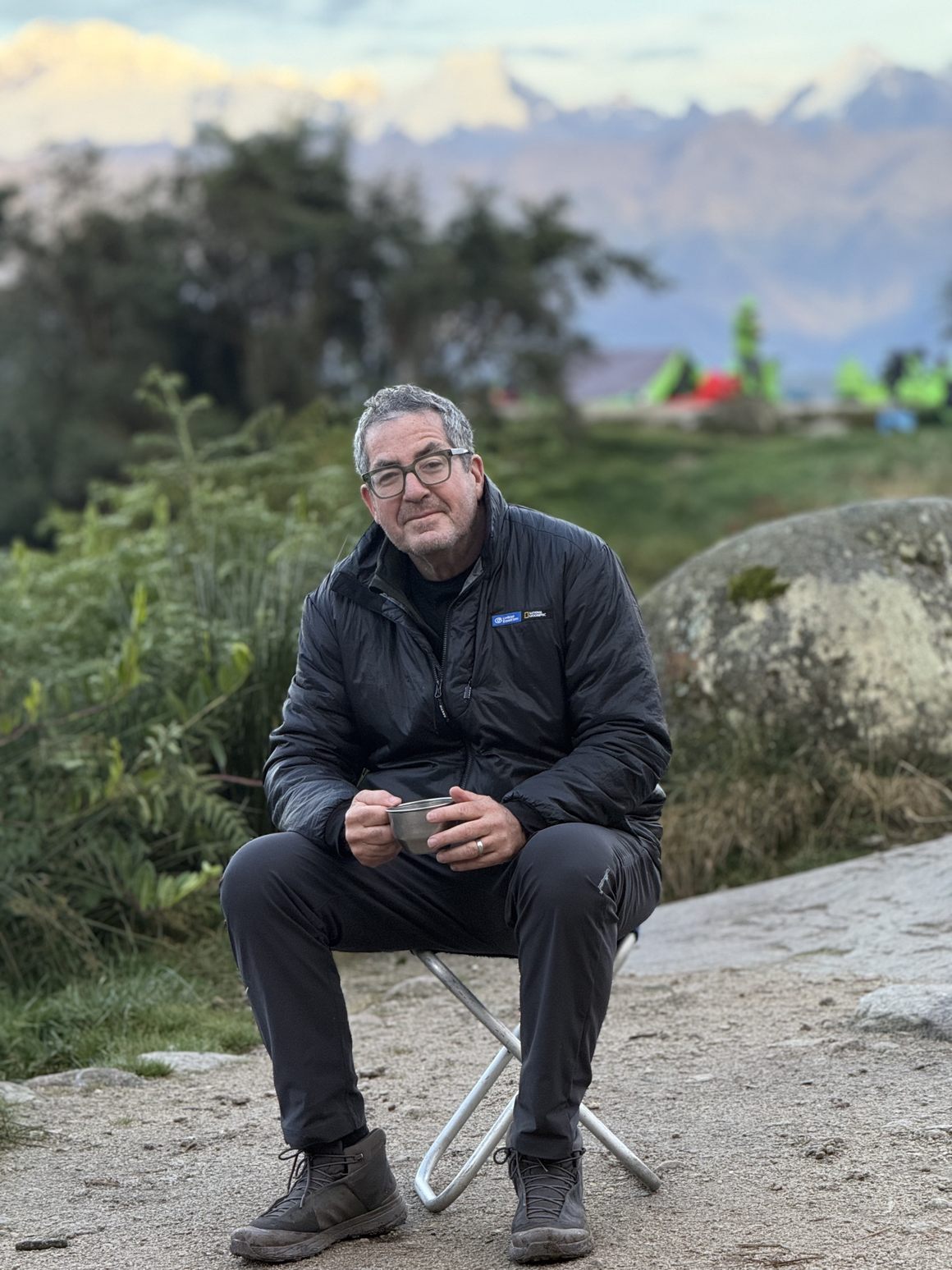
I wiped away the steam from the hotel mirror. I looked pretty good even if I was sunburnt, dirty and in desperate need of a shower. I had just finished a seven day trek through Peru's Lares Pass and The Inca Trail, climbing to nearly 15,000 ft before descending into The Sacred Valley and ultimately, Machu Picchu. It had been everything I had hoped for -- physically demanding, breathtakingly beautiful and humbling -- in the best possible way. But standing in front of that mirror I wasn't thinking at all about the trip, what I was thinking about was that I was standing there at all let alone climbing a pass. Because 18 months earlier something exploded in my brain and I was completely unsure of what my itinerary would be.
July 31, 2024
It's just after 8:00am and I'm sitting at my favorite restaurant in Los Angeles. If Katz's and Russ& Daughters had a hipster child it would be Gjusta. Whenever I was in LA I had a ritual, first Gold's Gym -- where the cast of characters reminded me of the cantina scene in the first "Star Wars" movie, then a walk over to Gjusta for my favorite breakfast. I had been traveling a lot, even for me -- trips back and forth to Europe, Iceland (I've worked with a software company there for 25yrs), New York and LA. I've always been a bit of a mountain goat when it comes to business travel, but this time it felt different, as I was unusually tired.
I had committed to having bfast that morning with the daughter of a friend of mine, ostensibly to give her career advice. Given what happened during our morning coffee, I'm pretty sure I'm the last person she'd want to take advice from, because at 8:23 that morning (oddly I had just looked at my phone) what felt like an anvil slammed on my head.
The pain was immediate and overwhelming and within seconds I knew what it might be. I was quite familiar with strokes and how the brain works, as I had spent a good part of the previous year producing a 9 part series based on the best selling work and stories of Oliver Sacks for Audible (if you're not familiar with Oliver you might remember that Robin Williams played him in the movie).
I excused myself and went to the bathroom, splashed some water on my face and came back to the table... "I gotta go" I said and walked outside and called an Uber (in retrospect not the best decision) to get to the nearest emergency room. I walked into the E.R and said I think I've had a stroke. She asked why and I told her I can only see half of everything (including her). Within minutes I was in a C.A.T. Scan and shortly afterwards the nurse entered the room and asked if I had a wife or partner that they could call. They need to transfer me to the neurological I.C.U. At U.C.L.A.
My brain ruptured over coffee and banana bread at Gjusta. It's now been nearly two years including twelve days in the ICU, three brain procedures and countless follow-up appointments. I'm better, maybe not the same, but better.
You might be wondering what any of this has to do with travel or Atlas Obscura. The answer is everything, because anyone who experiences a major health event follows a different path back. My road back was fueled by my love and need to travel. It helped heal me, both physically and emotionally, albeit with wrong turns along the way.
Travel served as PT for my brain and it helped me fuel my recovery, both physically and spiritually. It reminded me that recovery isn't just about getting healthy enough to stay home -- sometimes it's about becoming well enough to leave it.
Unlike many stroke survivors, most of my damage was visual rather than physical. The aneurysm ruptured in my right occipital lobe, affecting how I process what I see more than how I move or think. I couldn't drive, reading became exhausting and my brain tired easily. For six months I was grounded, except for getting myself back to New York. The therapies available weren't especially helpful, and after a while I realized no one was going to hand me a roadmap -- I'd have to make one. Being stuck at home gave me time to think about all the places I'd spent years postponing because of work.
Like a lot of people after a health scare, I started asking different questions. I was 64 -- how many more trips was I saving for "someday"? So I quit my job and started planning trips, having no idea if I was ever really going to be able to go. Not huge trips at first, but enough to "push myself. And that's when I discovered something unexpected. Planning travel is hard. It's hard even with ChatGPT!
Flights, hotels, currencies, rail passes, reservations, confirmations and so much more. Tiny details hidden in tiny fonts on mobile apps that already seem designed to make booking the wrong thing easy (do you know how hard it is to find english translations on a mobile website?). Throw in a brain that's still rewiring itself, and it becomes an adventure before you've even left home. I booked hotels on the wrong dates, made restaurant reservations for the wrong month and confirmed flights multiple times because I couldn't remember if I'd confirmed them the first time.
But I adapted and started to check everything twice -- even three times. It wasn't pretty, but every booking was another small victory. As I love to say -- hope springs eternal. Nothing says old quite like buying compression socks, but I was prepared and ready. We planned nearly three weeks in Europe, Scotland, and Iceland, visiting friends, new places and different geographies and topographies.
I didn't make it easy on myself, multiple flights, trains, different countries and currencies. The kind of itinerary that can go sideways even when your brain is firing on all cylinders. I was the travel equivalent of someone in AA: Anxious but Ambitious. And somehow… I nailed it.
Naturally, I began to think, "You know what would be a good next trip -- Japan." Because apparently I don't believe in easing into things. I'd been there many times for work but had never really traveled there. Anyone who's been to Japan knows it's wonderfully rewarding—and wonderfully humbling. Tokyo's train system makes perfect sense right up until the moment you're standing in the wrong station wondering if you've accidentally entered another dimension.
Finding a garbage can can feel like an expedition. To make things even more interesting, after Japan my wife flew home and I continued alone to Taiwan for another week. I wanted to know if I could still travel by myself. I needed to test my confidence. Finally, after those "prep trips," I felt I was ready for something more, bigger, physically harder. I needed a long walk -- something that would challenge me physically but strengthen me emotionally.
I had always wanted to go to The Andes, and figured, what better time than now. Sometimes in order to commit to something new I have to say something out loud to friends or family before I've fully thought it through. This was one of those moments.
I told my family and friends that I was going to Peru—and then on to Chile—for a solo trip that would include seven days of trekking through the Andes. I'd always wanted to hike the Inca Trail, but after everything that had happened over the previous eighteen months, simply checking a destination off a bucket list wasn't enough. I wanted something harder, higher and more uncertain. And I wanted to do it alone. Not literally alone—I would have a guide and porters—but I didn't want the pressure of traveling with friends or the distraction of a group.
Part of that decision was practical. I honestly wasn't sure I could finish the trek. The last thing I wanted was to abandon the trek halfway through and mess up someone else's well planned trip. But the bigger reason was that I needed the silence. I needed long stretches of trail where the only conversation was the one happening inside my own head.
Once I'd made the announcement, there was no turning back. I spent weeks researching routes, reading reviews, and disappearing down Reddit rabbit holes until I found Valencia Travel and a terrific trip specialist named Diego to help plan the trek. Together we built an itinerary: time in Cusco to acclimate, the Lares Trek, the Inca Trail, and then I'd split to Santiago because, well, I was almost there and the ticket was only $137.00.
I booked the flights, packed my gear, and then visited my cardiologist and neurologist for one final reality check. After surviving a brain aneurysm, three brain procedures, and everything that followed, I wanted to hear them say I was ready. They did. Before I left I did one last but important thing -- I bought excellent travel insurance.
I've always loved guides and what they represented —not just in cities or hiking trails, but in life. During my career in media, music, arts, and technology, I spent years building products that helped people discover things. I often thought of these products as digital Sherpas, making complicated worlds a little easier to navigate. But nothing compares to a great guide.
The best ones don't just know the trail; they know how to connect history, culture, and place into stories that somehow help you understand yourself and the world a little better. They are Griots -- storytellers where you never tire of hearing what they have to say. I was fortunate enough to have one of those guides -- Aldo Sanches.
As we climbed and descended through the Andes, Aldo repeated the same four phrases over and over: “Steep incline. Steep decline. Gradual decline. Slow and steady.” At first they were simply trail instructions. Before long, they became something else entirely. After everything I'd been through, I had no interest in steep inclines or steep declines. I'd experienced enough extremes for one lifetime.
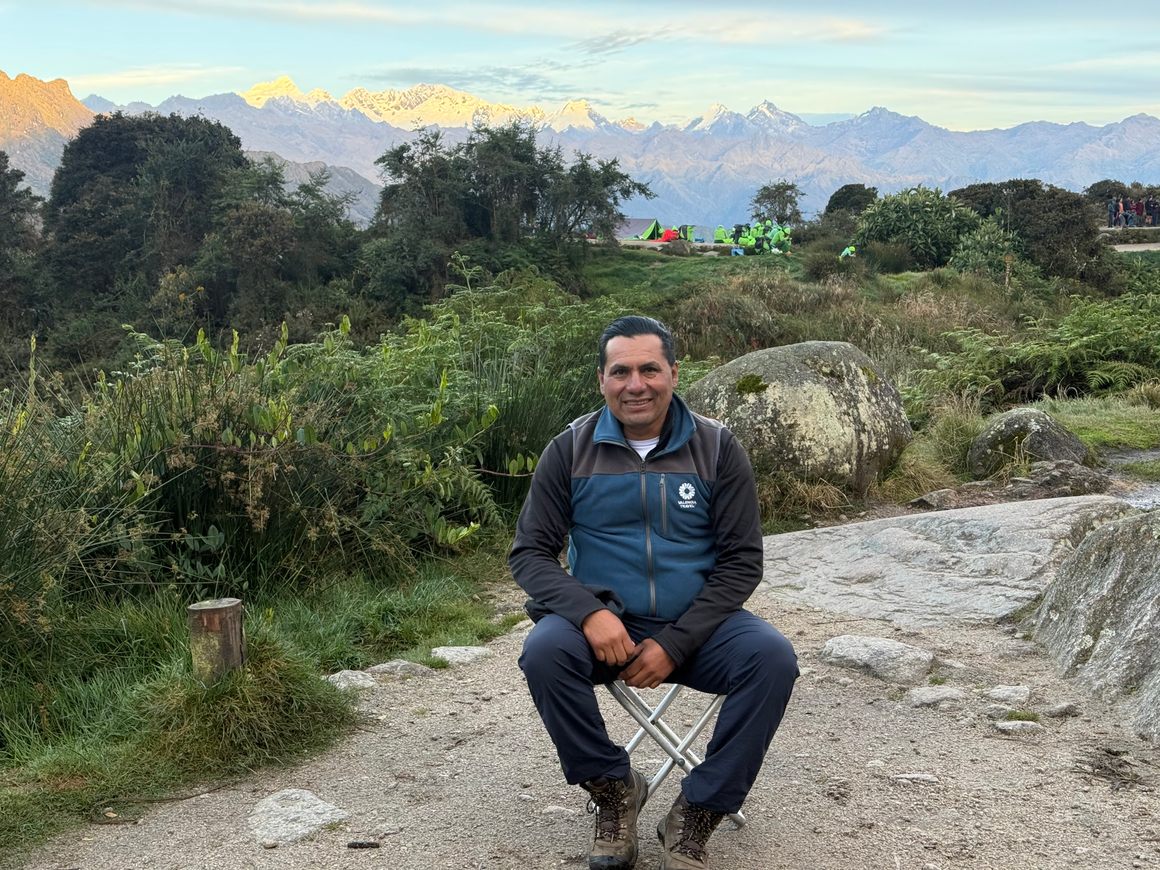
"Gradual decline" wasn't exactly the future I wanted to embrace. I still believed there was plenty left in the tank. That left one path -- Slow and steady. Those three words became my mantra. They got me over mountain passes I wasn't sure I could climb and carried me safely down descents that seemed to last forever. More importantly, my mantra gave me a new way to think about the life waiting for me after the trail.
For most of my life, I'd chased speed, momentum, and the next climb. Now, for the first time, I found myself wanting something different. Not less. Just steadier.
Wiping away the steam from the hotel mirror, I felt better than I had in years. Not because I'd conquered a mountain, but because somewhere along the trail, I'd stopped trying to become the person I was before, and started accepting the person I was becoming.
I bought a one-way ticket, (my other mantra), to Peru and eventually bought another one home. I returned happier, healthier, and more hopeful than I'd been in a very long time. I wouldn't recommend my particular journey to anyone, but I can say this: travel opened my world when I was young, and decades later, when I needed it most, it helped put me back together again. Slow and steady. Turns out, that was exactly the way home.