
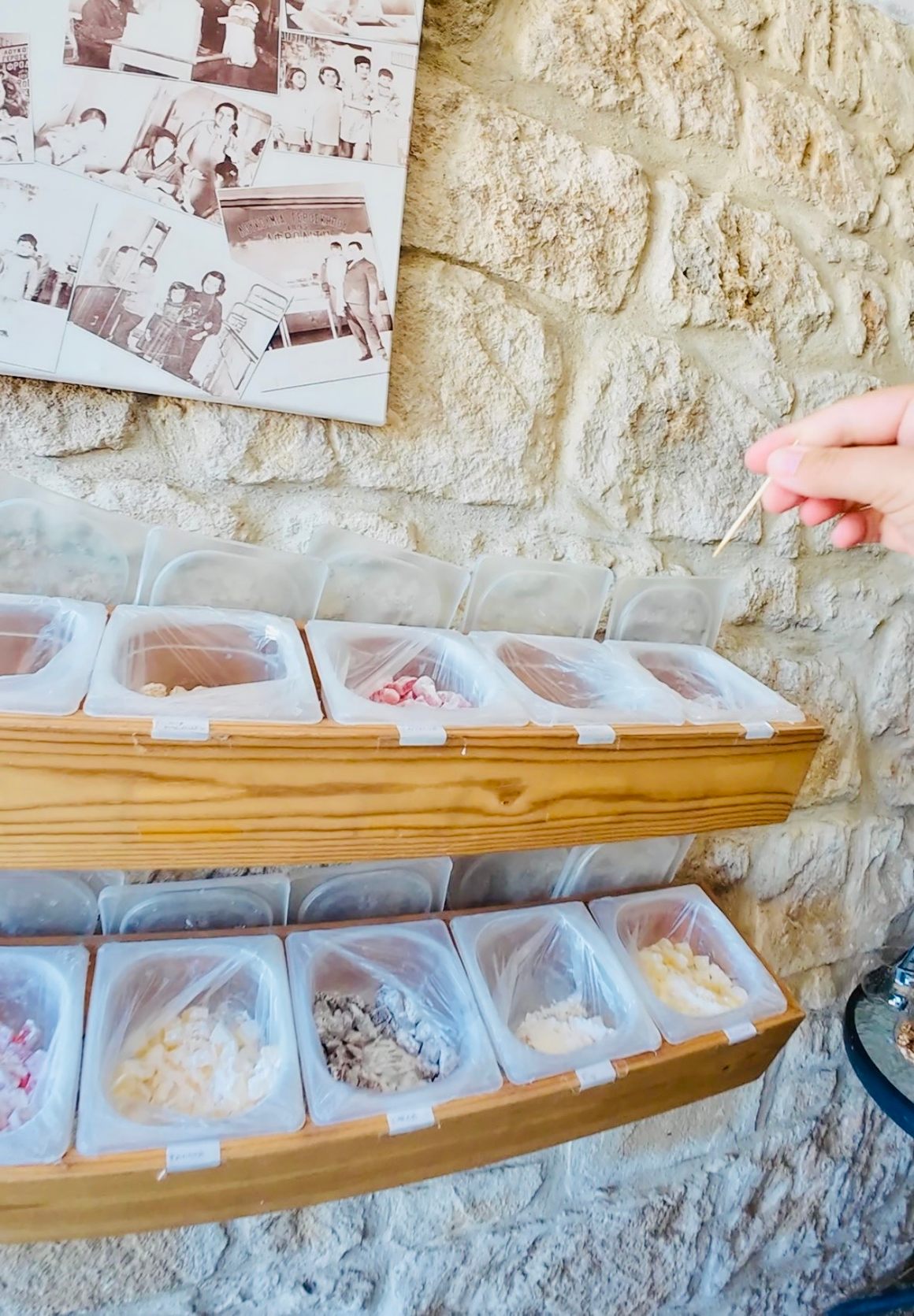
I had an appointment at eleven with George, but his sister met me first. She put a toothpick in my hand, opened the tasting boxes one after another, and said a single word: "taste." Everyone who walks into the shop gets the same welcome, and it put me at ease at once.
The shop sits in Geroskipou, on the southwest edge of Paphos, facing the square and its Byzantine church. It belongs to the family that has made loukoumi here since 1895. When George arrived, he walked me around, handed me a coffee, and we ended up talking about his family for a long while. A coffee and a plate of sweets before noon is hard to refuse.
I started with the flavors that seemed least obvious to a French palate, as a matter of professional duty. Mastic took some adjusting to. Carob was unfamiliar but distinctive. The ouzo loukoumi tasted so strongly of aniseed that it reminded me of pastis. Then the classics: bergamot with almonds inside, rose, and mandarin, which was my favorite of the morning.
Before Cyprus
The sweet itself is older than anyone can pin down. The usual story starts in Istanbul in 1777, with a confectioner named Hacı Bekir whose shop still trades today, but historians doubt he invented it, and Arab and Persian recipes using starch and sugar are centuries older. The name comes from the Arabic rahat al-hulqum, roughly "comfort of the throat". Greece took the sweet up in the early nineteenth century, and on Syros the tradition is said to have arrived with refugees from Chios around 1824.
How it got here
Cyprus had been under Ottoman rule and then British administration for centuries, yet as far as anyone can tell, loukoumi only reached the island with Sophocles Athanasiou in 1895. Before him, there is no trace of it. After him, it spread from this one square to the rest of the island.
That year Athanasiou came home to Geroskipou after years abroad, in Switzerland according to the family, carrying a recipe he had picked up on Greek islands and along the coast of Asia Minor. He opened a small workshop near the square. In 1920 he handed the business to his daughter Chariklia and her husband Gabriel Hadjizinoviou, and the line continued through their son Nikodemos. Since 1990 his widow Evdokia and their son George have kept it going. George is Sophocles's great-grandson, and he has run Aphrodite Delights since 1994. Other makers in town followed the same recipe, among them Loukoumia Arsinoe, Pafos and Pyramos, which George described as cousins rather than rivals.
On one wall of the shop hangs a framed photo of a giant loukoumi. It dates from 16 October 2004, when the town entered the Guinness World Records with a 2,532 kg loukoumi made over three days for the first "Loukoumi Day". George told me it was eaten in about twelve hours. What he cares about most today is that schools now take part, and that children learn what loukoumi is by making it themselves.
In the workshop
The workshop visit is not offered to the public anymore, so I knew I was being given something. George drove me a few minutes away to the family's newest factory, which is about twenty years old, with around ten employees. We sat in an office above the production floor and talked about the business while the team worked below.
I came down just as the team was adding natural flavors and colors to the mix of water, sugar and starch that was heating in the vats. It smelled wonderful before the rose even went in. The protected recipe sets the numbers: sugar and citric acid boiled in water for 35 minutes at 100°C, then cornstarch added and cooked for two hours between 100 and 130°C, stirred at 36 turns a minute. There is no glucose and no gelatine. What I saw went into large wide trays dusted with icing sugar, with no silicone or Teflon, since the sugar is enough to stop the mass sticking. After 24 hours of rest, everything is done by hand: cutting, weighing, packing.
A sweet with a legal name
The town's name is written into the law, and it suits a sugar story. Geroskipou comes from Hierokepis, "sacred garden", and legend holds that Aphrodite rose from the sea at Petra tou Romiou, a few kilometers away, and sowed her garden here. The gardens are gone. The shop across from the church sells the nearest thing the town still harvests.
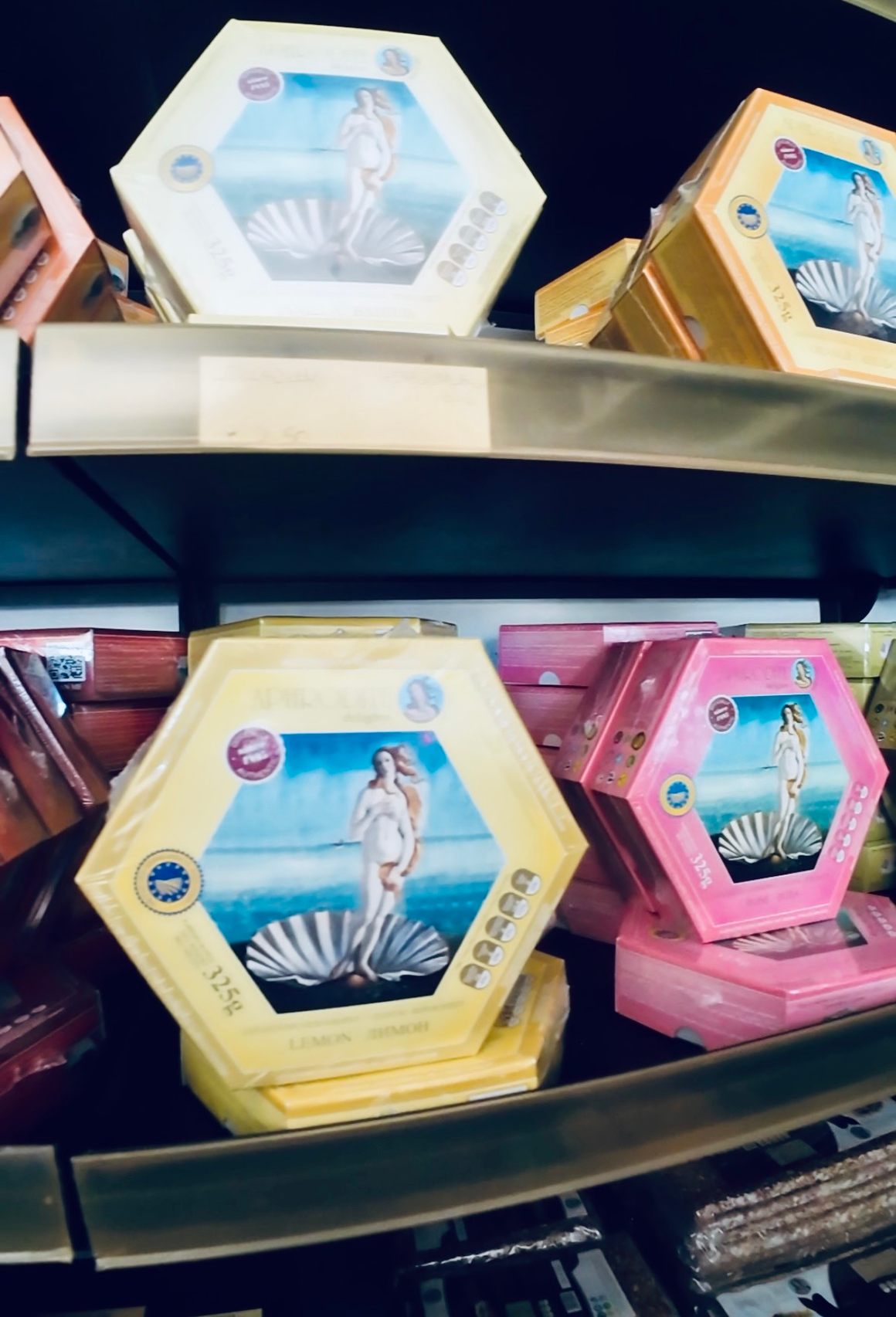
In 2003, before Cyprus had joined the European Union, the town's producers filed a request for a protected geographical indication, the first ever filed by a Cypriot product. Commission Regulation (EC) No 1485/2007, dated 14 December 2007, entered Loukoumi Geroskipou in the register. It remains the only loukoumi in Europe to hold the status.
What stayed with me is what the protection rests on. The regulation does not point to local soil or climate. It points to history: the link between the product and the place is a tradition that began with one man and a recipe in 1895.
George had packed me a bag to take away, with flavors I had not tasted on site (bergamot was such a nice discovery). I left the square with a better sense of why a country would register a sweet the way others register a cheese.


