
Cyprus doesn't just claim Aphrodite as a legend. It gives her an address, or, actually, at least three.
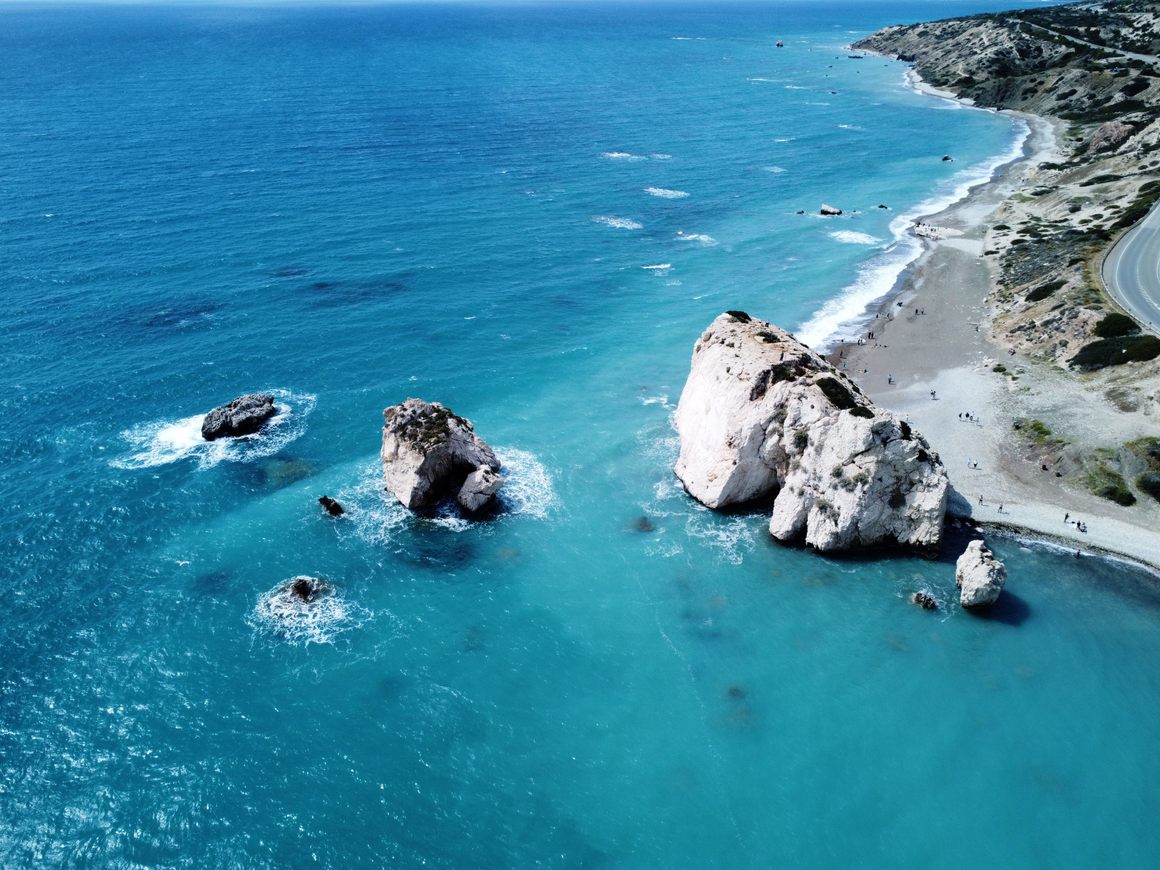
My first stop, on my first trip to Cyprus in 2025, was Petra tou Romiou, the rock where the goddess is said to have been born from sea foam. I'd come to Paphos specifically inspired by her myth, and this stretch of coastline delivered more than I expected: an enormous white limestone rock rising out of the water, flanked by smaller boulders that look almost like an escort. Climbing it is forbidden, but you can get close enough to see the smooth striations on its surface, remnants of tectonic plates grinding against each other over millions of years. Of every coastline I've seen on the island since, across two separate trips, this one has stayed my favorite. There's a viewpoint restaurant above the beach, and at sunset the low light turns the whole scene almost cinematic.
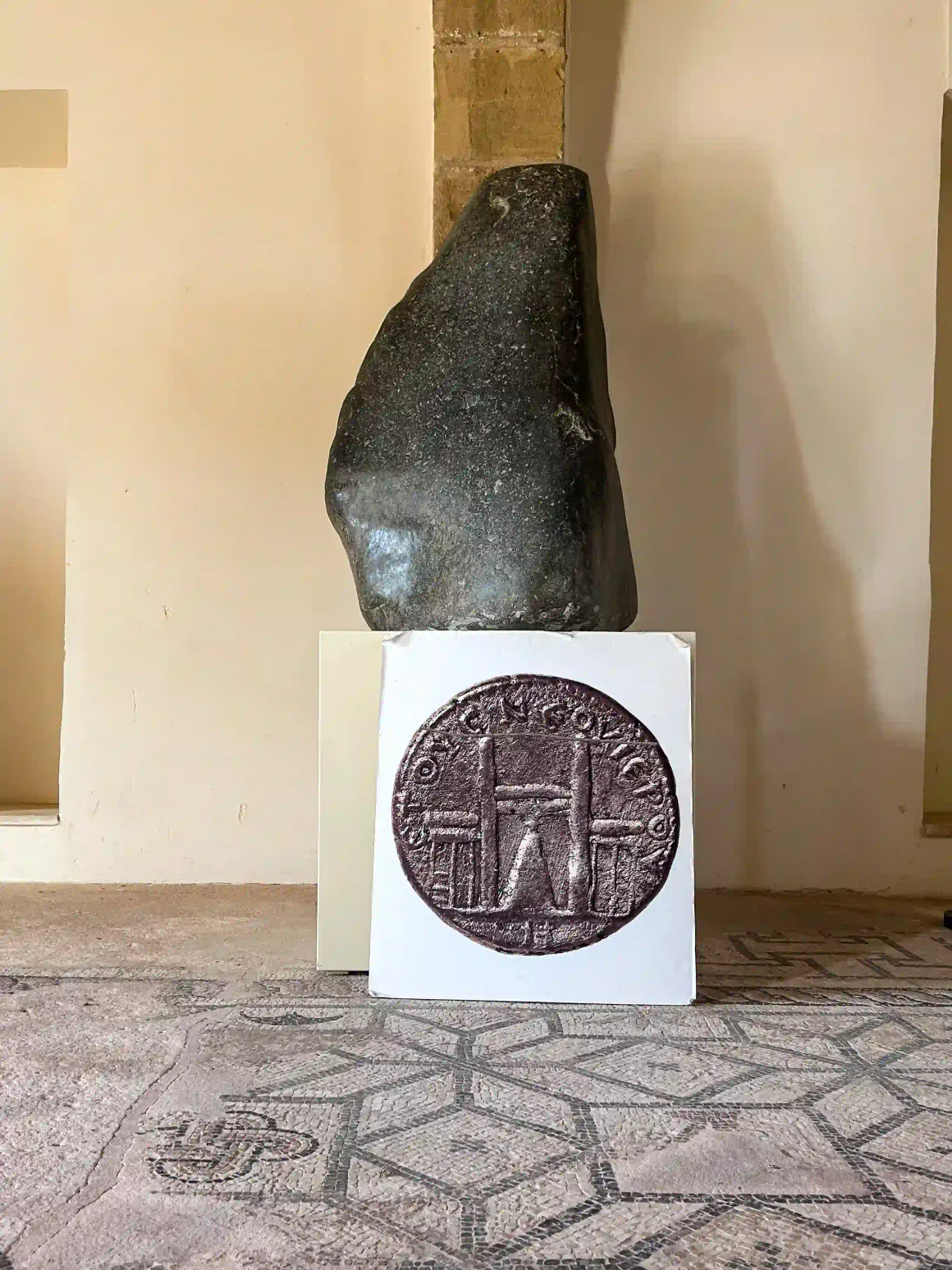
Just down the road on that same trip was Palaepaphos, the ancient sanctuary at Kouklia where Aphrodite was worshipped for over a millennium. I went in October, and the site was completely empty, which somehow made the scale of it hit harder: 144 hectares of scattered foundations and massive limestone blocks, once the most important religious center in the Mediterranean, now just me and the stones. Inside the small museum, I stood in front of the object the entire cult was originally built around: a plain black conical stone, no face, no features. I remember standing there thinking, genuinely, "wait, this rock is Aphrodite?" For centuries, this was her.
What the museum doesn't let you forget is that Aphrodite wasn't the first goddess to hold that stone sacred. Before the Greeks arrived, this same site already worshipped a Near Eastern goddess of love and fertility, Astarte, herself descended from the Mesopotamian Ishtar. When the newcomers landed, there was no replacement, just fusion: two goddesses merging into one, until the name Aphrodite eventually won out. So the faceless black stone wasn't a placeholder waiting for Aphrodite to show up. It was already someone else's god, on a much longer résumé than the Greek myth lets on.
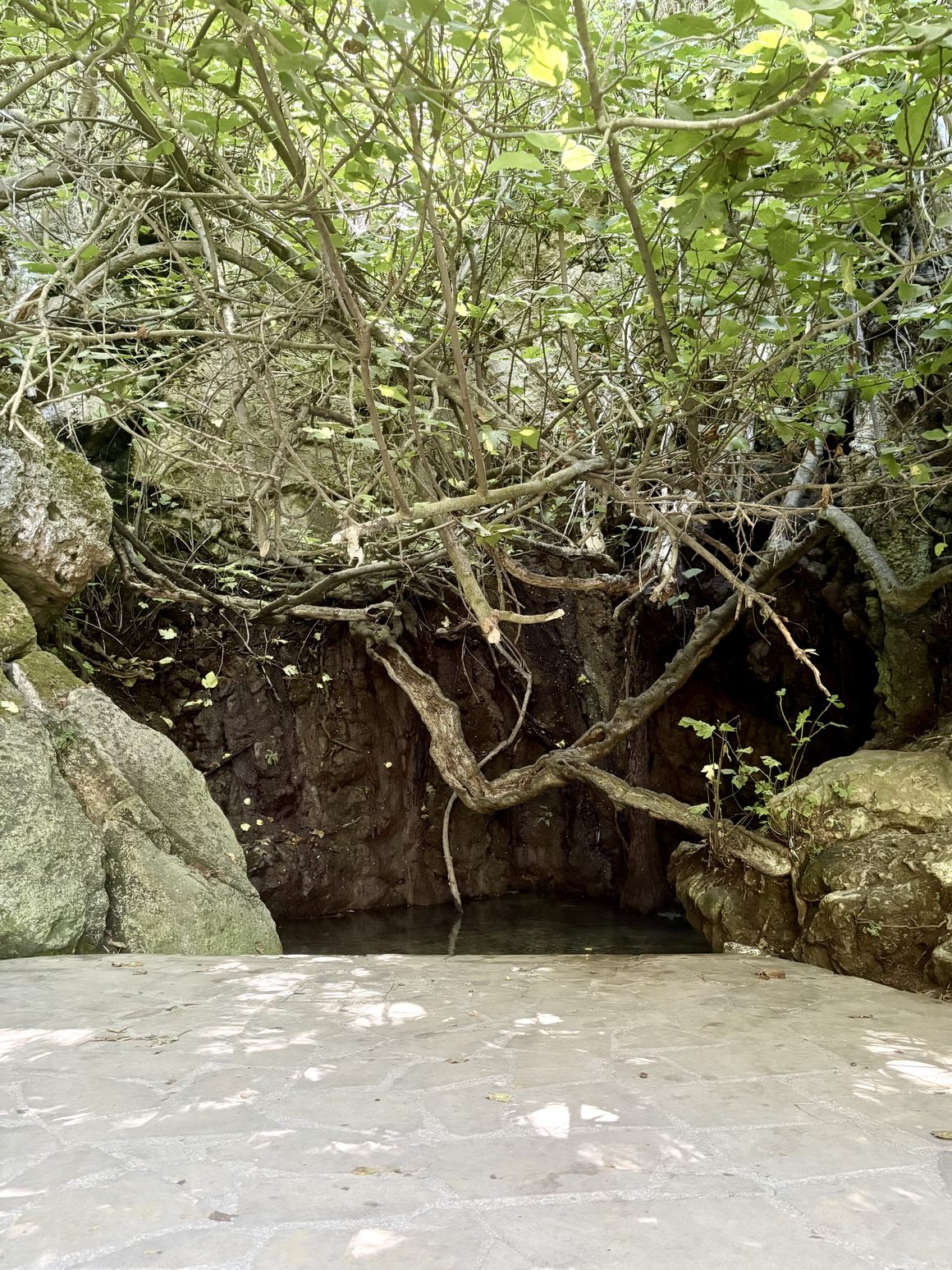
It took a second trip to Cyprus, this time covering the full south coast plus a detour up into Akamas, to reach the other end of the story: the Baths of Aphrodite, on the peninsula's northwestern edge, where the goddess is said to have bathed and met with her lover Adonis. Driving up, I saw a dozen tour buses parked at the entrance and braced for a crowd. It turned out most visitors apparently head straight for the Aphrodite Trail, the hiking path that starts right at the baths. The garden itself, wrapped around a small natural cave shaded by an old fig tree, was strangely quiet. I stood alone in front of the cave for a good fifteen minutes without seeing another person, which is not what I'd pictured for one of the most mythologically loaded spots on the island.
Three sites, two trips, and one thread running through all of them: a goddess who was, at different points, a birth from sea foam, a rock nobody thought needed a face, and a quiet bathing spot in a garden.
