Places Foods Stories Newsletters
Loading...
Loading...
Loading...

No search results found for
“”

Make sure words are spelled correctly.

Try searching for a travel destination.

Places near me Random place

Popular Destinations

  • Paris
  • London
  • New York
  • Berlin
  • Rome
  • Los Angeles
Places Foods Stories Newsletters
Sign In Join
Places near me Random place
All the United States Florida Flagler Beach Bulow Plantation Ruins

Bulow Plantation Ruins

The ruins of this antebellum sugar plantation are the end result of a Seminole attack during the Florida Wars of 1836.

Flagler Beach, Florida

B brickhound profile photo
Added By
brickhound
Email
Been Here
Want to go
Added to list
CAPTION
Storing and loading area   Milo44/CC BY-SA 3.0
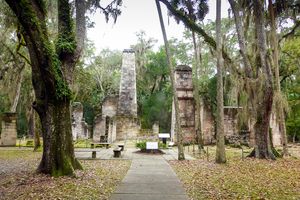
Ruins of the Bulow Plantation   Rain0975/CC BY-ND 2.0
Remains of the sugar mill   Rain0975/CC BY-ND 2.0
Not much remains of the original plantation   Ebyabe/CC BY-SA 3.0
Ruins of the sugar mill   Rain0975/CC BY-ND 2.0
Bulow Ville, January 26, 1831   Rain0975/CC BY-ND 2.0
  PushingUpDaisies / Atlas Obscura User
  PushingUpDaisies / Atlas Obscura User
  PushingUpDaisies / Atlas Obscura User
  PushingUpDaisies / Atlas Obscura User
  PushingUpDaisies / Atlas Obscura User
  PushingUpDaisies / Atlas Obscura User
  PushingUpDaisies / Atlas Obscura User
  PushingUpDaisies / Atlas Obscura User
  PushingUpDaisies / Atlas Obscura User
  PushingUpDaisies / Atlas Obscura User
Bulow Sugar Mills history sign   PushingUpDaisies / Atlas Obscura User
  PushingUpDaisies / Atlas Obscura User
  breaingram / Atlas Obscura User
  breaingram / Atlas Obscura User
  breaingram / Atlas Obscura User
  PushingUpDaisies / Atlas Obscura User
  PushingUpDaisies / Atlas Obscura User
  PushingUpDaisies / Atlas Obscura User
  PushingUpDaisies / Atlas Obscura User
  PushingUpDaisies / Atlas Obscura User
  PushingUpDaisies / Atlas Obscura User
Surprising condition and story.   TAT / Atlas Obscura User
  msdiva1 / Atlas Obscura User
  msdiva1 / Atlas Obscura User
  msdiva1 / Atlas Obscura User
  msdiva1 / Atlas Obscura User
  msdiva1 / Atlas Obscura User
  msdiva1 / Atlas Obscura User
  michaelnhartman / Atlas Obscura User
  michaelnhartman / Atlas Obscura User
  michaelnhartman / Atlas Obscura User
  michaelnhartman / Atlas Obscura User
  michaelnhartman / Atlas Obscura User
  msdiva1 / Atlas Obscura User
  msdiva1 / Atlas Obscura User
  msdiva1 / Atlas Obscura User
  msdiva1 / Atlas Obscura User
4-19-25   Darrell Powers / Atlas Obscura User
  SemiruralYeti / Atlas Obscura User
  planan / Atlas Obscura User
  SemiruralYeti / Atlas Obscura User
  arc459 / Atlas Obscura User
  PushingUpDaisies / Atlas Obscura User
  PushingUpDaisies / Atlas Obscura User
  PushingUpDaisies / Atlas Obscura User
Been Here
Want to go
Added to list

About

More than 20 years before Florida became a state, a South Carolina man named Charles Wilhelm Bulow bought up thousands of acres of land along the central coast, not far from present-day Daytona Beach. Since Bulow wasn’t the oldest son, convention of the day dictated that he couldn’t inherit his dad’s massive fortune—so he set out to create his own. The result was Bulow Ville, or the Bulow Plantation, its ruins now part of the Florida State Park system.

The origins of the plantation go back to the early 19th century. Bulow acquired two tracts of land that he combined to a whopping 9,000 acres, and being Florida land he would be able to grow sugarcane, cotton, rice, and even indigo (the plant stuff used to make blue dye). By 1821 Bulow had the acreage, he had the climate, and with a tidal creek just alongside his property, he had an easy way to transport crops.

What he didn’t have was cleared land. This being the antebellum South, clearing thousands of acres of densely forested land meant using the labor of enslaved men and women. It’s speculated that about 300 enslaved people were sent from his older brother’s plantation in South Carolina to do the work. Two years later Bulow died at the age of 44. His son John, who was studying in Paris, was sent for to take over, though he was only 16 at the time. When he returned, he ordered the construction of a mill to turn Bulow Ville’s sweetest commodity (sugarcane) into sugar, molasses, and rum.

By 1835 the second of the Seminole Wars (also known as the Florida Wars) was raging, as the U.S. government tried to force the Seminole Indians (actually a number of different Native American tribes) out of Florida. John Bulow was forced from Bulow Ville by the local militia, who wanted to use the sturdy stone buildings as a fortified base of operations. They didn’t last long, and they were soon attacked and burned out by the Seminole, putting an end to the plantation that had lasted only 15 years. Most of the buildings are long gone, but today stand the the eerie ruins of the sugar mill and a few chimneys and wells.

Places

Discover your next amazing Atlas Place.

Get more unusual and extraordinary places each week with the Atlas Obscura Places newsletter.

Your newsletter subscriptions with us are subject to Atlas Obscura's Privacy Policy and Terms of Use.

Know Before You Go

Park is three miles west of Flagler Beach - off Old Kings Road So., off I-95 exit 284.

Ruins and parking are free.

Community Contributors

B brickhound profile photo

Added By

brickhound

Blindcolour profile photo PushingUpDaisies profile photo arc459 profile photo planan profile photo

Edited By

Blindcolour, PushingUpDaisies, arc459, planan...

  • Blindcolour profile photo Blindcolour
  • PushingUpDaisies profile photo PushingUpDaisies
  • arc459 profile photo arc459
  • planan profile photo planan
  • breaingram profile photo breaingram
  • M michaelnhartman profile photo michaelnhartman
  • Darrell Powers profile photo Darrell Powers
  • SemiruralYeti profile photo SemiruralYeti
  • M msdiva1 profile photo msdiva1

Published

February 11, 2016
Edit this listing

Make an Edit
Add Photos
Sources
  • https://www.floridastateparks.org/park/bulow-plantation
  • https://en.wikipedia.org/wiki/Bulow_Plantation_Ruins_Historic_State_Park
  • http://www.flaglerlibraryfriend.com/holden/Bulow_plantation/Bulow%20Plantation.htm

Related Tags

Ruins Fires Native Americans Slavery
Bulow Plantation Ruins
3501 Old Kings Road
Flagler Beach, Florida, 32136
United States
29.435145, -81.142258
Visit Website
Get Directions

Nearby Places

Dummett Sugar Mill Ruins

Ormond Beach, Florida

miles away

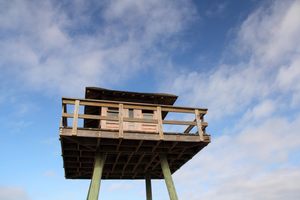
Ormond Beach Watchtower

Ormond Beach, Florida

miles away

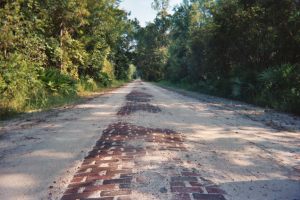
The Old Brick Road

Bunnell, Florida

miles away

Explore the Destination Guide

Photo of Florida

Florida

United States

Places 500
Stories 48

Nearby Places

Dummett Sugar Mill Ruins

Ormond Beach, Florida

miles away

Ormond Beach Watchtower

Ormond Beach, Florida

miles away

The Old Brick Road

Bunnell, Florida

miles away

Explore the Destination Guide

Photo of Florida

Florida

United States

Places 500
Stories 48

Related Places

  • Keller House

    Malibu, California

    Keller House

    The stone walls of a home built to withstand a California wildfire still stand after more than a century.

  • Ruins of a walkway or parapet are scattered among campsites at South Bass Island State Park

    Put-In-Bay, Ohio

    Ruins of the Hotel Victory

    What was one of the largest hotels in the country burned to the ground in a tragic fire.

  • Besh-Ba-Gowah Archaeological Park and Museum

    Globe, Arizona

    Besh-Ba-Gowah Archaeological Park and Museum

    The remains of a large pueblo village constructed by the Salado culture, who occupied the region more than 600 years ago.

  • The tomb of Marcus Vergilius Eurysaces, the baker.

    Rome, Italy

    Tomb of Eurysaces the Baker

    A freedman baker’s lavish tomb has a relief showing various stages of Roman bread making.

  • The ruins of El Cuartelejo.

    Scott City, Kansas

    El Cuartelejo

    The ruins of the northernmost pueblo in the Americas tell the story of a mixing of native cultures.

  • Abo kiva in foreground, church in background

    Mountainair, New Mexico

    Salinas Pueblo Missions

    The remains of Abó, Gran Quivera, and Qurai are monuments to the long, complicated history of the Indigenous people of the Southwest.

  • The House at Otowi Bridge

    San Ildefonso Pueblo, New Mexico

    House at Otowi Bridge

    This old ruin once served as a post office, a train station, a restaurant, and a bridge to the Atomic Age.

  • Tusayan Ruin

    Grand Canyon Village, Arizona

    Tusayan Ruin

    This Native American settlement dates back to the Pueblo II period.

Aerial image of Vietnam, displaying the picturesque rice terraces, characterized by their layered, verdant fields.
Atlas Obscura Membership

Become an Atlas Obscura Member


Join our community of curious explorers.

Become a Member

Get Our Email Newsletter

Follow Us

Facebook YouTube TikTok Instagram Pinterest RSS Feed

Get the app

Download the App
Download on the Apple App Store Get it on Google Play
  • All Places
  • Latest Places
  • Most Popular
  • Places to Eat
  • Random
  • Nearby
  • Add a Place
  • Stories
  • Food & Drink
  • Itineraries
  • Lists
  • Video
  • Podcast
  • Newsletters
  • All Trips
  • Membership
  • Feedback & Ideas
  • Community Guidelines
  • Product Blog
  • Unique Gifts
  • Work With Us
  • About
  • FAQ
  • Advertise With Us
  • Advertising Guidelines
  • Privacy Policy
  • Cookie Policy
  • Terms of Use
Atlas Obscura

© 2026 Atlas Obscura. All Rights Reserved.