About
In the heart of Valencia, the Royal Seminary of Corpus Christi, founded in 1583 by Saint Juan de Ribera, is home to one of the city’s most fascinating legends: the story of the patriarch's dragon. This seminary, known for its role in the Counter-Reformation and in religious education, also became the home of a unique historical and mythical figure.
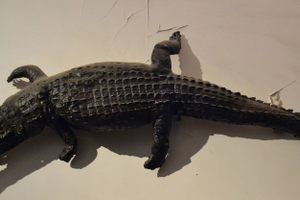
The dragon, an imposing taxidermic specimen, was brought to the seminary as a symbol of victory over the forces of evil. Tradition has it that this creature, which was probably a crocodile or an alligator brought back from America or Africa by the explorers of the time, was displayed to amaze the students and reinforce religious teachings. According to some reports, Saint Juan de Ribera himself ordered the purchase, perhaps as a metaphor for the victory of faith over sin.
This particular specimen became a cultural and educational icon of the seminary. In a room that also houses relics and historical objects, the dragon was integrated into the seminary’s teaching by evoking both the mystery of the natural world and the symbolic dimension of religion.
Even today, the patriarch's dragon remains a point of attraction for visitors and scholars. Not only does it represent a link to the global discoveries of the 16th century, but it is also an example of how the exotic was used for religious and cultural purposes in an institution that has profoundly shaped the history of Valencia.
Know Before You Go
You can see the dragon in the vestibule of the Church of the College of the Patriarch in the center of Valencia
The church is open 7 days a week from 11 to 1.30 and from 5 to 7 pm
Saturdays and Sundays, the church is only open in the morning
Community Contributors

Added By
Published
June 19, 2026