About
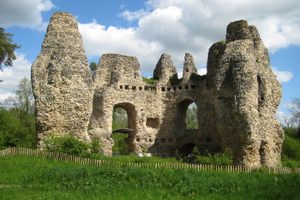
A walk along the towpath of Basingstoke Canal isn’t frightening at first, as you pass the peaceful ruins of Odiham Castle, peer at mallard ducks and coots on the water, and a mute swan on an enormous nest. However, at the end of the canal, beware the Greywell Tunnel, a place where men in the 19th century had to fight claustrophobia (fear of small places), nyctophobia (fear of the dark), thalassophobia (fear of drowning) and chiroptophobia (fear of bats) just to do their jobs.
It's perfectly safe today, and the most thrilling thing about the site is the wildlife, because in the winter months it is the home of thousands of bats. Signs along the current path indicate that it is a site of special scientific interest. This site has more roosting bats than any other site in all of Britain. At least eight species of bats have been identified at this tunnel, with Natterer’s and Daubenton bats most common. The high count of 484 Natterer’s bats in 2015 was the second largest in the world.
The brick tunnel must have been infamous when boats used it for commerce. It was built without a towpath, which meant cargo boats were moved by legging. This is when two people lie on their backs in the boat and use their feet against the tunnel walls to push the boat along. Because of the length of the tunnel, it could take up to 6 hours to leg it through in the dark.
More dangerous than working in the tunnel was building it. The original tunnel was built by hand, first by digging a shaft 130 feet down from the top of Greywell Hill, then by tunneling out in both directions by candlelight, till the tunnel was over 1,100 meters long. It took years to construct and officially opened in 1794.
The tunnel roof partially collapsed in 1932. Commerce needs had changed by then, so the roof fall was not repaired. Another collapse in the early 1950s blocked it for any kind of boats. That portion filled with clay, making it more like a cave than a tunnel.
There is no public access to the tunnel, and that portion of the canal is visited by bat scientists, who can only travel 600 feet inside because if they go any farther, there are no more places to turn around and come back out.
Today there is nothing to fear, and a lot to love about this bridge over multiple freshwater springs, that are a main water source for the Basingstoke Canal. From the path beside the water, you can look down into the crystal clear waters and see the waving fronds of ferns and mosses beneath the surface. The beautiful and imposing Greywell Tunnel eastern portal is Grade II listed, and was restored in 1975.
Related Tags
Know Before You Go
To visit the site, park at the intersection of Hook Rd and Deptford Ln and on Deptford Ln you will see a well worn path to the bridge. On the other side of the bridge is an adjoining path that you can use to walk to the water's edge.
An optional and more interesting approach is to park at the end of Tunnel Ln near the Warnborough Lift Bridge. Follow the signs to Odiham Castle, but continue past the castle and stay on the path beside the canal. It is a full mile from the lift bridge to Greywell Tunnel. Of course you must also visit the castle while you're there.
Community Contributors

Added By
Published
October 17, 2025
Sources
- https://batconservationtrust.blogspot.com/2018/03/bats-in-greywell-tunnel-hampshire.html
- https://www.facebook.com/basingstokecs/posts/the-greywell-tunnel-now-marks-the-western-end-of-the-basingstoke-canal-and-is-an/2590896374302611/
- https://www.subbrit.org.uk/sites/greywell-tunnel-basingstoke-canal/