About
The Las Vegas Valley is the improbable site of world-class fossils of late Pleistocene megafauna (large animals), including such iconic species as the saber-toothed cat, the giant ground sloth, the mammoth, and the American horse, camel, and lion.
The fossils occur in sediments preserved around the northern side of the valley, which were once wetlands ranging from marshes and meadows to spring fed streams during slightly drier periods. The abundant vegetation would have attracted the herbivores, and the herbivores in turn attracted the carnivores. The large stretches of muddy ground would have also provided opportunities for fossils to be preserved, as bones could easily become buried.
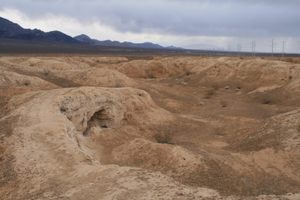
The country dried out at the end of the Pleistocene, and then gullies and channels started to carve into the sediments as erosion worked upstream from the Colorado River system. Indeed, the upper end of Vegas Wash, the drainage entering Lake Mead from the Las Vegas Valley, crosses the fossil-bearing sediments at the sites, some 25 miles upstream from where it now enters the lake.
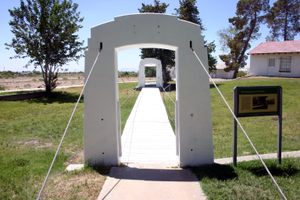
These fossil occurrences have already been recognized with the nearby Tule Springs Fossil Beds National Monument, and it's appropriate that the State of Nevada extend the recognition and protection with this state park. The park includes a visitor center and museum, with interpretive displays and artists' illustrations, and is centered around an early 1960s paleontological excavation that first documented the scale of the deposits.
One of the interpretive trails, called the Big Dig Trail (2 miles), runs through the 1960s excavation sites and more. The Big Dig Trail leaves from the Megafauna Trail (0.3 miles) which includes life-size metal silhouette sculptures of some of the megafauna that have been found in the area. This trail is the most accessible trail and goes around the back of the visitor center/museum. The third trail is the Las Vegas Wash Trail (1.5 miles) which takes you through the Upper Las Vegas Wash and the interpretive panels focus on the natural history of the site.
Know Before You Go
The park is open Wednesday through Sunday starting at 8am with the last entry at 4pm when the visitor center closes. The trails and the park close at 4:30pm.
As with all state parks there is an entry fee which covers the trails, visitor center/museum, picnic area, parking, Monumental Mammoth Plaza, educational programs, restrooms, and parking. It’s $3 per person and kids 12 and under are free. All visitors need to check in inside the visitor center before heading out on the trails.
Take Decatur Boulevard north. The turnoff will be on the right (east), just north of the developed residential area. The street address is 8660 N Decatur Blvd.
Community Contributors

Added By
Published
August 7, 2024