About
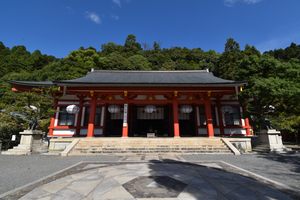
Located in a wooded gorge between Mounts Kibune and Kurama, the ancient Kifune Shrine is one of the most revered shrines in Kyoto, dedicated to the water god Taka-okami-no-kami and deeply associated with wish-making.
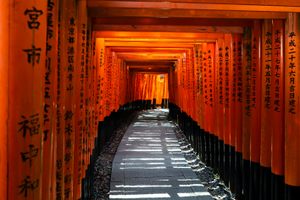
Though it is most famed for its photogenic stairway lined with lanterns and autumn foliage, the shrine is steeped in history and folklore, both auspicious and dark.
For one, Kifune Shrine is widely considered the birthplace of ema prayer boards, which are found at almost every Shinto shrine across Japan today. Ema, literally meaning “picture-horse,” was once an actual, live horse offered by the Emperor to pray for the rain here, but was eventually replaced by a wooden horse, and then by a wooden board with a picture of a horse.
In the medieval play titled Kanawa, the shrine is featured as the location where the protagonist, a vengeful cuckquean, is advised by the gods to “dress in red, paint her face with cinnabar, wear an iron crown and light a candle” to become a demoness.
This story was later fused with the custom of the Ushi-no-toki-mairi, a well-known curse ritual performed at the Hour of the Ox (around 2:30 AM). Due to this, Kifune Shrine grew into a popular spot for those seeking to put a curse upon someone else.
Originally, however, the Hour of the Ox ritual was not necessarily a curse, but wish-making in general, inspired by the myth that the God of Kifune manifested himself at the Hour of the Ox on the Day of the Ox in the Year of the Ox.
Interestingly, there is also a small sub-shrine in a corner of the shrine grounds dedicated to the Ushioni (“ox demon”), who accompanied the God of Kifune. This demon was so talkative that the God cut off his tongue, exiled him and wouldn’t forgive him for three years. It is said that his descendants took monstrous forms up to the fourth generation, but became humans from then on. This Zetsu (“tongue”) family has survived to this day, serving Kifune Shrine as priests.
Know Before You Go
Kifune Shrine consists of three locations about a half-hour apart. All spots mentioned in this article can be found at the Hongu (main shrine), but it’s also worth walking to the Oku-no-miya (inner shrine), the original site of the shrine.
By public transport, ride a Kurama Line train to Kibuneguchi station and walk for 25 minutes; alternatively, you can also visit Kurama-dera temple on the other side of the mountains first and take a hike to the Kibune village.
Community Contributors

Added By
Published
December 31, 2025